
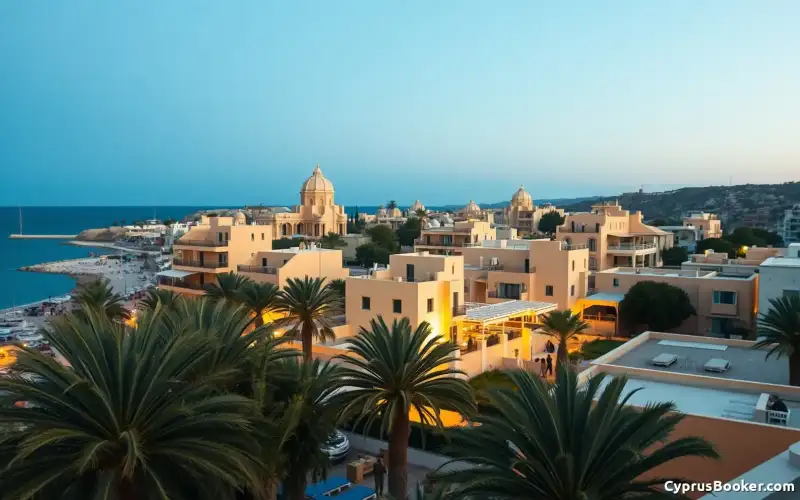
I stood on the balcony of a supposedly 'quiet' one-bedroom apartment in Ayia Napa at 2 a.m. on a Saturday, watching drunk revellers stumble past the building below, bass from a nearby club vibrating through the walls. The listing had promised 'peaceful location, steps from the action'. What it actually meant was: close enough to hear every moment of the action, all night long. This was my first lesson about apartment rentals in Ayia Napa, and it wasn't the last.
After two years living between London and Larnaca, and having helped dozens of friends and colleagues book self-catering places here, I've learned that the gap between what landlords advertise and what you actually get is wider than the gap between the beach and the highway. The apartments themselves are often decent. The surprises? Those are where the real story lies.
1. The Noise Situation Is Far Worse Than You Think
Let's start with the elephant in the room – or rather, the nightclub in the street below. Ayia Napa's apartment buildings are concentrated in three main zones: the strip (Nissi Avenue and surrounding streets), the old town area, and the quieter northern neighbourhoods around Kryou Nerou Avenue. If your apartment is within half a mile of Nissi Avenue, you're in the noise zone. Full stop.
The strip doesn't really quiet down until 3 a.m., and even then, you'll get delivery trucks from 6 a.m. onwards. I've stayed in apartments advertised as 'steps from the beach' – which is technically true – where the beach is 200 metres away but the nightclub is 50 metres away. Your bedroom window faces the street. The noise is relentless from May through September, and weekends year-round.
What actually works: apartments on the second floor or higher, facing away from the main roads. Ground-floor units facing the street are basically unusable after 11 p.m. if you're a light sleeper. Check Google Street View of the exact building before booking. Look at the surrounding businesses – if there are bars, clubs, or restaurants within 100 metres, factor in serious noise. Some landlords will tell you 'it's only loud in summer' – this is technically true but misleading. Summer is when most people visit.
Budget for earplugs, a white noise machine, or accept that you'll be awake between midnight and 3 a.m. regularly. This isn't pessimism – it's just the reality of Ayia Napa.
2. Pool 'Access' Doesn't Mean Peaceful Swimming
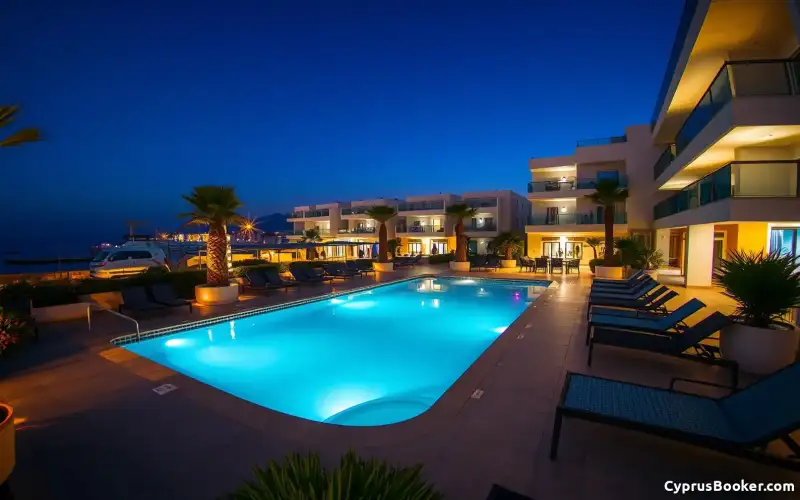
Most mid-range apartments here come with pool access. What the listing doesn't mention is that 'pool access' means sharing with 40 other units, often with families who treat it like a water park and groups of lads doing cannonballs at 11 p.m. If the building has 80 apartments and the pool is 8 metres by 5 metres, you're looking at serious congestion during peak hours (10 a.m. to 4 p.m.).
I watched a family of six attempt to have a quiet morning swim in a pool where 15 other people were already playing volleyball with an inflatable ball. The 'shared facilities' clause is real, and there's no lifeguard, no rules enforcement, and no one to complain to except other guests who are equally frustrated.
The actual situation: if you want reliable pool time, book a place with a private pool (these exist but cost 30-40% more) or accept that you'll be swimming before 9 a.m. or after 5 p.m. The water temperature is excellent year-round – even in winter it's 16°C, which is swimmable – but the social dynamics around shared pools in apartment complexes are messy.
3. 'Fully Equipped Kitchen' Is Marketing Speak
This is where I get genuinely irritated. A 'fully equipped kitchen' in Ayia Napa typically means: a two-ring hob (not four), a microwave that heats unevenly, a fridge that's adequate but small, and cutlery that looks like it was salvaged from a 1980s caravan. You'll find no proper knives, one wooden spoon, and a set of plates in three different patterns because they've been replaced piecemeal over five years.
I once tried to cook a proper meal in an apartment kitchen and discovered there was no colander, no measuring cups, one blunt knife, and a chopping board the size of a coaster. The oven worked, technically, but it heated unevenly and there was no thermometer. Cooking for a family of four becomes an exercise in frustration.
Here's what you actually need to ask before booking: Does it have a proper four-ring cooktop or just a hob? Is there an oven with a working thermostat? Are there real knives, not just butter spreaders? How many plates and bowls per person? Is there a kettle? (Many don't.) What about basic equipment – colander, measuring spoons, a decent chopping board?
The honest approach: plan to eat out most nights or bring a camping stove. Seriously. Most people find that cooking in apartment kitchens takes three times longer than it should because the equipment is inadequate. Budget for restaurants. You're in Ayia Napa – the food is cheap by UK standards anyway. A main course runs £5-8 GBP, so cooking to save money doesn't really work out.
4. Air Conditioning Bills Will Shock You
Here's the thing nobody mentions: air conditioning in Cyprus in July and August costs real money. If your apartment has AC (and most do), you'll be running it 24/7 if the temperature hits 35°C or above, which happens regularly. The electric bill for a two-bedroom apartment can hit £80-120 per month in peak summer if you leave it on constantly.
Most landlords charge a 'flat rate' for utilities – typically £15-25 per week. What they don't tell you is that this rate was calculated assuming you'd be sensible about AC usage. If you're coming from the UK where air conditioning is rare, you'll run it like you're cooling a shopping centre. The bill gets added to your final payment, and it's always more than you expected.
I've seen bills for £200+ added to checkout for a two-week stay in August because the tenant ran AC continuously. The apartment was comfortable, sure, but the cost was brutal. The landlord's response is usually: 'You should have turned it off at night.' But when it's 32°C at midnight, that's not realistic.
Strategy: use AC strategically. Turn it off when you're out (you're at the beach anyway). Use fans in the evenings. Close shutters during the day. If you're sensitive to heat, budget an extra £30-50 for the month. If you're visiting in May or September, AC costs are minimal – maybe £5-10 per week.
5. Water Pressure and Hot Water Are Inconsistent
Cyprus has water scarcity issues, and apartment buildings often have tanks on the roof that fill overnight and deplete during the day. This means water pressure varies wildly. You might have excellent pressure at 7 a.m. and a trickle at 7 p.m. Showers become a lottery.
Hot water is another issue. Most apartments have solar water heaters on the roof, which work brilliantly in summer (water is sometimes too hot) but are unreliable in winter. Some buildings have electric backup heaters that landlords turn off to save money. I've had freezing showers in March because the landlord decided the solar system was 'sufficient'.
The fix: ask specifically about the water system before booking. Is there a roof tank? How many apartments share it? Is there a backup electric heater? What's the hot water situation in winter? If the landlord is vague, that's a red flag. Some apartments have excellent water systems; others are genuinely problematic.
6. WiFi Is Often Terrible, Despite What the Listing Says
The listing promises 'high-speed WiFi'. What you get is often a router from 2015 in the corner of the living room, shared bandwidth with 30 other units, and speeds that drop to 1 Mbps during peak hours (evenings and weekends). If you need to work from the apartment or stream anything, you're in trouble.
I've worked remotely from Ayia Napa apartments where the WiFi was so unreliable that I had to work from cafes instead. The landlord's response was always: 'The WiFi is fine, maybe it's your device.' It wasn't my device. It was their 2015 router struggling with 40 simultaneous connections.
Check the reviews carefully. If multiple people mention WiFi issues, they're real. Consider getting a local SIM card with data as backup – Cyta and Vodafone offer decent plans for around £10-15 per week. This is standard practice for anyone working remotely in Cyprus.
7. Checkout Inspections Are Aggressive, and Damage Charges Are Vague
The final surprise comes at checkout. Landlords are increasingly using detailed photographic inspections and charging for minor damage that's actually normal wear and tear. A small scuff on a wall, a missing cushion cover, or a slightly stained grout line can result in charges of £50-150.
The problem is that the damage clause in most rental agreements is vague. It says something like 'tenant responsible for any damage beyond normal wear and tear' – but 'normal wear and tear' isn't defined. One landlord I know charges £75 for a missing light bulb. Another charges £120 if you leave the apartment 'not to standard cleanliness'.
Protect yourself: take photos of the apartment on arrival, document any existing damage, and keep the place reasonably clean. Check the inventory list carefully. If something is already broken, make sure the landlord acknowledges it. Some landlords are reasonable; others are looking for any excuse to keep your deposit.
What Actually Works: The Practical Reality
Despite all this, apartment rentals in Ayia Napa work well if you go in with realistic expectations. Here's what I've learned actually matters:
- Location matters more than amenities. A smaller apartment in a quiet area is better than a large one on the strip.
- Read recent reviews carefully. Look for patterns – if three people mention noise or WiFi issues, that's real.
- Book directly with landlords when possible, not through agencies. You get better communication and often lower prices.
- Plan to eat out most nights. The apartment kitchen is for coffee and breakfast, not serious cooking.
- Budget for utilities beyond the quoted rate. Add 20% as a buffer for AC and water costs.
- Visit in shoulder season (May or September) if you want a quieter experience. Peak summer is genuinely loud and hot.
The apartments themselves are fine. They're clean, they're comfortable, and they're significantly cheaper than hotels for families or groups. A two-bedroom apartment costs £40-60 per night; a decent two-bedroom hotel costs £100+. For a week-long stay with four people, the savings are substantial.
Just go in knowing what you're actually getting: a place to sleep, shower, and maybe have coffee. It's not a luxury retreat. It's a functional base for a beach holiday. And honestly? That's exactly what most people need.
The Bottom Line
Rent an apartment in Ayia Napa if you want flexibility, space, and value for money. Just don't expect it to be quiet, perfectly equipped, or problem-free. The best apartments are the ones where landlords are honest about limitations, recent reviews are consistently positive, and you've checked the location carefully on a map before booking.
I've spent enough time in these apartments to know which ones work and which ones don't. The ones that work are the ones where expectations match reality. Everything else is just noise – literally and figuratively.


Comments (4 comments)