
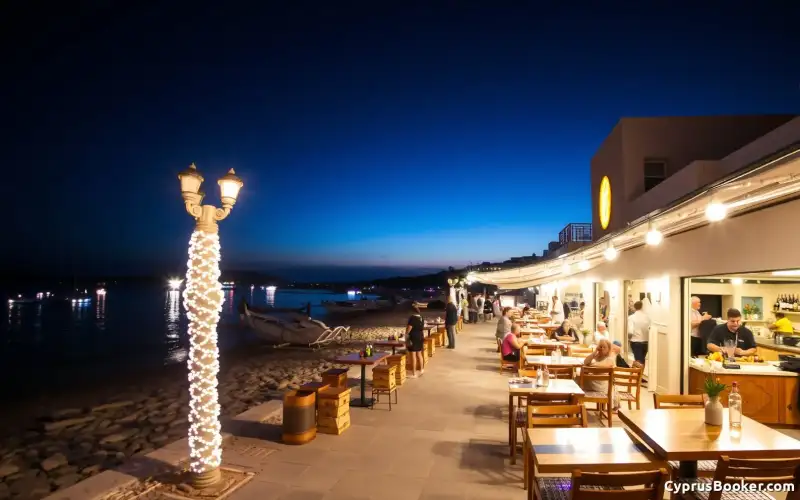
Last October, I watched a couple at a beachfront taverna pay €28 for a souvlaki that should have cost €8. They didn't know any better. The waiter smiled, took their order, and they'd never know the difference until they got home and checked their credit card statement. That's the Ayia Napa food trap in a nutshell—and it's entirely avoidable if you know where to look.
The resort has transformed since I first visited five years ago. Prices have climbed steadily, especially along the main strip where clubs and hotels cluster. But the real Cyprus—the one where you eat well, drink well, and keep your money in your pocket—still exists if you're willing to walk two streets inland and eat when locals eat.
Understanding Ayia Napa's Food Geography and Price Zones
Ayia Napa splits into three distinct eating zones, and your location matters more than you'd think. The beachfront strip—think Nissi Avenue and the main pedestrian drag—is where restaurants charge premium prices. A beer runs €5–7, a cocktail €10–14, and a main course €18–26. These aren't fine dining establishments; they're volume businesses banking on footfall and atmosphere.
Move one or two streets back toward the town centre, and prices drop 20–30% immediately. The same souvlaki costs €6–7 instead of €10–12. A beer settles at €3–4. This is where you'll find family-run tavernas, traditional mezedhes houses, and the occasional hidden gem that's been operating for fifteen years without changing much except the menu board.
The third zone—the residential area beyond the main tourist drag, around the old town and toward Larnaca Road—is where locals actually eat. Prices here feel almost shockingly cheap by British standards. A proper meze spread for two people costs €15–20. A souvlaki is €5. A beer is €2.50–3. The catch? These places rarely have English menus, and you'll be the only tourist in sight. That's exactly why they're worth finding.
Breakfast: Where to Spend €2–4 Instead of €12–15
Start your day at a Cypriot bakery, not your hotel. This single decision saves you more than you'd expect. Every neighbourhood in Ayia Napa has at least two or three traditional bakeries (psomadika). They open at 6:30 or 7 a.m., smell like heaven, and charge roughly €1–2 for a fresh pastry and €1.50 for a coffee.
Look for loukoumades (honey puffs), galaktoboureko (custard pastry), or koupes (meat-filled pastries). Pair any of these with a small Greek coffee or a cappuccino, and you've spent €3–4 total. Compare that to a hotel breakfast at €12–15 per person, and you're already ahead by €8–11 before 9 a.m.
The best bakeries sit on side streets rather than the main drag. Ask your hotel receptionist for the nearest one—they'll know it by name. Pro tip: go between 7 and 8 a.m. when the bread is still warm and the crowd is mostly local workers, not tourists.
If you want something more substantial, grab a cheese pie (tiropita) or a spinach pie (spanakopita) for €1.50–2 and eat it on a bench overlooking the marina. You've had breakfast for the price of a single cocktail.
Lunch Strategy: Supermarkets and Taverna Timing
Midday is when Ayia Napa becomes expensive by default. Restaurants know tourists are hungry after a beach morning, and they price accordingly. A simple salad and a drink at a beachfront place runs €14–18. You don't have to do this.
Supermarkets—particularly Carrefour and Alphamega—stock ready-made salads, grilled chicken, feta cheese, olives, bread, and cold drinks at prices that seem unreal. A lunch for two (salad, bread, cheese, fruit, water) costs €6–8. Grab it, take it to the beach or a quiet square, and you've just saved €20 compared to eating at a restaurant.
If you want a sit-down lunch without the premium, eat between 1 and 2 p.m. at a traditional taverna away from the main strip. This is when locals eat their main meal, and restaurants offer daily specials (mageirika) that aren't on the English menu. You'll see Cypriot families ordering plates of stifado (beef stew), pastitsio, or grilled fish for €7–10 per person. Ask your server what the special is, and order that. It's always better value than the printed menu.
Dinner: Tavernas Over Tourist Restaurants
Dinner is where most tourists hemorrhage money. A meal at a beachfront restaurant—starter, main, drink, dessert—easily costs €50–70 per person. You can eat better, more authentically, and spend half that.
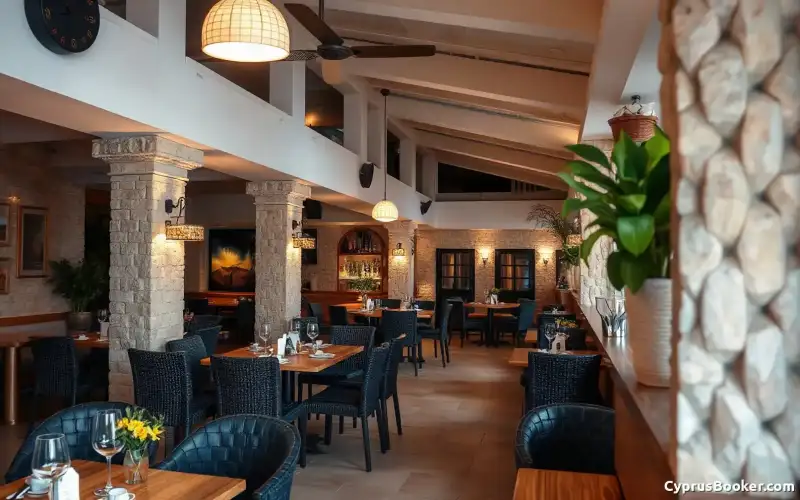
Seek out family-run tavernas in the old town area or on the quieter streets near the main square. These places have been feeding locals for decades. A typical dinner: saganaki (fried cheese, €4–5), keftedes (meatballs, €7–8), souvlaki (€6–8), grilled fish (€10–14 depending on type), a shared salad (€3–4), bread (€1), and a beer or glass of wine (€2.50–4). Two people eat well for €35–45 total, including drinks.
The quality is often superior to what you'll get on the strip. The meat is fresher, the portions are larger, and the owner actually cares whether you come back. I've eaten at a tiny taverna called Taverna tis Sappas (tucked away on a side street near the old harbour) three times now, and the meze spreads are extraordinary—grilled octopus, saganaki, keftedes, halloumi, grilled vegetables—for €18 per person.
Timing matters. Eat early (before 8 p.m.) and you'll see more locals and fewer package tourists. The food is the same, but the atmosphere is entirely different. You're eating dinner, not performing for Instagram.
Drinks: Happy Hours and Supermarket Strategy
Ayia Napa's bar scene is built on happy hours. From roughly 5 to 8 p.m., many bars run two-for-one offers or significant discounts. A pint that costs €6–7 during normal hours drops to €3–3.50 during happy hour. A cocktail that's €12–14 becomes €6–7. If you time your drinking around these windows, you'll spend roughly half what casual drinkers pay.
The best happy hours cluster around the main strip bars and the clubs. Check with your hotel or ask staff at your first bar—they'll know which places honour happy hour and which have quietly abandoned it. In 2026, reliable happy hour spots include bars near the main pedestrian street and around the harbour area, though these change seasonally.
For casual drinking at your accommodation or on the beach, buy from supermarkets. A bottle of local beer (Keo or Carlsberg) costs €1.50–2 in a shop versus €5–6 in a bar. A bottle of wine costs €4–7 versus €20–30 on a menu. If you're in a group and planning a relaxed evening, this approach saves money without sacrificing quality.
Spirits and mixers from supermarkets are similarly cheap. A bottle of local brandy or ouzo costs €8–12 and makes multiple drinks. Again, this only works if you're happy drinking at your hotel or a quiet spot—you can't bring your own drinks into clubs.
The Meze Advantage: More Food, Less Money
Meze—shared plates of small dishes—is the most efficient way to eat in Cyprus. Order five or six dishes between two people, and you'll spend €15–25 while eating more variety and better quality than a single main course would provide.
A typical meze spread includes saganaki, keftedes, grilled halloumi, olives, tzatziki, hummus, grilled vegetables, and bread. Each dish arrives as you talk and drink. It's how locals eat, and restaurants price it accordingly because it's their standard way of doing business, not a tourist novelty.
Avoid meze at beachfront restaurants. Order it at a proper taverna in town, where a meze for two costs €18–25 instead of €35–45. The food is the same; the location markup is eliminated.
What to Avoid: The Tourist Trap Restaurants
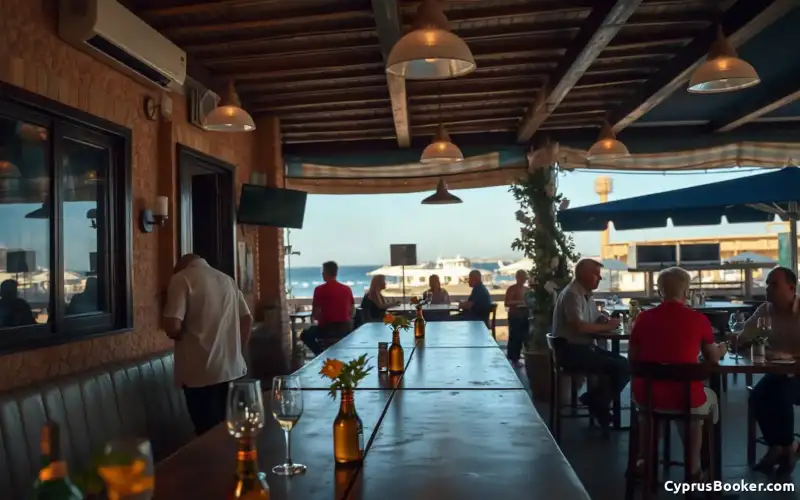
Any restaurant with a picture menu in multiple languages, a staff member outside trying to pull you in, or a view that costs more than the food—skip it. These places exist to extract money from people who don't know better. A souvlaki at these spots costs €10–14. A beer is €6–7. A simple salad is €12–15. The food is mediocre, the portions are small, and you'll feel ripped off before you've finished eating.
The beachfront strip is almost entirely these restaurants. Nissi Avenue and the main pedestrian drag are designed for maximum tourist traffic and maximum prices. Eat there once if you want the experience, but don't make it your routine.
Similarly, avoid restaurants directly attached to clubs or beach bars. They charge premium prices because they know you're already committed to spending money on the premises. Walk five minutes away and eat better for less.
Practical Money-Saving Tactics
Share plates. Portions in Cyprus are generous, and two people can easily split a main course and a side dish. You'll eat better and spend less.
Eat at local times. Lunch is 1–3 p.m., dinner is 8 p.m. or later. Eating at these times means eating when restaurants are serving locals, not tourists.
Ask for the local wine or beer, not imports. Keo beer and local wine cost half what imported brands do and are genuinely good.
Order water (nero) instead of soft drinks. It's free, cold, and comes automatically. Soft drinks cost €2–3 in restaurants.
Skip the tourist menus. If there's an English menu with pictures, ask if there's a Greek menu or daily specials. The best food is rarely on the English version.
Eat breakfast like a local (bakery), lunch like a tourist (supermarket), and dinner like you belong there (taverna). This simple pattern saves money while giving you genuine experiences.
Realistic 2026 Price Guide
Here's what you'll actually pay for common items across Ayia Napa in 2026:
| Item | Tourist Restaurant | Local Taverna | Supermarket |
|---|---|---|---|
| Souvlaki (single) | €10–14 | €6–8 | €5–6 (pre-made) |
| Pint of beer | €6–7 | €3–4 | €1.50–2 |
| Cocktail | €12–14 | €7–9 | N/A |
| Main course (fish/meat) | €20–28 | €10–14 | N/A |
| Meze for two | €35–50 | €18–25 | N/A |
| Coffee | €3–4 | €1.50–2 | €1–1.50 |
| Bakery pastry | €5–7 | €1–2 | €1–1.50 |
The gap between tourist and local pricing is dramatic. Choosing local tavernas over tourist restaurants saves roughly 40–50% on food. Adding supermarket breakfasts and strategic happy hour drinking pushes total savings toward 50–60% of what casual tourists spend.
Final Thoughts: Eat Like You Live There
The difference between a cheap Ayia Napa holiday and an expensive one isn't the resort itself—it's how you approach eating and drinking. The tourists paying €70 per person for dinner at a beachfront restaurant aren't having a better experience than the ones eating meze at a taverna for €22 per person. They're just spending more money.
Ayia Napa has excellent food if you know where to find it. Walk away from the main strip, eat when locals eat, and order what locals order. Your wallet will thank you, and you'll eat better than if you'd stuck to the obvious tourist places.
The bakery breakfast, the supermarket lunch, the taverna dinner, the happy hour drinks—this is how you travel well on a budget. It's not about deprivation; it's about being smart enough to avoid paying three times what something costs just because it has a sea view.
Comments (4 comments)