
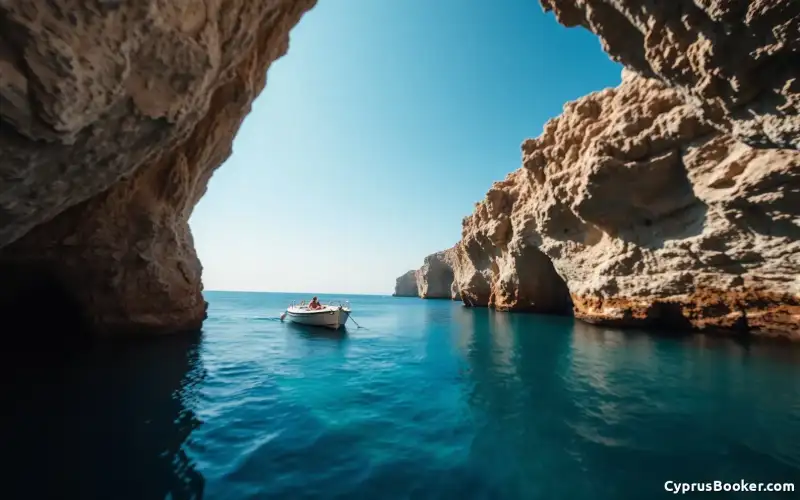
I'll never forget the moment my eldest asked, "Mum, why are we climbing over rocks in 38-degree heat?" We were about halfway to Cape Greco's sea caves, my youngest was complaining about his feet, and I was questioning every life choice that had led me to this sun-baked clifftop. Then we rounded a corner and there it was—a turquoise cavern carved into the limestone, waves echoing inside like nature's own cathedral. He shut up. We all did. That's when I understood why people trek out here every single summer, despite the sweat, the crowds, and the very real risk of turning your ankle on a loose rock.
Cape Greco isn't a gentle stroll. It's not Nissi Beach with its manicured sunbeds and cocktail bars. What it is, though, is genuine—a proper adventure that actually delivers on the promise of hidden Cyprus. And if you're planning to do it, you need to know exactly what you're getting into.
Overview: What You're Actually Signing Up For
Cape Greco sits about 10 kilometres south of Ayia Napa town centre, at the southern tip of the Famagusta district. The sea caves themselves are part of the Cape Greco National Forest Park, a protected area that stretches across 385 hectares of coastal cliffs and scrubland. The caves aren't just one dramatic opening—there are several, carved by centuries of wave action into the soft limestone. Some are accessible from the water if you're brave (or mad) enough to swim into them. Most visitors, though, hike in from the top.
The main trail to the caves starts from the Cape Greco car park, which sits about 50 metres above sea level. From there, it's roughly 1.5 kilometres to the cave viewpoint, though the path doesn't go in a straight line. It winds, it doubles back, it climbs, and it descends. The whole experience—walking there, exploring the caves, and walking back—takes most people between 2.5 and 4 hours, depending on fitness, crowds, and how long you linger.
Here's the thing nobody mentions in the glossy tourism websites: the trail is rocky. Not "wear trainers and you'll be fine" rocky. Proper, ankle-turningly, sole-scraping rocky. The path is made of compacted earth and limestone shale, and in summer, the rocks are hot enough to burn through a thin sole. I've seen grown men hobbling back to the car park in flip-flops, looking like they'd just crossed the Sahara. I've also seen people in proper hiking boots who moved like mountain goats. The difference matters.
The Trail Difficulty: Let's Be Honest
What the Terrain Actually Looks Like
The Cape Greco trail is rated as moderate-to-challenging, and that's fair. It's not a scramble requiring ropes and harnesses, but it's absolutely not a flat beach walk either. The path is narrow in places, with drops of 20-30 metres on one side and rocky outcrops on the other. In summer 2026, after a dry winter, the ground is loose and crumbly. Loose rocks shift under your feet. It's the kind of terrain that demands concentration—you can't zone out and daydream. You have to watch where you're stepping.
The ascents aren't steep, but they're relentless. There are no long flat sections where you can catch your breath and admire the view. It's up, down, up, down, with the sun beating down the whole time. The descent toward the caves is where most people struggle. It's only about 50 metres down, but it's steep enough that you need to use your hands to steady yourself on the rocks. Coming back up is harder than going down—your legs are tired, you're hot, and gravity is not your friend.
That said, the trail is well-trodden. Thousands of people walk it every summer. The path is marked with painted rocks and occasional signs. You won't get lost. You might get frustrated, sweaty, and regretful, but lost? No.
Fitness and Age Considerations
I've watched eight-year-olds bound along this trail like mountain goats, and I've seen fit-looking forty-year-olds struggling after 20 minutes. It depends on your fitness level, your acclimatisation to heat, and honestly, your stubbornness. My advice: if you can comfortably walk for an hour without stopping, you can do this hike. If you're used to walking on uneven terrain, you'll find it easier. If you have knee or ankle problems, think carefully before committing.
For families with younger children—say, under six—it's doable but requires patience and realistic expectations. My five-year-old made it, but we took it slow, we stopped frequently, and we bribed him with snacks and the promise of ice cream at the end. We also accepted that we might not make it all the way to the caves. You need to be flexible.
The Crowds Factor
Here's what the tourism board doesn't emphasise: Cape Greco is popular. On a typical summer day in July or August, you'll share the trail with dozens of other people. On a hot day, it can feel like a queue with a view. The narrow sections become bottlenecks. People stop in the middle of the path to take selfies. You'll find yourself waiting for someone to move so you can pass, or doing that awkward sideways shuffle when two groups meet on a narrow bit.
The caves themselves get crowded by mid-morning. If you want photos without strangers in the background, you need to be there early. I'm talking 7:30 or 8 a.m. early. Which brings us to timing.
The Best Time to Go (And Why Morning Matters)
Summer Heat and the Clock
Ayia Napa in summer hits 35-38 degrees Celsius regularly. On the Cape Greco trail, with minimal shade and full exposure to the sun, it feels hotter. The reflected heat from the pale limestone is intense. By 11 a.m., the trail is like an oven. By 1 p.m., it's genuinely dangerous for anyone not used to extreme heat.
Start early. Genuinely early. 7:30 a.m. is ideal. You'll be on the trail when it's still relatively cool, the crowds are minimal, and you'll have time to explore the caves and get back before the worst heat hits. By 10 a.m., you'll be back at the car park, ready for a cold drink and breakfast.
If you can't manage early morning—and I get it, holidays are supposed to be relaxing—then late afternoon is your second option. After 4 p.m., the sun is lower, the heat is less intense, and the crowds thin out. You'll finish your hike as the light is getting golden, which is actually lovely for photos. The downside: you're hiking back in the dark if you linger, which isn't ideal on rocky terrain.
Seasonal Variations and Weather
June and September are genuinely better than July and August. The heat is slightly less oppressive, the sea is still warm, and the crowds are marginally smaller. If you're visiting Ayia Napa in these shoulder months, prioritise Cape Greco.
Wind is a factor in spring and early summer. Cape Greco is exposed, and strong winds can make the narrow sections feel precarious. Check the forecast. If it's windy, consider a different beach.
What to Pack: The Essentials and the Honest Mistakes
The Non-Negotiables
Water is the most important thing. Not one small bottle. A proper litre-and-a-half minimum, ideally two litres if you're doing this in peak summer heat. Dehydration creeps up on you in the heat, and there's nowhere to refill on the trail. I've seen people turn back because they ran out of water. Don't be that person.
Sun protection is next. High SPF sunscreen (50+), a hat, and sunglasses. The sun reflects off the pale rocks, so you're getting hit from above and below. Reapply sunscreen halfway through. Bring a lightweight long-sleeved top if you have one—the sun protection is worth the slight extra warmth.
Proper footwear is crucial. Trainers with good grip and ankle support are ideal. Hiking boots are overkill unless you're planning to scramble. Flip-flops and sandals are a disaster. I've seen people in Crocs attempt this trail. They don't make it far. Your feet will thank you for good trainers with thick soles.
A small backpack—10-15 litres—is enough. You don't need much. Phone, keys, wallet, water, snacks, sunscreen, a lightweight rain jacket (unlikely but possible), and maybe a small first aid kit with plasters for blisters. That's it.
The Nice-to-Haves That Make a Difference
Electrolyte tablets or a sports drink mix are genuinely useful. Plain water is fine, but if you're sweating heavily, your body needs salt and minerals too. A couple of sachets in your backpack don't weigh anything.
Snacks matter more than you'd think. Energy bars, nuts, dried fruit, or a banana. The combination of heat and exertion burns calories quickly. I've watched people get grumpy and tired, then perk up completely after eating something. It's not just about hunger—it's about maintaining energy levels in the heat.
A small towel or microfibre cloth is useful if you're planning to swim in the caves or paddle in the shallows. The caves stay cool and the water is inviting. A quick splash makes the walk back feel less exhausting.
The Mistakes I've Made (So You Don't Have To)
Don't bring your entire holiday wardrobe. One woman I met had a full-size rucksack with a change of clothes, makeup, and what looked like a week's worth of supplies. She made it about 500 metres before turning back. Pack light.
Don't assume you can wing it without water. I know someone who thought "I'll just drink at the caves." There's no water at the caves. He spent the last 20 minutes of the walk in genuine distress, feeling faint and dizzy. It wasn't dramatic or fun.
Don't wear new trainers. Break them in first. A blister halfway along this trail is miserable. Thick socks help too—they cushion your feet and reduce friction.
The Caves Themselves: What You'll Actually See
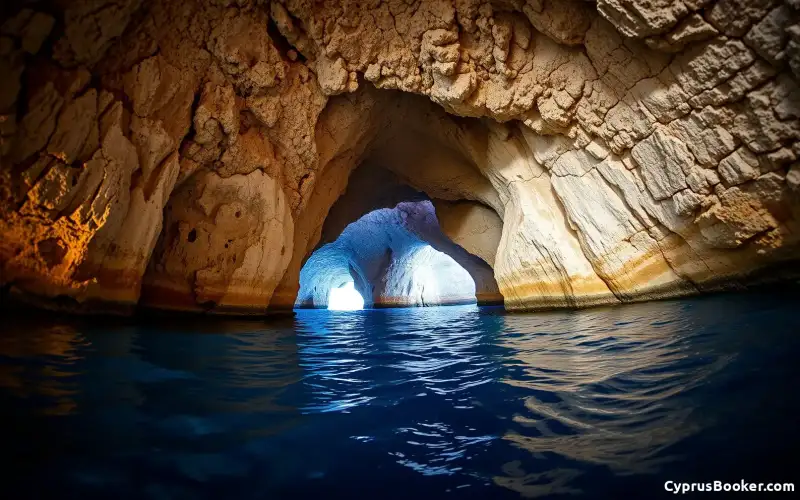
The main sea cave is impressive. It's a proper cavern, maybe 15 metres deep and 10 metres high, with a natural opening to the sea. The water inside is a stunning turquoise, and in the morning light, the colours are genuinely beautiful. The cave walls are smooth limestone, sculpted by centuries of wave action. It's the kind of place that makes you understand why people bother with the hike.
There are smaller caves nearby, and the whole area is worth exploring carefully. The rocks are slippery in places, especially near the water, so watch your footing. The sea can be rough—on windy days, waves crash into the caves dramatically. On calm days, it's peaceful and almost meditative.
Swimming in the caves is possible but requires caution. The water is deep, the rocks are sharp, and the sea can turn rough quickly. If you're a confident swimmer and the sea is calm, it's an amazing experience. If you're not sure, paddle in the shallows instead. Either way, bring a towel or change of clothes if you're planning to get wet.
Pros: Why This Hike Is Actually Worth It
The Views Are Genuinely Stunning
You don't get views like this from a beach resort. The Cape Greco coastline is dramatic—high cliffs, turquoise water, and a sense of wildness that you don't find at Nissi or Konnos. On a clear day, you can see all the way across the bay toward Protaras. It's the kind of landscape that makes you remember why you came to Cyprus in the first place.
It Feels Like an Adventure, Not a Tourist Tick-Box
This isn't a manufactured experience. There are no souvenir shops or overpriced beachfront restaurants. It's genuine exploration. Your kids will remember this more than they remember lying on a sunbed. I promise you that.
The Physical Challenge Is Actually Rewarding
There's something deeply satisfying about pushing yourself physically and achieving something. The hike is hard enough to feel like an accomplishment, but not so hard that it's miserable. Your body feels stronger afterward. Your mood is better. It's proper exercise disguised as a holiday.
The Caves Are Genuinely Impressive
Photographs don't do them justice. The scale, the colours, the sound of the sea echoing inside—you need to be there in person to appreciate it. It's one of those experiences that justifies the effort.
You'll Feel Like You've Discovered Something Secret
Even though thousands of people do this hike every year, it still feels like you've found something hidden. The sense of discovery is part of the appeal. You're not on a crowded beach with hundreds of other tourists. You're exploring caves that have existed for thousands of years.
Cons: The Honest Downsides
The Heat Is Genuinely Tough
There's no getting around it. If you struggle in extreme heat, this hike will be unpleasant. Even starting early, you'll be hot and sweaty by the time you reach the caves. If you're not accustomed to heat, it can feel overwhelming. Older visitors and anyone with heat sensitivity should think carefully before committing.
The Rocky Terrain Is Unforgiving
A twisted ankle here means a long, painful walk back to the car park with no help nearby. The path is narrow in places, and there's genuine exposure. If you're afraid of heights or have balance issues, this will stress you out. It's not dangerous if you're careful, but it demands respect and attention.
The Crowds Diminish the Experience
In peak summer, the trail feels busy. You're queuing on narrow sections. The caves are full of people taking selfies. If you're seeking solitude or a sense of wilderness, you'll be disappointed. The experience is still worthwhile, but it's not the peaceful adventure you might imagine.
It's Physically Demanding
This isn't a stroll. Your legs will ache the next day, especially your calves and quads. If you're not used to walking on uneven terrain, you'll feel it. It's not dangerous or impossible, but it's tiring. Go in with realistic expectations about your fitness level.
There's Limited Shade and Nowhere to Rest Properly
The trail has virtually no shade. There are no benches or shelters. If you need to sit down and rest, you're sitting on rocks in the full sun. It's not comfortable. On a hot day, this becomes a real issue, especially for children or older visitors.
Who It's For (And Who It Isn't)
It's Perfect For
Families with kids aged 7 and up who are reasonably fit and enjoy outdoor activities. Couples looking for something more adventurous than a beach day. Groups of friends wanting to do something memorable. Anyone who enjoys hiking and doesn't mind heat. People visiting in June or September when the weather is slightly less extreme.
It's Not Ideal For
Very young children (under five) unless you're prepared for a slow pace and possible disappointment if they can't make it all the way. People with significant mobility issues or joint problems. Anyone who struggles badly with heat. Visitors in peak July-August heat who prefer comfort over adventure. People looking for a relaxing beach day.
Verdict: Is It Worth the Effort?
Yes. Absolutely yes. The Cape Greco sea caves are one of the best things to do in the Ayia Napa area, and the hike itself is part of the appeal. It's not easy, and it's not for everyone, but if you're reasonably fit, can handle heat, and want to experience something genuinely memorable, do it.
Start early, bring plenty of water, wear proper trainers, and don't overthink it. The discomfort is temporary. The memory of those turquoise caves, the dramatic cliffs, and the sense of having done something real—that lasts. When you're back in Manchester in September, sitting in the drizzle, you'll remember that morning at Cape Greco and smile.
My kids still talk about it. Not about the sunbeds at Nissi. Not about the water slides at the aqua park. The caves. That's what they remember. That's what makes it worth the sweat.
Comments (4 comments)