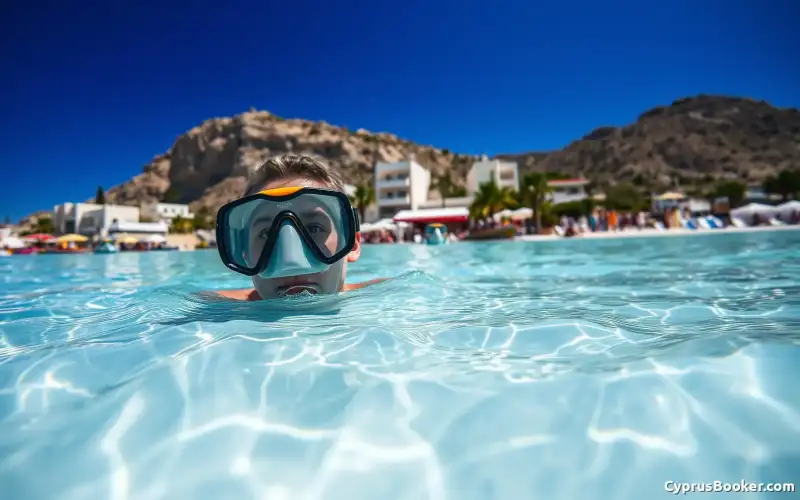
I'll never forget the first time I ducked my head underwater at Makronissos Beach in 2010. My mate Sarah had dragged me out of a beach bar at 11 AM—which felt like a crime against hangover recovery—and thrust a snorkel into my hands. Within thirty seconds, I was staring at a school of bream the size of dinner plates, and I was hooked. Not literally, thankfully, but you get the idea. Sixteen years later, I've snorkelled nearly every decent spot between Ayia Napa and Cape Greco, and I've learned exactly how to do it without getting absolutely fleeced by the beach hut operators.
The thing about snorkelling here is simple: the water is clearer than your ex's browser history, the fish are curious rather than frightened, and you can absolutely do it on a budget if you know where to look. The problem is that most first-timers wander up to the nearest beach bar, get quoted £40 for a mask-and-snorkel combo that cost the owner about £6, and assume they've had a rip-off. Spoiler: they have. But it doesn't have to be that way.
Step 1: Understand What You Actually Need
Before you spend a single pound, let's talk about what snorkelling actually requires. You need three things: a mask that fits your face properly, a snorkel tube, and fins. That's it. You don't need a wetsuit unless you're planning to stay in the water for hours or you get cold easily—and in July and August, the Mediterranean is about 27°C, so you'll be fine in just your swimwear.
The mask is the critical bit. A poor fit means water leaks in, you get frustrated, and you spend the whole time adjusting instead of enjoying the fish. Most beach bars have masks that fit about 40% of faces properly, which is why so many people have a miserable first experience. The snorkel tube is straightforward—it's a bent piece of plastic with a mouthpiece. Fins are optional for casual snorkelling in shallow water, but they make you more efficient and less likely to kick up sand and scare everything away.
Here's what I always tell people: your mask needs to create a seal around your eye sockets without being so tight it gives you a headache. Put it on without the strap, press it gently to your face, and breathe in slightly through your nose. If it stays in place for a few seconds, it fits. If it drops immediately, it doesn't. Simple as that.
Step 2: Where to Hire Gear Without Getting Ripped Off
This is where I save you actual money. The beach bars along Nissi Beach and Makronissos will charge you £35–£45 for a basic snorkel set for a few hours. It's criminal. Here's the honest breakdown of your options:
- Sports shops in town (Ayia Napa center): Walk into any of the dive shops along Leoforos Agiou Anargyroi—there are at least four within 200 metres of the main square. They rent full snorkel sets for £12–£18 per day. Yes, per day, not per hour. They're used to tourists, they have proper equipment, and the masks actually fit different head shapes. I use Dive Point or Blue Dolphin Diving most often. They're about 10 minutes from Nissi Beach by car.
- Supermarket rental kiosks: Carrefour and Alphamega have small rental counters near their beach sections. Expect to pay £15–£20 for a set. The quality is hit-and-miss, but the staff know if something doesn't fit properly.
- Beach huts and bars: These are your most expensive option, but they're convenient if you're already settled on a lounger. Negotiate hard. I've gotten £20 sets down to £12 by asking if they'll throw in a second day for the same price. Most will, because they'd rather rent to you twice than lose the sale.
- Buy your own: If you're staying for a week or longer, just buy a set. Decathlon (if you can get to Limassol) or any tourist shop sells basic snorkel sets for £25–£35. You'll use it for the rest of your holiday, and you can leave it behind for the next person or bring it home. It pays for itself after two rentals.
My personal move? I always rent from a town shop for £15, use it for three days, and return it. The owners know me by now, so they don't even charge me the full amount. Build a relationship, and things get cheaper.
Step 3: The Best Snorkelling Spots Around Ayia Napa
Not all underwater real estate is created equal. Some spots are crowded, some are murky, and some are absolutely magical. Here's where to actually go:
Cape Greco (Cavo Greco) – The Gold Standard
If you're serious about snorkelling, Cape Greco is your destination. It's about 15 minutes' drive south of Ayia Napa center, and the water is so clear you'll swear someone cleaned it that morning. The sea caves are the main attraction—there are three main ones you can safely snorkel around, and they're home to groupers, octopuses (if you're lucky), and thousands of smaller fish.
The catch? You need to go early. I'm talking 8 AM or 9 AM, before the boat tours arrive and stir up the seabed. Park at the Cape Greco car park (€2 for the day), walk down to the rocky shore, and enter the water from the eastern side near the cliffs. The water is shallow for the first 20 metres, then drops away. You can see down 15–20 metres easily on a clear day.
Avoid the western side where the tour boats moor—it's crowded, noisy, and the fish have learned to hide. The eastern caves are quieter and the marine life is less spooked. I've seen seahorses there in May and June.
Makronissos Beach – Beginner-Friendly
This is where I'd send anyone who's never snorkelled before. It's a sandy beach with a gentle slope, so you can wade out slowly and get used to breathing through the snorkel without feeling like you're in the deep end immediately. The fish here are used to humans, so they're curious rather than terrified.
The left side of the beach (facing the sea) has a small reef about 30 metres out with groupers and bream. Snorkel straight out from the lifeguard station. You'll be in about 4–5 metres of water, which is perfect for learning. The downside is that it's busy in summer, so again, get there early or go in May/June when the weather is warm but the crowds haven't arrived.
Limanaki Beach – The Hidden Gem
This tiny cove is about 10 minutes' drive east of Nissi Beach, and most tourists never find it. It's a small sandy beach backed by a taverna, and the water shelves gently into a rocky underwater landscape. You'll see bream, wrasse, and occasionally larger fish like amberjack. It's quieter than Makronissos, and the taverna does decent fresh fish if you want lunch afterward.
Nissi Beach – Skip It for Snorkelling
I know this is controversial, but Nissi is a nightmare for snorkelling. Yes, it's beautiful and famous, and yes, there are fish. But it's also absolutely rammed with sunbathers, paddleboarders, and people wading around in the shallows. The seabed is mostly sand, so visibility isn't great, and any fish worth seeing have learned to avoid the chaos. Go there for the beach bar scene, not for snorkelling.
Step 4: Seasonal Timing and Water Conditions
Snorkelling in Ayia Napa works year-round, but some times are genuinely better than others. Here's the honest breakdown:
| Season | Water Temp | Visibility | Crowds | Best For |
|---|---|---|---|---|
| May–June | 22–24°C | Excellent | Moderate | First-timers, ideal conditions |
| July–August | 26–27°C | Good | Very High | Warm water, but arrive early |
| September–October | 24–25°C | Very Good | Low | Experienced snorkellers, fewer tourists |
| November–April | 15–18°C | Variable | Very Low | Wetsuit required, experienced only |
My recommendation? Go in May or September. The water is warm enough that you don't need a wetsuit, visibility is excellent, and you won't be fighting crowds. June is also decent, but it's when families start arriving for school holidays.
Step 5: Safety and Practical Tips for Beginners
Right, let's talk about not dying. Snorkelling is incredibly safe if you follow basic rules, and incredibly stupid if you don't.
- Never snorkel alone. Always go with at least one other person. If something goes wrong—you panic, you get a cramp, your mask floods—you need someone there.
- Tell someone on shore where you're going and when you'll be back. Leave your phone with a mate or the taverna owner.
- Don't go out beyond your depth if you can't swim confidently. Stick to areas where you can stand up if you need to. This isn't a limitation—some of the best snorkelling in Ayia Napa is in 2–4 metres of water.
- Watch the weather. If the sea looks rough or the sky is dark, don't go in. The Mediterranean can change fast, and a calm morning can become choppy by afternoon. Check the forecast before you leave your hotel.
- Wear sunscreen on your back and shoulders. You'll be floating on the surface for hours, and sunburn is no joke. Reapply after an hour in the water.
- Don't touch anything underwater. Not the sea urchins, not the rocks, not the fish. Look but don't touch. Sea urchins are spiky and painful, and disturbing marine life stresses them out.
- Respect the marine reserve at Cape Greco. There are rules about where you can snorkel. The main caves are fine, but don't venture into restricted areas marked by buoys.
I've seen people panic because they forgot how to breathe through a snorkel, or because they got water in their mouth. It happens. The trick is to stay calm, stop, stand up, clear your snorkel, and try again. Your instinct will be to panic, but panic is what causes actual problems.
Step 6: What to Bring and What to Leave Behind
Pack smart. You need:
- Snorkel gear (mask, snorkel, fins)
- Towel
- Sunscreen (high SPF)
- Water bottle (stay hydrated)
- Flip-flops or water shoes (rocky entry points hurt)
- Small rucksack to carry it all
Leave behind: expensive watches, jewelry, your phone (unless it's waterproof), and any expectations of looking cool in underwater photos. You'll look ridiculous with a snorkel in your mouth, and that's part of the fun.
Step 7: Budget Breakdown for a Day's Snorkelling
Here's what you're actually spending if you do this right in 2026:
- Gear hire (town shop): £15
- Parking (Cape Greco): £2
- Lunch at a taverna afterward: £12–£18
- Ice cream because you've earned it: £3–£4
- Total: £32–£39
Compare that to the £80+ you'd spend if you hired from a beach bar, bought overpriced food at the beach club, and got talked into a guided tour you didn't need. The difference is huge, and the experience is identical.
Bonus Tip: Go in the Evening
Here's something most people don't think about: snorkelling at 5 PM or 6 PM, when the afternoon sun is lower, is magical. The light hits the water differently, and the fish are more active as they prepare for evening. You'll have the water almost to yourself because everyone's at the beach bars. The water is still warm, and you'll get some of the best photos of the day. Plus, you can snorkel, dry off, and head straight to dinner without rushing.
Conclusion
Snorkelling in Ayia Napa isn't complicated or expensive if you know where to go and what to avoid. Rent your gear from a town shop, get to Cape Greco before 9 AM, and spend the morning watching fish that have never seen a snorkel before. You'll spend less money than most tourists, see more marine life, and actually enjoy yourself instead of standing in a queue at Nissi Beach.
The water here is genuinely special. After 16 years of exploring these spots, I still get excited every time I put my mask on. Once you've seen a grouper the size of your head, or watched an octopus change color, you'll understand why people come back to Ayia Napa year after year. It's not just the nightlife or the beaches—it's the stuff underneath the water that makes this place worth visiting.
Comments (4 comments)