
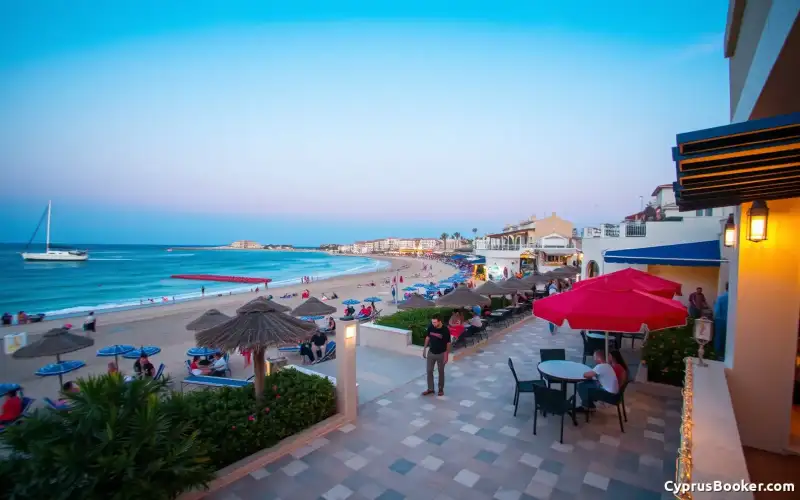
Back in 2015, I watched my mate Dave complete his first property purchase in Ayia Napa. He'd spent three weeks here on holiday, fallen in love with a beachfront apartment, and decided to buy it on the spot. Fast forward six months of confusion, unexpected costs, and a solicitor who barely spoke English, and he finally got his keys. Since then, I've helped dozens of British friends navigate this process, and honestly, it doesn't have to be nearly as chaotic as Dave's experience was. The Cyprus property market has matured, the rules are clearer, and if you know what to expect, buying here is actually quite straightforward.
What You'll Learn in This Guide
This guide walks you through every single stage of buying property in Ayia Napa as a UK first-timer. We're talking about the actual process – not the glossy brochure version, but the real one with timescales, typical costs, and the bits nobody tells you about until you're halfway through. By the end, you'll understand what a title deed actually means, why you need a Cypriot solicitor even though you've got one in Brighton, and roughly how long this whole thing takes from viewing to keys in hand.
Whether you're after a holiday home to rent out, a retirement bolt-hole, or just somewhere to escape the British winter, the process is the same. The difference is in the numbers and the tax implications, which we'll touch on.
Prerequisites: What You Need Before You Start
Right, before you even think about making an offer, there are several things you need to have sorted or at least understand.
A Valid Passport and Tax Number
You'll need your UK passport to be valid for at least six months beyond your purchase date. Cyprus will also issue you a tax identification number (AFM). Don't panic – this is straightforward and your solicitor will handle most of it, but you need to know it's coming. This number is essential for everything from opening a bank account to paying property taxes.
Proof of Funds
You'll need to prove where your money is coming from. This isn't about being dodgy – it's anti-money-laundering legislation. Get statements from your UK bank showing the funds you're planning to use. If you're getting a mortgage, your lender will require this anyway. If you're paying cash, the Cypriot authorities will want to see it. Expect to provide bank statements going back three months.
Understanding Exchange Rates
Property prices in Cyprus are quoted in euros. You'll be paying in euros. If you're transferring from the UK, exchange rates matter. A one-cent movement in the euro can cost you hundreds on a €300,000 purchase. Many British buyers use specialist currency brokers rather than their high street bank – the savings are genuine.
A Realistic Budget
Here's what catches people out: the purchase price isn't the whole story. Budget for these additional costs on top of your property price:
- Solicitor's fees: typically €1,000–€2,500 depending on property value
- Title deed registration: €500–€1,200
- Stamp duty: 0.1% of the property value (this is actually tiny compared to UK)
- VAT or transfer tax: 0–19% depending on whether it's a new or resale property (this is the big one – more on this later)
- Survey and inspection: €300–€600 (optional but recommended)
- Bank transfer fees: €50–€200
A rough rule of thumb: add 8–12% to your purchase price for new properties (VAT), or 3–5% for resale properties (transfer tax and other costs). If you're buying a brand-new apartment in a development, it's closer to 12%. If you're buying an older villa from a private seller, it's closer to 3–4%.
Mortgage Options (If Needed)
Not all UK lenders will mortgage property in Cyprus, but many will. You're typically looking at 60–70% loan-to-value, so you'll need a decent deposit. Interest rates are usually 1–2% higher than UK mortgages. Cypriot banks also offer mortgages to non-residents, often at slightly better rates than UK banks, but you'll need to open a Cypriot bank account. Get mortgage in principle from your UK lender before you start seriously house hunting – it shows sellers you're serious.
Time Off Work
You'll need to be in Cyprus for the final signing at the land registry. This typically takes one day, but you'll want to be there for at least three days to handle last-minute issues and meet your solicitor face-to-face. Budget for a trip to Cyprus during the signing phase.
Step 1: Search and Shortlist Properties
This is the fun bit. You've got several options for finding properties in Ayia Napa. The main routes are online portals (Spareroom, Cypriot property websites), local estate agents (there are dozens in Ayia Napa town centre), and word of mouth.
My honest advice: use the online portals to get a sense of pricing and what's available, but then contact local agents directly. The best properties often don't make it onto the big portals – they sell through local networks. In Ayia Napa specifically, most agents cluster around the main square and along Makedonias Street. Pop into three or four offices and tell them what you're looking for.
When you're looking at listings, pay attention to the location. Ayia Napa isn't huge, but there's a massive difference between beachfront properties (expensive, noisy in summer, great for rentals), properties in the town centre (walkable to bars and restaurants, but can be touristy), and properties in the quieter residential areas heading towards Protaras (cheaper, more peaceful, harder to rent out). Also check whether the property is freehold (you own the land) or leasehold (you own the building but lease the land – usually 99 years, which is fine).
Viewing properties takes time. Don't rush. I typically recommend viewing at least 8–10 properties before making an offer. Prices can vary wildly even for similar-sized apartments in the same area, and you need to understand the market. Visit properties at different times of day – that quiet apartment might be next to a bar that pumps until 3 a.m.
Step 2: Get a Survey and Make an Offer
Once you've found something you like, get a survey done. This costs €300–€600 and is absolutely worth it. A Cypriot surveyor will check the structure, electrics, plumbing, and highlight any issues. Damp is surprisingly common in older properties near the coast. Dodgy wiring is another frequent problem. You need to know what you're buying before you commit.
After the survey, make your offer. In Cyprus, there's usually room for negotiation, especially on resale properties. If the asking price is €250,000, offering €240,000 isn't unreasonable. New developments are less flexible on price, but they might throw in upgrades or furniture. Your offer should be made through an estate agent or directly to the seller's solicitor. Get it in writing – verbal agreements mean nothing.
The seller will either accept, reject, or counter-offer. This back-and-forth can take a few days or a few weeks. Once you've agreed on a price, you'll be asked to pay a reservation fee or put down a non-refundable deposit, typically 3–5% of the purchase price. This secures the property while you sort out the legal side. Don't hand over this money until you've got a signed agreement from the seller's solicitor outlining exactly what happens if either party pulls out.
Step 3: Instruct a Cypriot Solicitor
This is crucial. You need a Cypriot solicitor – not your UK solicitor, not an online service, but an actual Cypriot lawyer who understands local property law. Your UK solicitor can't act on your behalf in Cyprus because they're not qualified in Cypriot law. This feels like an extra cost, but it's non-negotiable and actually protects you.
How do you find one? Ask your estate agent for recommendations. Ask other British expats in Ayia Napa. Check online reviews. A good solicitor will be fluent in English, responsive to emails, and willing to explain things clearly. You want someone who's handled dozens of sales to British buyers – they'll know all the pitfalls.
Your solicitor's job is to:
- Verify the seller's ownership and check the title deed is clean (no liens, no disputes)
- Ensure the property has all necessary planning permissions and building permits
- Handle all the paperwork and registration
- Arrange the signing at the land registry
- Transfer the money and get you the keys
Expect to pay €1,500–€2,500 in solicitor's fees, depending on property value. Some solicitors charge a flat fee, others a percentage – ask upfront. You'll also pay their costs separately (registry fees, searches, etc.), which typically add another €500–€1,200.
Step 4: Title Deed Verification and Due Diligence
Here's where things get properly legal. Your solicitor will obtain and review the title deed (the document proving the seller owns the property). In Cyprus, title deeds are registered at the Land Registry, and this is a proper, formal process. Unlike the UK where the Land Registry is computerised, Cyprus still has physical title deeds in some cases, though this is changing.
Your solicitor will check:
- The deed is in the seller's name with no disputes or claims against it
- There are no outstanding mortgages or liens on the property
- All property taxes (ENFIA – the annual property tax) are paid up to date
- Building permits were issued and the property was built legally
- There are no planning violations or issues with neighbours' rights
This process typically takes 2–4 weeks. If everything is clean, you'll get the all-clear. If there are issues – and sometimes there are – your solicitor will flag them and you can negotiate with the seller to fix them or reduce the price accordingly.
One thing that catches British buyers out: in Cyprus, not all properties have up-to-date building permits, especially older villas and apartments built in the 1990s and early 2000s. This doesn't necessarily mean you can't buy the property, but it might affect your ability to renovate or your insurance. Discuss this with your solicitor and your surveyor.
Step 5: Arrange Financing and Open a Bank Account
If you're getting a mortgage, your lender will need to be satisfied with the title deed verification. Once your solicitor gives the all-clear, you can proceed with the mortgage application. Cypriot banks are usually quicker than UK lenders – expect 2–3 weeks from application to approval for a straightforward case.
You'll need a Cypriot bank account to receive the mortgage funds and to pay the final purchase costs. Opening an account is simple – bring your passport, proof of address (a utility bill from the UK is fine), and proof of funds. Most banks take 2–3 days to open an account. Popular banks for expats include the Bank of Cyprus, Hellenic Bank, and Alpha Bank. Shop around for the best mortgage rates – they vary between banks.
If you're paying cash, transfer the money to a Cypriot bank account in your name a few days before completion. Don't send it directly to your solicitor's account – it needs to be in your account first, then your solicitor will transfer it on your instruction. This protects you legally.
Step 6: Exchange of Contracts and Pre-Completion Checks
Once the title deed is verified and financing is sorted, your solicitor will prepare the contract. In Cyprus, this is called the



Comments (4 comments)