
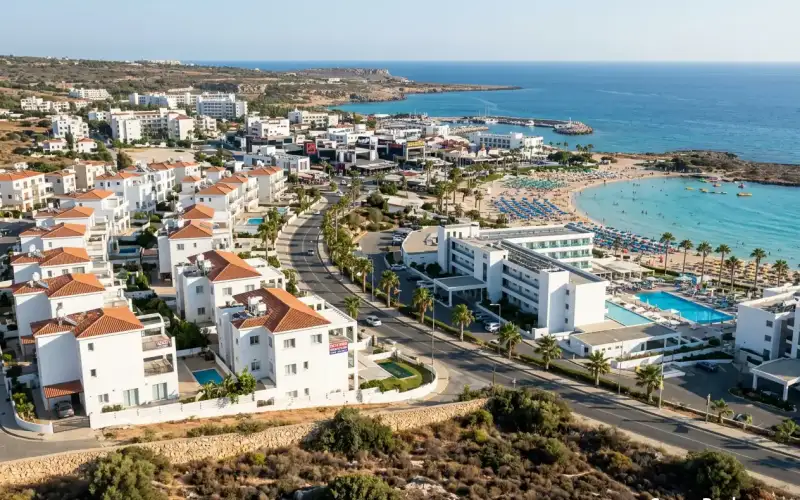
The Night I Realised Property Ownership Wasn't Straightforward Anymore
It was summer 2022, and I was at Carwash nightclub with a group of friends from Manchester who'd been coming to Ayia Napa every July for fifteen years. Between drinks, they mentioned they'd been trying to buy a small apartment near the marina—something they'd spotted back in 2019 and had been eyeing ever since. "We made an offer," one of them said, "but the lawyer told us we need something called a 'non-EU certificate' now. Apparently Brexit changed everything." I'd never heard of it. Neither had they. That conversation sparked something—I realised thousands of British buyers were probably in the same boat, confused about what had actually changed since January 2020.
The property market in Ayia Napa has always attracted British money. It's the closest Mediterranean resort to the UK, the weather's guaranteed, and for decades it felt like an extension of the British seaside. But Brexit wasn't just political theatre—it fundamentally rewired how British citizens buy property in Cyprus. The rules changed. The paperwork multiplied. Currency fluctuations suddenly mattered more than ever. Yet most guides online were either outdated or written in corporate jargon that made your head spin.
What Actually Changed After Brexit
The Non-EU Certificate: Your New Best Friend (or Nightmare)
Before 2020, British buyers had it relatively straightforward. EU citizenship meant property purchase was treated almost like buying in the UK—you could own land, there were minimal restrictions, and paperwork was simpler. That ended on 31 December 2019. Now, as a UK citizen, you need what's called a "non-EU certificate" to buy residential property in Cyprus. This isn't optional. It's not a suggestion. It's the gatekeeping document.
Here's what it actually means: the Cypriot government wants to verify you're a legitimate buyer, not a shell company or money launderer, and that you're not circumventing ownership laws. The process involves submitting your application to the Civil Registry and Registrar's Office in Nicosia, along with proof of identity, proof of funds, and a police clearance certificate from the UK. Your solicitor handles most of this, but it takes time—typically 4-8 weeks, sometimes longer if the office is backed up. There's no fee, but there is bureaucratic drag.
The certificate itself doesn't guarantee you can buy anything. It just means you're allowed to try. You still need to comply with ownership limits.
The Ownership Limits: How Much Land Can You Actually Own?
This is where it gets fiddly. Non-EU citizens (which now includes us Brits) can own residential property up to a maximum of 0.25 hectares of land. That's roughly 2,500 square metres, or about the size of three and a half tennis courts. For context, most holiday apartments in Ayia Napa sit on plots well under this limit, so you're fine if you're buying a flat. But if you're dreaming of a villa with a sprawling garden and a pool—something a lot of British buyers fantasise about—you need to check the actual land measurement carefully.
The restriction applies per property. So technically, you could own multiple properties as long as each one stays under the 0.25-hectare limit. But there's a catch: the Cypriot authorities can refuse your application if they think you're trying to accumulate too much land overall. It's vague, which is frustrating, but in practice, most holiday home buyers don't hit this wall. The real issue comes if you inherit property from a Cypriot spouse or family member—inheritance rules are different, and you could end up with more land than the limit allows, which creates a legal headache.
The Money Side: Currency and Costs
GBP-EUR Fluctuations and What They Mean for Your Budget
In January 2020, one pound bought you roughly 1.18 euros. By late 2024, that had dropped to around 1.15. By 2026, the rate's hovering between 1.12 and 1.17, depending on the week. For a property costing €300,000, that difference between 1.12 and 1.18 means you're looking at anywhere from £254,237 to £267,857. That's a £13,620 swing just from currency timing. It sounds abstract until you're actually transferring the money.
I've watched friends get burned by this. One couple from Bristol locked in a price in euros in January 2025, then the pound weakened over six months while their mortgage offer sat pending. By the time they exchanged contracts, they owed an extra £8,000. The lesson: if you're buying in 2026, don't assume the exchange rate stays stable. Talk to your mortgage broker about forward contracts—they let you lock in a rate for 30-90 days, which costs a small fee but removes the guesswork.
The Actual Costs: What to Budget Beyond the Purchase Price
Property prices in Ayia Napa vary wildly depending on location and condition. A one-bedroom apartment near the town centre runs €180,000-€250,000. A two-bedroom with sea views costs €300,000-€450,000. A villa with its own pool and garden? You're looking at €600,000 upwards. But the purchase price is only part of the equation.
Here's what you actually owe:
- Transfer tax: 0% on the first €85,000, then 3% on the next €85,000, then 5% on everything above €170,000. On a €300,000 property, you're paying roughly €8,250 in transfer tax.
- Legal fees: Your solicitor charges between 0.5% and 1% of the property price, typically €1,500-€3,000 for a mid-range purchase.
- Title deed costs: The Land Registry charges registration fees, usually €500-€1,500 depending on the property value.
- Surveyor's report: If you want one (strongly recommended), budget €400-€800.
- Mortgage arrangement fees: If you're financing through a UK bank, expect £1,000-£2,500 upfront.
- Property searches and non-EU certificate processing: Solicitor fees, roughly £500-£1,000.
On a €300,000 property, you're looking at total costs of roughly €12,000-€16,000 (£10,700-£14,300) on top of the purchase price. It's not trivial. Many British buyers arrive thinking they've budgeted for everything, then get a bill for transfer tax and suddenly the numbers don't match.
The Step-by-Step Process: From Viewing to Keys
Stage One: Finding Property and Making an Offer (Weeks 1-6)
You'll work with a local estate agent. Most properties in Ayia Napa are listed through Cypriot agencies, though a few British-run firms operate here too. Prices are usually negotiable—the asking price is often 5-15% higher than what sellers actually expect. You make an offer, the seller accepts (or counters), and you sign a preliminary agreement. This agreement includes the purchase price, payment terms, and a completion date—usually 60-120 days out.
At this stage, you also instruct a solicitor. This is non-negotiable. Cypriot property law is different from UK law, and you need someone who understands both. Your solicitor begins the non-EU certificate application immediately.
Stage Two: Due Diligence and Non-EU Certificate (Weeks 6-14)
Your solicitor conducts property searches, checks for outstanding mortgages or liens, and verifies the seller actually owns what they're selling. Simultaneously, you're submitting documents for the non-EU certificate: your passport, proof of funds (bank statements showing you have the money), and a UK police clearance certificate. You can apply for the police clearance online through the UK's Disclosure and Barring Service—it takes 2-4 weeks and costs £13.
During this time, arrange a surveyor's inspection. British surveyors sometimes work remotely, but hiring a local Cypriot surveyor is often cheaper and more reliable. They'll check for structural issues, damp, electrical problems, and plumbing. Ayia Napa's climate is harsh on buildings—salt spray corrodes metal, intense sun cracks plaster, and poor construction shortcuts are common. A survey costs money upfront but saves you from buying a money pit.
Stage Three: Mortgage and Finance (Weeks 10-18)
If you're financing through a UK bank, apply now. Barclays, HSBC, and Santander all offer mortgages for overseas property, typically up to 70% of the purchase price. Interest rates are usually 1-2% higher than UK mortgages, and lenders want proof of income, credit checks, and a professional valuation. The process takes 6-8 weeks. Some British buyers finance through Cypriot banks instead—rates can be competitive, but you'll need a Cyprus tax number and a local bank account.
Stage Four: Exchange and Completion (Weeks 18-24)
Once your non-EU certificate arrives and your mortgage is approved, you exchange contracts. This is when you pay the deposit—typically 10-20% of the purchase price. The balance is due at completion, which happens when the title deed is transferred to your name at the Land Registry in Larnaca or Nicosia. Your solicitor handles the transfer electronically. Once it's registered, the property is legally yours.
Stage Five: After Completion—Registration and Ongoing Costs
After you own the property, you need to register for a Cyprus tax number (AFM), open a local bank account, and arrange property insurance. Annual costs include council tax (roughly €200-€400 depending on the property), water and electricity (€30-€60 monthly for a holiday home used part-time), and building maintenance fees if you're in an apartment complex (€100-€300 monthly). If you're renting it out, you'll owe income tax on rental profits—Cyprus taxes rental income at 0-35% depending on your total income.
Real Talk: The Mistakes British Buyers Make
After fifteen years coming to Ayia Napa and watching dozens of friends buy property here, I've noticed patterns in what goes wrong. First, people underestimate the timeline. They think they can view a property in July and own it by August. It doesn't work that way. Budget six months minimum, longer if the non-EU certificate process gets delayed. Second, they ignore surveys. "The building looks solid," they say. Then the roof leaks in winter and the repair bill is €8,000. Third, they don't account for currency fluctuations. The pound weakens, and suddenly their budget's shot. Fourth, they don't think about resale. Property in Ayia Napa sells, but it's not London. If you buy badly—too far from the beach, in a noisy area, or in a building with structural issues—you'll struggle to shift it.
One more thing: don't assume you can rent it out without complications. Ayia Napa's rental market is saturated. Hundreds of apartments compete for the same tourists. Rental income rarely covers costs, especially once you factor in property tax, management fees, and the months when tourists don't show up.
Is It Worth It?
For some people, absolutely. If you love Ayia Napa, want a guaranteed base every summer, and can afford the upfront costs without stretching yourself, buying a holiday home makes sense. You're building equity, you avoid hotel bills, and you have a place that's yours. But it's not a quick investment flip, and it's not a passive income generator. It's a lifestyle purchase dressed up as a financial decision.
The 2026 market is softer than 2019. Prices have dipped slightly, mortgage rates are reasonable, and the non-EU certificate process, while bureaucratic, is now established and predictable. If you're thinking about it, now's a decent time. Just go in with your eyes open—understand the costs, factor in the timeline, get proper legal advice, and don't assume it's like buying in the UK. It's not. But when you're sitting on your balcony with a cold drink, watching the sunset over the Mediterranean, you might think it was worth every penny and every form you had to fill out.


Comments (3 comments)