
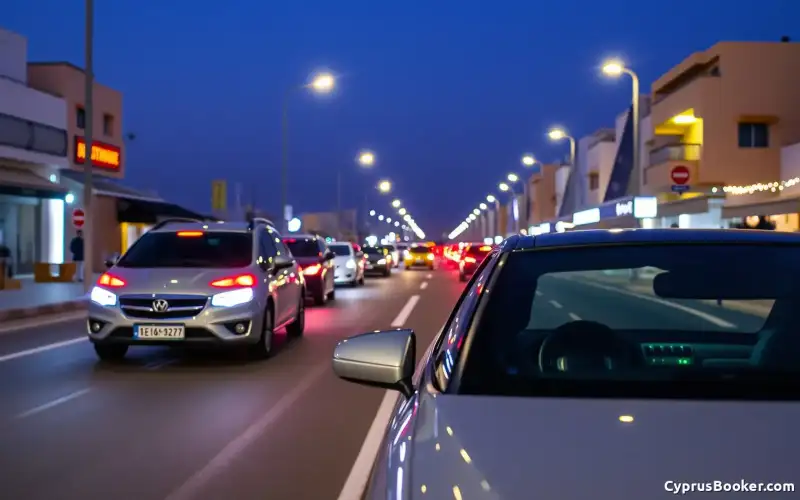
Last summer, my mate Sarah picked up a hire car at Larnaca airport and returned it three days later to a bill for €400 in "damage charges" that definitely weren't there when she drove off the lot. The hire firm's photos were grainy, their argument was circular, and she had no recourse. That's the story I'm starting with because it happens roughly once a week to British holidaymakers in Cyprus, and it's entirely avoidable if you know what you're doing.
Renting a car in Ayia Napa is genuinely useful — you can hit Cape Greco's dive sites, drive out to Protaras for lunch, explore Larnaca's salt flats — but the rental industry here has perfected the art of the gotcha. This guide walks you through the real minefield: which firms won't screw you over, what insurance actually means, why fuel policies are deliberately confusing, and where you can actually park without losing your deposit.
Why You Need a Car in Ayia Napa (And When You Don't)
Let's be honest: Ayia Napa town itself is walkable. The bars, restaurants, and main beach are all within 15 minutes on foot. But if you want to do anything beyond the resort strip, a car transforms your holiday from "drinks at the same three bars" to "proper Cyprus adventure."
Cape Greco, about 20km south, is where the diving really happens. The underwater cliffs, the sea caves, the clarity of the water — you can't experience it from the coach tour. Protaras, 15km east, has better fish restaurants than anywhere in Ayia Napa, proper Cypriot families eating there, not just tourists. Larnaca's salt lake, the Hala Sultan Tekke mosque, the old fort — these are day trips that matter, and they're not feasible on public transport without spending four hours on buses.
That said, if you're staying in the main resort area and planning to drink heavily every night, skip the car. Taxis are cheap (around €15-20 to Cape Greco, €8-12 to Protaras town), and you won't be stressing about parking or sobriety checks.
Choosing a Rental Company: The Firms That Don't Rip You Off
The big international chains — Hertz, Avis, Budget — have desks at Larnaca airport and in Ayia Napa town. They're more expensive (€35-50 per day for a basic hatchback), but the paperwork is transparent and disputes are handled through proper channels. If something goes wrong, you're not dealing with a one-man operation in a shipping container.
The local firms are cheaper — often €20-30 per day — but quality varies wildly. Some are genuinely fine. Others are running a scam factory. The difference usually comes down to whether they're trying to make money from rentals or from damage claims.
Here's what actually works: ask your hotel. Not the front desk — they get kickbacks from certain firms — but chat to the cleaner, the pool guy, the person who's been there five years. They know which rental places have screwed guests over and which ones are straightforward. Last August, our hotel's maintenance guy steered us toward a firm called Europcar (local operator, not the chain), and we paid €28 per day for a Fiat 500 with zero drama on return.
Check recent Google reviews, specifically the ones from British tourists in the last six months. Look for patterns: if ten reviews mention surprise charges on return, that's a pattern. If they mention smooth pickups and honest inspections, that's a green light.
The absolute minimum: book online before you arrive. Walk-in rates are higher, and you lose the paper trail. When you book online, you get a confirmation email with exact terms. That email is your insurance policy.
Insurance: What You Actually Need and What's a Scam
This is where the rental firms make their real money. The basic third-party liability insurance (mandatory in Cyprus) is usually included in the quote. That covers damage you cause to other vehicles or property. Cost: around €5-8 per day, often bundled into the rate.
Then they'll pitch you collision damage waiver (CDW) and personal effects coverage and roadside assistance and a dozen other add-ons. Most of it is noise.
Here's the reality: your UK car insurance likely covers you for hire cars in the EU, including Cyprus. Ring your insurer before you leave — takes five minutes — and ask specifically: "Am I covered for collision damage on a hire car in Cyprus?" If yes, you don't need their CDW. You're just paying twice.
If your insurer says no (some budget policies don't), then yes, buy their CDW. But negotiate. If the rental firm quotes €15 per day for CDW, ask if they'll do €10. They often will, because they're already making 200% margin on it.
One thing worth buying: excess reduction. This lowers your personal liability if there's a crash from €1,500 to €300 or so. Costs about €3-5 per day. Given how mental some Cypriot drivers are (and how many potholes are on the roads), it's reasonable insurance.
Do not buy "personal effects coverage" or "roadside assistance." Your travel insurance covers personal effects. Roadside assistance is pointless in Cyprus — the island is tiny, and a tow truck will be there in 30 minutes anyway.
The Fuel Policy Trap: Understand Before You Sign
The rental firm will present you with three fuel options:
- Full-to-full. You pick up a full tank, you return it full. You pay for fuel at petrol station prices (currently €1.35-1.45 per litre in Cyprus, so a full 50-litre tank is roughly €67-72). This is the only sensible option. Take it.
- Full-to-empty. You pick up full, return empty, and they charge you a per-litre rate (usually €1.80-2.00 per litre). This is a scam. You're paying 30-50% more than petrol station prices, and you're also gambling on whether they'll claim the tank wasn't actually empty. Don't do this.
- Pre-purchase fuel. You pay upfront for a full tank at an inflated rate (€80-90), and return the car empty. If you don't use all the fuel, you lose the money. Another scam. Avoid.
Always choose full-to-full. Fill up at a petrol station before you return the car — there are stations all over Ayia Napa and the surrounding areas. Takes ten minutes, costs what it actually costs, and you have a receipt proving you did it.
One practical tip: plan your fuel stops. If you're driving to Cape Greco and back, that's roughly 40km, so you'll use about 3-4 litres. Not worth a special trip to the petrol station. But if you're doing Larnaca (45km away), fill up before you leave town.
The Vehicle Inspection: How Not to Get Scammed on Return
This is where most damage claims originate. The rental firm will do an "inspection" when you pick up the car, noting existing scratches and dents. Then, when you return it, they'll claim you caused new damage and charge you.
The process:
- When you pick up the car, walk around it with the staff member. Point out every scratch, every dent, every bit of wear. Don't be polite about it. Say things like, "That scratch on the bumper — that's pre-existing, yeah?" Get them to mark it on the inspection sheet.
- Take your own photos. Use your phone. Get wide shots of each side, close-ups of any damage. Timestamp them (most phones do this automatically). Email them to yourself. This is your evidence.
- When you return the car, do the same thing. Walk around with them, point out what was already there. If they try to claim new damage, show them your photos. "That scratch was there when I picked it up. Here's the photo. Here's the date."
Most firms will back down immediately if you have photos. The ones that don't are the ones to avoid next time.
One more thing: don't accept their offer to "just sign off without a full inspection." That's how they get you. They'll call you a week later claiming you caused €300 in damage that they "didn't want to bother you about at the time." Always do the inspection. Always document it.
Driving in Cyprus: The Reality Check
Cypriot drivers are aggressive. Not in an angry way — just fast, impatient, and willing to overtake on blind corners. Speed limits are 100km/h on highways, 50km/h in towns, and they're not really enforced on the highway but absolutely are in towns. The police use speed cameras, and fines are €100-200.
The roads around Ayia Napa are decent. The main highway to Larnaca is fine. But the smaller roads to Cape Greco and some of the coastal routes are narrow, potholed, and winding. Drive slowly. A Fiat 500 isn't the best for these roads anyway, but it's what you'll get for €25-30 per day.
Parking in Ayia Napa town is a nightmare in peak season (June-August). There's a large car park near the beach — it costs €1.50 per hour or €12 per day — but it fills up by 10am. Street parking is free but chaotic. Your hire car will get dinged. It will. Accept it, document it, and don't claim it on return (because you'll lose your deposit fighting about it).
At Cape Greco, parking is free and plentiful. Same at Protaras. At Larnaca, there's a big free car park near the fort.
One practical thing: get a parking disc. You can buy one at any petrol station for €2-3. In town, you need it for free parking (usually limited to 90 minutes). It's not complicated, but tourists miss it and get ticketed.
Common Mistakes and How to Avoid Them
I've watched British holidaymakers make the same errors repeatedly. Here are the big ones:
Assuming your UK driving licence is enough. It is, legally, but get an International Driving Permit anyway (costs £5.50 from Post Office before you leave). It's not required, but if you get stopped and the police officer is having a bad day, it smooths things over.
Not checking the spare tyre. Seriously. Ask them to show you the spare, check it's not flat, and check there's a jack. I've heard of people getting stranded because the spare was missing.
Not filling up before returning the car. You'll be charged a premium rate, and they'll claim the tank wasn't actually full. Fill it yourself at a petrol station. Takes five minutes.
Paying for damage you didn't cause. This happens because people are embarrassed or don't want confrontation. Don't do this. If you didn't cause it, you didn't cause it. Show your photos. Stand firm.
Renting on a credit card without checking your insurance. Some credit cards offer rental car insurance. If yours does, you might not need to buy the rental firm's coverage. Check before you travel.
The Day-Trip Routes: Where You Actually Want to Go
Cape Greco is the main one. It's a national park, rocky headland, proper Mediterranean scenery. The diving here is world-class — you've got the Zenobia wreck nearby (a cargo ship that sank in 1980, now a dive site), sea caves, underwater cliffs. If you're doing a dive trip, you need a car. Most dive shops in Ayia Napa will pick you up, but having your own transport gives you flexibility.
Protaras is smaller, quieter, better for families. The beach is long and sandy, the water's calm, and the restaurants are genuinely good. It's 15km from Ayia Napa, 20 minutes' drive. You can do a half-day trip easily.
Larnaca is the furthest (45km, about 50 minutes). The salt lake is weird and wonderful — it's bright pink in summer because of the algae, and you can float in it like the Dead Sea. The old fort is interesting if you're into history. The airport is there too, so if you're arriving or leaving via Larnaca, you might rent the car there instead of Ayia Napa.
Final Thoughts: The Real Cost of Hiring
A realistic budget for a three-day car hire in 2026: €25-35 per day (€75-105 total), €15-20 in fuel, €10-15 in parking and tolls. So roughly €100-140 for three days, or €33-47 per day all-in. That's reasonable for the freedom it gives you.
The key is avoiding the scams. Don't overpay for insurance you don't need. Don't accept damage charges you didn't cause. Don't use their fuel scheme. Do inspect the car properly. Do take photos. Do ask locals which firms are legit.
Your holiday is expensive enough without losing €400 to a dodgy rental firm. Do it right, and you'll actually enjoy the driving and the places you can reach.


Comments (3 comments)