
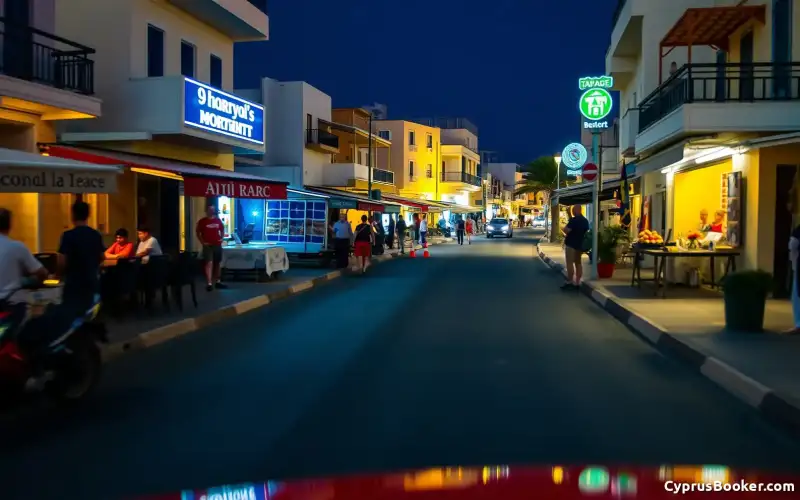
I've spent more summer nights in Ayia Napa than I care to admit, and I've done it without a hire car more times than I've rented one. The first time I arrived in 2010, I made the rookie mistake of booking a Fiat Panda for the week—spent half my holiday stressed about where to park it near Nissi Beach and the other half paying for petrol to drive five minutes down the road. Now I know better. The buses work, taxis are cheaper than you'd think, and your feet will take you further than you imagine.
The truth is, you don't need four wheels to have a proper Ayia Napa holiday. You need to know which buses to catch, how much to expect to pay, and when walking actually beats driving. This guide covers everything you need to get from your hotel to the beaches, the clubs, and Cape Greco without renting a car.
Understanding Ayia Napa's Public Bus System in 2026
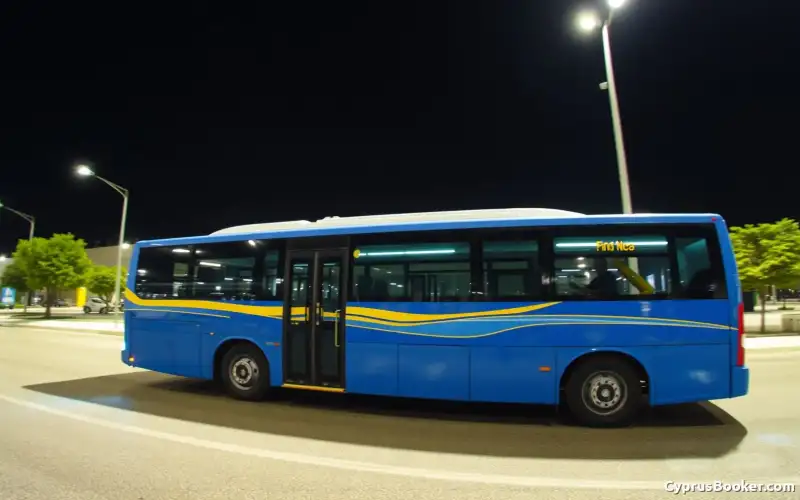
The local bus network is run by OSYPA (Osia Symvouleftiki Ypiresion Aftokinitou), and it's more reliable than most British tourists expect. The two main routes you'll live on are the 101 and 102, which loop around town and hit every significant beach.
Route 101 runs from Paralimni (the larger town inland) through central Ayia Napa and down to Nissi Beach. It's the busier route, especially in summer, and it operates roughly every 20–30 minutes during peak season (June–August). Off-season, expect gaps of 45 minutes to an hour. The full journey from the town centre to Nissi takes about 15 minutes.
Route 102 covers the eastern side of town and heads towards Konnos Beach and eventually Cape Greco. This route is less crowded than the 101, which means you'll actually get a seat in summer. Journey time to Konnos is roughly 20 minutes from the main square.
Single fares within Ayia Napa town cost €1.50 (2026 rates). A journey to Nissi or Konnos is €2.00. If you're staying for a week, buy a weekly pass for €15.00—it covers unlimited journeys on both routes and saves you money if you're moving between beaches daily.
Bus stops are marked with a blue shelter and a timetable. The main hub is near the town square, opposite the municipality building. Timetables are posted in English and Greek. Download the OSYPA app or check osypa.com.cy for real-time updates, though I'll be honest—the app works better in theory than practice. Buses sometimes run 5–10 minutes early or late, especially in summer when traffic backs up near the seafront.
The Toy Train: Novelty or Genuine Transport?
The little train that loops around town is technically a tourist attraction, but it's also a legitimate way to move around if your feet are killing you after a night out. It runs a fixed route from the main square through the town centre, past the square (Plateia), and along part of the seafront. The journey takes about 30 minutes for the full loop.
Fares are €5.00 per person for a single journey, or €8.00 for a day ticket. It's not cheap when you compare it to the bus, but if you've had three mojitos and can't face walking back to your hotel, it's worth every euro. The train runs roughly every 20–30 minutes in summer, less frequently in winter. It's cheerful, visible from everywhere in town, and the driver usually knows where you're trying to go.
The toy train is genuinely useful if you're staying in the town centre and want a quick loop to get your bearings on your first day. After that, you'll probably find it more novelty than necessity. That said, I've taken it on sticky summer nights when the pavement felt like it was melting, and I've never regretted the €5.
Taxis: When They Make Sense
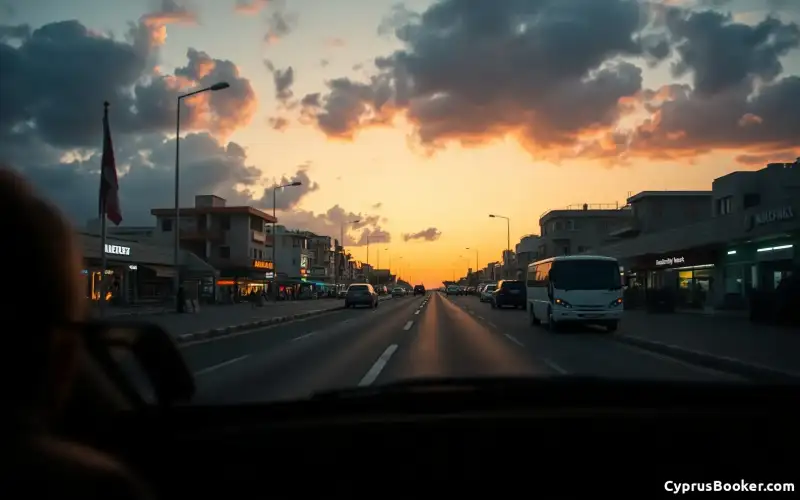
Taxis in Ayia Napa are metered and regulated. The initial fare is €3.50, then €0.70 per kilometre. From the town centre to Nissi Beach, expect to pay €6.00–€8.00. To Konnos, it's roughly €7.00–€9.00. Cape Greco is further out—about €12.00–€15.00 depending on exactly where you're going.
Late-night fares (after 9 p.m.) are 1.5 times the daytime rate, so a journey that costs €8.00 at lunchtime might be €12.00 at midnight. This is where the maths gets interesting. If you're a group of four heading to a club, splitting a taxi costs less per person than the bus, and you avoid waiting in the heat. If you're solo, the bus wins on price every time.
You can hail taxis on the street or book one by phone. The main rank is near the town square. Drivers are generally honest about fares—they use the meter—but always check it's running when you get in. I've never had a problem, but it's worth being aware. Most drivers speak English, many speak German, and a few speak Russian. They know the town inside out and can recommend restaurants and bars if you ask.
Walking Routes to Key Beaches
This is where I'll be honest: Ayia Napa is smaller than you think, and walking is often faster than waiting for a bus.
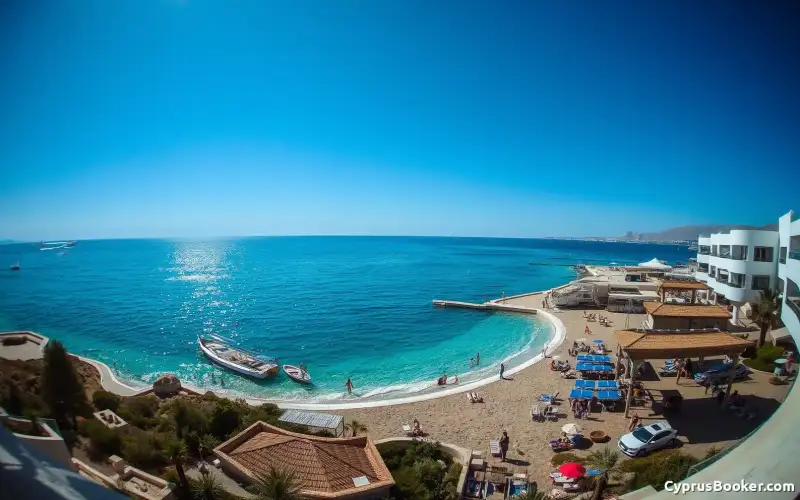
Town Centre to Nissi Beach is a 25–30 minute walk. Head south from the main square towards the seafront, follow the promenade, and you'll hit Nissi. The route is flat, mostly shaded by trees, and passes several bars and restaurants where you can grab water. In summer, go early (before 10 a.m.) or late (after 5 p.m.) to avoid the midday heat.
Town Centre to Konnos Beach takes about 20 minutes on foot. Head east from the square towards the smaller beaches (Limanaki, Mavrovouni), and keep going. The path is less obvious than the Nissi route, but it's walkable. There's less shade, so bring water and sunscreen. The payoff is that Konnos is quieter than Nissi, especially if you go mid-week.
Cape Greco is too far to walk from town (about 4 km), but once you're there, it's brilliant for walking. The headland has several marked trails. The walk to the sea caves and the old lighthouse takes 45 minutes to an hour. The views are stunning, and the water is clearer than at the main beaches because there's no sand—it's all rock and shale. Bring proper shoes, not flip-flops.
Combining Transport Methods for Maximum Flexibility
The best approach is mixing methods depending on the situation. Here's how I usually do it:
- Morning beach runs: Walk to Nissi or Konnos if you're staying in town. You're fresh, the walk is pleasant, and you save €2.
- Afternoon club hopping: Bus between venues. It's cheap, reliable enough, and you're not sweating in the sun.
- Late-night club crawls: Taxi after midnight. The night-time surcharge stings, but splitting it between four people is still cheaper than a car rental, and you don't have to worry about parking or driving after drinks.
- Day trips to Cape Greco: Bus 102 or taxi. The bus is cheaper (€2.00) and takes about 30 minutes. A taxi is faster (15 minutes) but costs €12.00+. If you're going with a group, taxi wins. Solo, bus wins.
- Water sports bookings: Most hotels can arrange transport to parasailing, jet-ski, and banana boat operators. These are usually included in the activity price or cost €3.00–€5.00 extra. Don't overlook this option.
Real-World Scenarios: When You Actually Need a Car
Let me be clear: there are moments when hiring a car is worth the money. If you're staying for a week and planning to explore beyond Ayia Napa—places like Larnaca (45 minutes away), the Troodos Mountains (90 minutes), or the Akamas Peninsula (2 hours)—a car makes sense. Rental costs are roughly €25–€40 per day for a basic model in 2026, and petrol is about €1.20 per litre. A week of day trips without a car would cost more in taxis.
Similarly, if you're visiting in winter (November–March) when buses run less frequently, a car removes the frustration of waiting 45 minutes for the next 101. And if you're a group of six, the maths almost always favour a rental over multiple taxis.
But for a standard week-long holiday to Ayia Napa—staying in or near town, hitting the beaches, clubbing, maybe a day trip to Cape Greco—you don't need wheels. I've done it dozens of times, and I've never felt stranded.
Practical Tips for Getting Around Without a Car
A few things I've learned the hard way:
- Download offline maps of Ayia Napa on Google Maps before you arrive. Mobile data can be patchy, and maps work without a connection.
- Carry a reusable water bottle. Tap water is safe, and refilling saves you €2–€3 per day on bottled water.
- Wear comfortable shoes. You'll walk more than you expect, and blisters will ruin a night out.
- Check bus timetables the night before if you're planning an early start. Printed schedules at your hotel are usually accurate.
- Keep small change for buses. Not all drivers accept cards, and the machine doesn't give change from notes.
- In summer, avoid buses between 1 p.m. and 4 p.m. if you can. They're packed with school groups and tourists, and the air conditioning barely keeps up.
The Honest Take
Ayia Napa without a car is entirely doable, and for most visitors, it's actually simpler than dealing with a rental. You save money, avoid the stress of navigation and parking, and you're forced to explore on foot, which is how you discover the best bars and restaurants that don't make it into guidebooks. I've spent hundreds of pounds on car rentals over the years, and I can't point to a single holiday where the car actually improved the experience. The bus 101, a pair of decent shoes, and knowing when to splurge on a taxi—that's the formula that works.

Comments (3 comments)