Last summer, my eldest asked me why I was sitting on a paddleboard looking terrified while my youngest splashed about like an otter. "Mum, you're supposed to be having fun," she said. That's when I realised – water sports in Ayia Napa aren't just for Instagram heroes or gap-year kids. They're for everyone. The question isn't whether you'll find something to do in the water here; it's which of the brilliant options you'll actually get round to trying.
Ayia Napa's got a reputation as a party destination, and fair enough – the clubs are legendary. But the real magic happens during daylight hours, when the Med is calm and the sun's actually useful rather than just trying to fry you. Whether you're a nervous parent, a fitness-obsessed friend group, or a couple looking for something more active than sunbathing, there's genuinely something here for you. I've spent three summers testing these activities with my three, and I'm going to walk you through the ten that actually deliver on their promises.
The Problem: Too Many Choices, Not Enough Time
Here's the thing about Ayia Napa – it's spoilt for choice when it comes to water activities. You've got over a dozen beaches, dozens of operators, and water sports on offer that range from "I could do this after two glasses of wine" to "I need to sign a waiver and call my mum." The real problem isn't finding something to do. It's figuring out what's actually worth your money, what's safe, what suits your group, and – crucially – what won't leave you sunburned and disappointed by 11am.
Most holiday brochures lump water sports together like they're all the same. They're not. Some are genuinely relaxing. Others will have your heart in your throat for forty minutes straight. Some are brilliant for families; others are strictly for groups of mates who've already had a few beers. And the prices? They vary wildly depending on where you book, what time of day you go, and whether you're clever about bundling activities together.
I've made every mistake going – booked activities at the wrong time of day, chosen operators who were more interested in volume than safety, and once paid double because I didn't know the beachfront kiosks charge more than the places tucked back on the main road. This guide is basically what I wish someone had told me in 2023.
Why Getting This Right Actually Matters
Water safety in Ayia Napa is genuinely good – way better than some Mediterranean resorts I've visited. The instructors are trained, the equipment gets checked, and the coast guard actually patrols. But that doesn't mean every operator is equal, and it doesn't mean every activity suits every person. A jet-ski is thrilling for a 16-year-old on a school trip; it's terrifying for someone who's never been on anything faster than a canal boat.
The other thing that matters? Your money. A week in Ayia Napa isn't cheap, and water sports add up. A single parasailing session runs €45–€60 per person. Jet-skiing can hit €80–€120 for half an hour. If you're a family of four booking random activities without knowing what's actually good, you could easily spend €400–€500 on mediocre experiences. That's a lot of euros for a banana boat ride that lasts eight minutes.
Getting it right means you actually remember these activities fondly instead of as "the thing we paid for that was a bit meh." It also means you're booking with operators who prioritise safety over speed, who give you real instruction rather than just strapping you into something, and who understand that water sports should be fun, not stressful.
The 10 Water Sports That Actually Deliver
1. Stand-Up Paddleboarding (SUP)
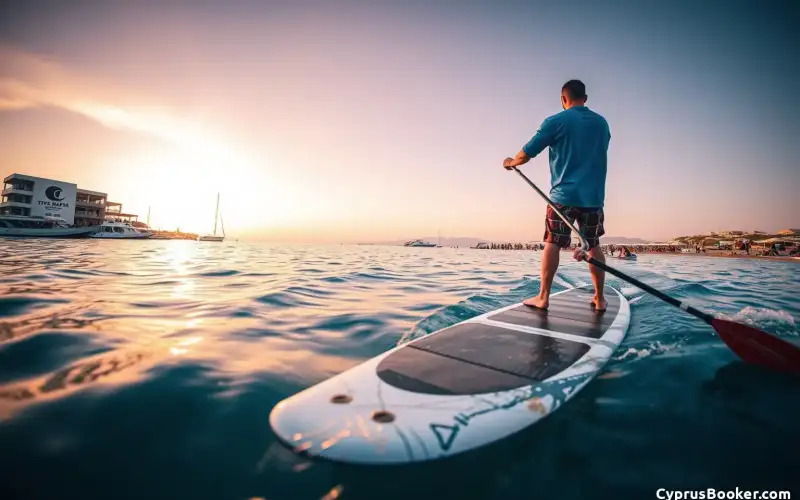
This is where I started, and honestly, it's the perfect gateway drug to water sports. You're standing on a board in water that's usually crystal-clear, moving at your own pace, and if you fall in – which you will – it's not the end of the world. The water's warm, you're not going fast, and you get a proper workout without realising it.
Where to do it: Most beaches rent SUP boards, but the calm waters at Nissi Beach and Makronissos Beach are ideal for beginners. The water's shallow for longer, and there are fewer jet-skis zooming about. Operators like Nissi Watersports and the smaller stands near the Dome Beach Club rent boards for €15–€25 per hour, or €40–€50 for a half-day. Group lessons run €30–€40 per person if you want proper instruction.
Best for: Families with kids aged 8+, couples wanting something active but not intense, anyone who's slightly nervous about water. My 10-year-old can SUP now, and she genuinely prefers it to swimming because she feels like she's actually doing something.
Real talk: You will get wet. You will probably fall in at least once. The first 10 minutes feel wobbly; by 20 minutes you'll wonder why you were nervous. Book early morning (before 10am) if you want calm water and fewer crowds.
2. Snorkelling and Guided Snorkel Tours
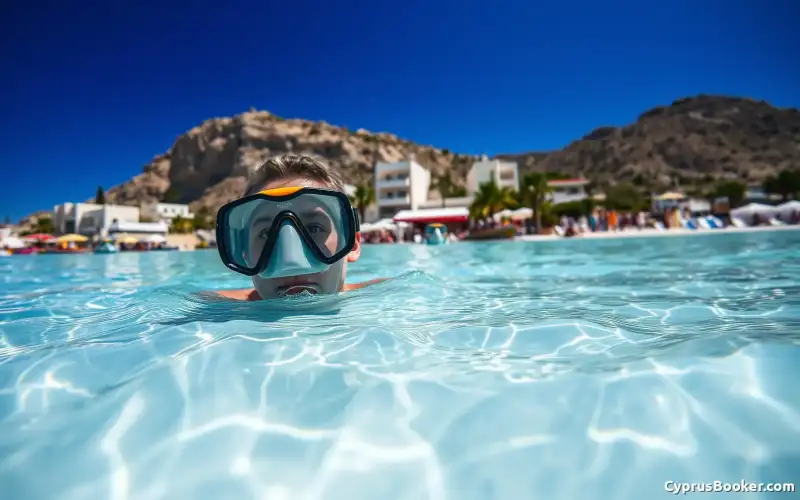
Ayia Napa's underwater world is genuinely spectacular. The water clarity is incredible – you can see down 10–15 metres on a good day – and there's actual marine life: fish, sea turtles occasionally, and rock formations that look like they've been carved by someone with too much time and a very good chisel.
Where to do it: Organised snorkel tours depart from Ayia Napa harbour and usually cost €25–€40 per adult, €15–€20 for kids. They take you to spots like the Kavo Gkreko sea caves and reefs where the fish are genuinely abundant. If you want to go solo, just rent snorkels from any beach stand (€5–€10) and wade in from Nissi Beach or Makronissos. The reefs start about 50 metres out.
Best for: Families, anyone who gets anxious about deep water (you can snorkel in 2–3 metres), couples wanting something peaceful, photography enthusiasts. The boat tours are social without being forced – you're with other tourists but not crammed in like sardines.
Real talk: The tours can be a bit slow-paced if you're expecting constant action. You're mostly floating and looking. Seasickness isn't usually an issue because the water's so calm, but take a travel tablet anyway. And please, please don't touch the coral or the fish. I've seen tourists grab sea urchins thinking they're rocks. They're not.
3. Scuba Diving
If snorkelling's the appetiser, scuba's the full meal. Ayia Napa's got several dive sites suitable for beginners – the Zenobia wreck (though that's a bit further away), and various reefs and underwater rock formations. The water temperature in summer is 26–28°C, so you barely need a wetsuit, and visibility is usually excellent.
Where to do it: Operators like Dive Cyprus and Ayia Napa Diving Centre run PADI courses and guided dives. A beginner's course (Open Water) costs €300–€400 and takes three days. Single guided dives for certified divers run €50–€70. If you've never dived before, book the course – it's worth it, and the instructors are genuinely patient with nervous people.
Best for: Adults and teenagers (minimum age usually 10 for junior certification), couples wanting something memorable, anyone who's ever wondered what it's like to breathe underwater. Not ideal for very young kids or anyone with ear/sinus issues.
Real talk: You will feel weird the first time you breathe underwater. That's normal. The instructors expect it. The courses are thorough – they don't just chuck you in the deep end (literally). And yes, you'll see fish. Lots of fish.
4. Parasailing
You're strapped into a harness, towed behind a speedboat, and lifted 200–300 metres into the air while a parachute does the work. It sounds terrifying. It's actually brilliant, and you get a view of the entire coastline that you can't get any other way.
Where to do it: Every major beach has parasailing operators. Nissi Beach, Ayia Napa Beach, and Sandy Beach all have stands. Prices are €45–€60 per person for a standard flight (about 15 minutes in the air). Some operators offer photo packages (€10 extra) where someone takes pictures of you looking tiny against the sky.
Best for: Thrill-seekers, couples wanting something dramatic, teenagers on a group trip. Families with kids – yes, but only if the child is confident and not scared of heights. My middle one absolutely loved it; my youngest took one look and said no.
Real talk: The takeoff and landing are the only slightly rough bits. Once you're up, it's genuinely peaceful. You're not moving that fast – the boat's doing the work. Book with operators that have good reviews (check TripAdvisor) because some are more professional than others. The difference between a mediocre parasailing experience and a brilliant one often comes down to the boat crew's attitude.
5. Jet-Skiing
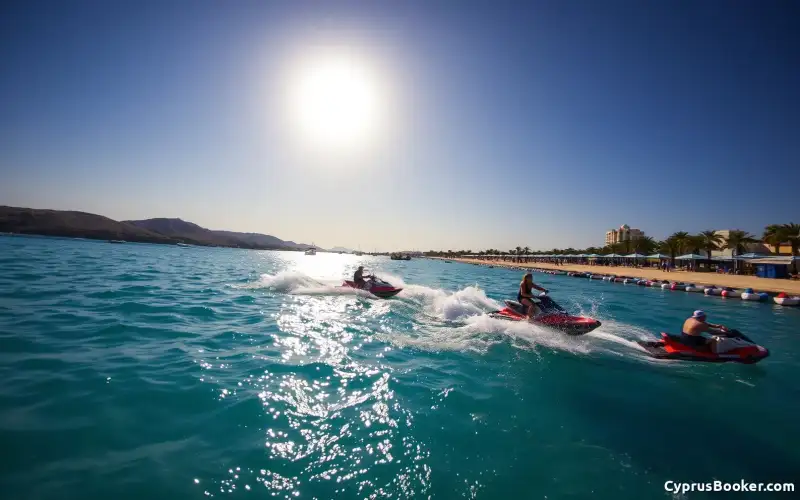
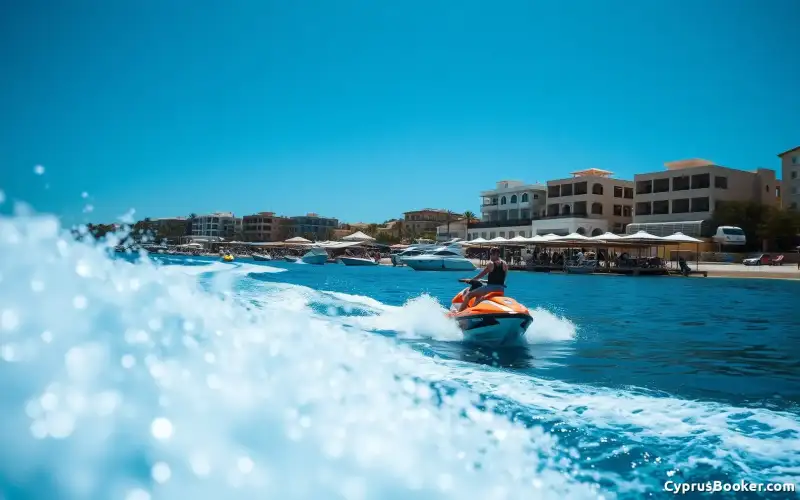
Okay, here's where we get into the properly loud, fast, adrenaline-heavy stuff. You're on a personal watercraft, you've got the throttle in your hand, and you can go as fast or slow as you want. It's exhilarating and absolutely demands respect – the sea might look calm, but it's got power.
Where to do it: Jet-ski rental stands are on almost every beach. Nissi Beach, Sandy Beach, and Ayia Napa Beach all have them. Prices run €80–€120 for 30 minutes, €140–€180 for an hour. You'll need to show ID and sign a waiver. Most operators require a €100–€200 deposit (refundable) and ask you to prove you can swim. Some offer guided tours if you're nervous about going solo.
Best for: Adults and older teenagers (usually 18+ to rent solo, but some places allow 16+ with parental consent), groups of mates, anyone who loves speed. Not for families with young kids or anyone who gets panicked easily.
Real talk: Jet-skis are loud and they use fuel like nobody's business. The 30-minute rental is genuinely 30 minutes – don't expect much longer. Some operators are more safety-conscious than others; book with ones that insist on life jackets and proper instruction. And don't be that person who zooms straight out into the horizon – stay in the designated zones. The coast guard does patrol, and fines are expensive.
6. Banana Boat Rides
A banana-shaped inflatable towed behind a speedboat, packed with people, designed to bounce and spin and tip you into the sea. It's chaotic, it's loud, and it's absolutely brilliant if you're with a group that likes laughing at each other.
Where to do it: Every beach has banana boat operators. Standard rides are €15–€25 per person and last about 10–15 minutes. Most runs take 6–8 people at a time. Some operators offer combo deals – banana boat plus parasailing, for instance – which can save money if you're doing multiple activities.
Best for: Groups of friends, families with kids aged 6+, anyone who doesn't mind getting soaked and looking silly in photos. It's genuinely the most fun-focused activity on this list – nobody pretends it's sophisticated.
Real talk: You will get wet. You will probably fall in. Sometimes intentionally, sometimes not. The ride operators are usually trying to tip you, and that's the whole point. If you're wearing sunscreen, reapply after because you'll have washed most of it off. And bring a dry shirt – wet cotton clinging to you for the rest of the day is nobody's idea of fun.
7. Wakeboarding and Water Skiing
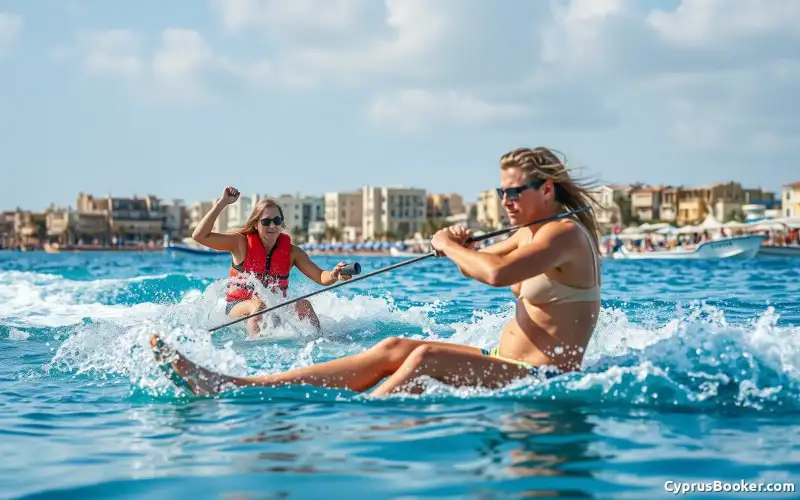
Imagine being towed behind a speedboat while standing on a board (wakeboarding) or skis (water skiing), using the rope as your only anchor. It's harder than it looks, more fun than you'd expect, and genuinely impressive when you actually manage to stay upright.
Where to do it: Ayia Napa Watersports and a few specialist operators run these activities. Wakeboarding lessons start at €60–€80 for 30 minutes of instruction plus practice. Water skiing is similar pricing. You'll need a bit of upper body strength and decent balance, but beginners are absolutely welcome.
Best for: Teenagers and adults, anyone with decent fitness levels, groups wanting something that feels like a real skill. Not ideal for very young kids or anyone with shoulder/arm issues.
Real talk: You will fall in. Repeatedly. The instructors expect it and design the lessons around it. The first time you actually get up and stay up for more than three seconds, you'll feel like an absolute legend. The water's warm, the instructors are patient, and it's one of the few activities that genuinely makes you feel like you've learned something rather than just paid for a ride.
8. Kayaking and Sea Kayaking
Quieter than SUP, more controllable than a jet-ski, and brilliant for exploring the coastline at your own pace. Sea kayaking trips often take you to sea caves and hidden beaches that you literally can't reach any other way.
Where to do it: Kayak rentals are available at most beaches for €15–€30 per hour. Guided sea kayaking tours (usually 2–3 hours) cost €40–€60 per person and often include stops at caves and snorkelling spots. The tours from Ayia Napa harbour are particularly good because they take you to places like the sea caves near Kavo Gkreko.
Best for: Families with kids aged 7+, couples wanting something active but not intense, anyone who enjoys being on the water without the noise and speed of motorised activities. It's also genuinely good exercise.
Real talk: Single kayaks are more stable than you'd think, but tandem kayaks (for two people) can be tricky if you're not coordinated. If you're booking a guided tour, go with someone you don't mind being stuck in a boat with for three hours. And bring water – you'll be in the sun, you'll be working, and dehydration creeps up on you fast.
9. Windsurfing and Kitesurfing
These are for people who've got some water confidence and want to learn a genuinely technical skill. Windsurfing's been around forever; kitesurfing's the newer, flashier cousin. Both require lessons, both take practice, and both are genuinely addictive once you get the hang of them.
Where to do it: Windsurfing schools operate at various beaches – check with your hotel for recommendations. Kitesurfing's less common in Ayia Napa itself (the bay's not ideal for it), but there are operators nearby. Beginner lessons for either run €50–€80 per hour, usually with a minimum of two hours. Equipment rental (if you already know what you're doing) is €30–€50 per day.
Best for: Teenagers and adults, people with decent swimming ability, anyone who wants to learn something that'll impress their mates back home. Not for complete beginners to water sports or anyone who panics in deeper water.
Real talk: These take actual practice. One lesson won't make you competent – you're looking at 5–10 hours minimum before you're genuinely comfortable. But if you've got a week in Ayia Napa and you're keen, it's absolutely doable. The instructors are used to teaching tourists with limited time.
10. Underwater Scooter Tours
The newest thing on the water sports circuit – you're strapped to a small battery-powered scooter that propels you underwater while you breathe through a tube. It's like snorkelling but with an engine, and it's genuinely magical if you like marine life and don't want to get tired.
Where to do it: A few operators have started offering this – it's still relatively new in Ayia Napa. Tours usually cost €60–€80 per person and last about 45 minutes. You don't need diving certification; it's basically snorkelling with assistance.
Best for: Families, anyone who wants to see marine life without the effort of swimming, people with limited mobility who still want an underwater experience. Not for anyone who gets claustrophobic with breathing apparatus near their face.
Real talk: This is genuinely brilliant if you've got elderly relatives or anyone who struggles with swimming. The scooter does the work; you just steer and enjoy. It's pricey compared to regular snorkelling, but if you're not confident in the water, it's worth every euro.
Practical Tips That Actually Save Money and Hassle
Book early morning whenever possible. Water's calmer, beaches are less crowded, and operators are fresher and more patient. Plus, you're done by early afternoon and have the rest of the day free.
Check if your hotel offers activity packages. Some hotels bundle water sports into all-inclusive deals, which can save 20–30% compared to booking individually. It's worth asking at reception.
Don't book from the beachfront kiosks if you can help it. The same activities cost 15–25% more when you book from the stands right on the sand. Walk back to the main road or book online the night before.
Bring your own snorkelling gear if you're planning multiple snorkel sessions. Rental snorkels are fine, but your own mask will fit better and you'll see more. They're €20–€30 to buy and you can use them for years.
Always check the operator's safety record. Ask how often equipment gets serviced, whether instructors are certified, and what the cancellation policy is. TripAdvisor and Google reviews are genuinely useful here – read the recent ones, not just the ratings.
Sunscreen is your friend. Reapply constantly, especially after water activities. The reflection off the water makes you burn faster than you'd think. And bring a rash vest for longer activities – it saves your shoulders from absolute agony.
Group discounts exist. If you're booking for four or more people, ask about discounts. Most operators will knock 10% off if you're booking a group activity.
Don't overbook. It's tempting to try everything, but you'll exhaust yourself and your wallet. Pick three or four activities that genuinely appeal to you and do them properly rather than rushing through ten mediocre experiences.
What to Book and When
If you're in Ayia Napa for a week, here's a realistic plan: Day one, SUP or snorkelling to get comfortable in the water. Day two or three, parasailing or a banana boat ride for something fun and relatively low-effort. Mid-week, a scuba lesson or guided sea kayaking tour – something that takes a bit more time and focus. Day five or six, jet-skiing or wakeboarding if you're into that, or another snorkel tour if you prefer the water to be calmer. Save a couple of days for beach time without activities – you'll need the rest.
Avoid booking everything in advance unless you're certain. Weather changes, you might get tired, or you might discover something else you'd rather do. Having flexibility is worth more than a 5% discount.
Check the weather forecast for the week. Windy days are brilliant for windsurfing but rough for parasailing and banana boats. Flat, calm days are perfect for SUP and snorkelling. Plan accordingly.
Consider your group's energy levels. If you're with people who party late, don't book early morning activities. You'll all be miserable. Conversely, if you're a family with young kids, book activities early and you'll have the afternoon free for naps and downtime.
Comments (4 comments)