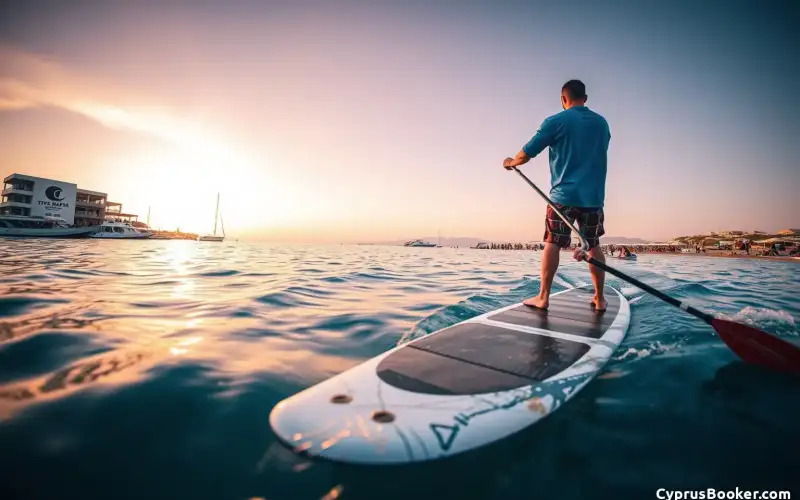
I'll never forget the morning I first paddled out from Nissi Beach on a stand-up paddleboard. It was 2012, and I'd ducked out of another foam party to do something genuinely peaceful. Within twenty minutes, I'd drifted past three beach bars I'd never noticed from the shore, spotted a family of fish darting beneath me, and realised I'd found my favourite way to spend a hangover in Ayia Napa. Paddleboarding isn't flashy. It won't give you the rush of a jet ski or the Instagram moment of parasailing, but it'll give you something rarer: a proper connection with the water and the coastline that makes you understand why people actually live here year-round.
What Exactly Is Paddleboarding and Why Should You Try It?
Stand-up paddleboarding, or SUP as the locals call it, is dead simple. You stand on a large, stable board—usually between 10 and 12 feet long—and use a single paddle to propel yourself across the water. It looks easy because it basically is, but don't let that fool you. Your core gets a proper workout, your balance improves, and you'll discover muscles in your shoulders you forgot existed.
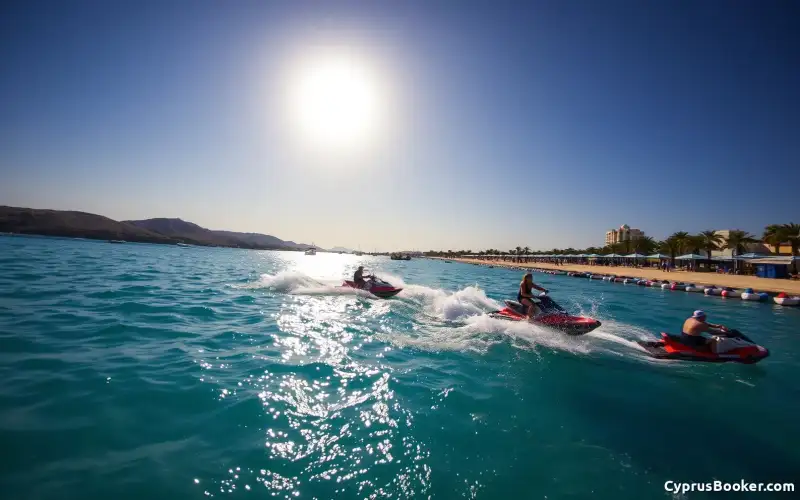
Unlike jet skiing, which requires a crash course in throttle control and leaves you soaked and ringing in the ears, paddleboarding is genuinely meditative. You set your own pace. You can stop whenever you fancy, lie flat on the board and soak up the sun, or paddle out to a secluded bay for lunch. It's the kind of activity that suits everyone from your 60-year-old parents to your mates who want something active but not mental. Most people pick it up in their first session—genuinely. The learning curve is forgiving.
"I came to Ayia Napa for the clubs, but paddleboarding became my favourite part of the trip. You see the coast from a completely different angle."
Where to Hire a Paddleboard in Ayia Napa
You've got several solid options for board hire, and most are clustered around the main beaches where the tourists actually are.
Nissi Beach Water Sports
Nissi Beach is the obvious starting point. The main water sports operators here—there are usually three or four competing for your business—hire SUP boards for around €15 to €20 per hour, or €40 to €50 for a full day (typically 8am to sunset). The boards are well-maintained fibreglass or inflatable models, and the staff will give you a quick safety briefing and show you the basic paddle technique. Nissi is busy, especially mid-morning, but it's also the safest option for beginners because the water's calm and there's always a lifeguard on duty. The beach is about 3km from the town centre—a short bus ride or 20-minute walk if you're staying nearby.
Ayia Thekla Beach
If you want something quieter, Ayia Thekla—just east of Nissi—has a smaller operation run by locals who actually know the water. Prices are similar (€18 per hour, €45 full day), but you'll get more personalised attention and fewer crowds. The beach itself is stunning: a crescent of golden sand backed by a white church and flanked by rocky outcrops. It's a 4km drive or a 50-minute walk from the town centre.
Makronissos Beach
Makronissos, on the western side of Ayia Napa, is less touristy and has a couple of smaller hire outfits. Expect to pay €16 to €22 per hour. The water here is generally calmer than Nissi because it's more sheltered, and you'll see fewer banana boats and parasails. It's about 2km from the town centre—a quick taxi ride for €5 to €7.
Private Hire and Lessons
If you want a proper lesson or a guided tour, several instructors operate independently. You'll pay €40 to €60 for a one-hour beginner lesson (usually includes board hire), or €80 to €120 for a two-hour guided paddle to quieter bays. These are worth the extra money if you're nervous or want to explore beyond the main beaches safely.
Best Bays and Routes for Paddleboarding
The beauty of paddleboarding is that you can explore the coast in a way that's impossible from the beach or a boat tour. Here are the spots I keep coming back to.
Kermia Beach (The Hidden Gem)
From Nissi, if you paddle east for about 15 to 20 minutes, you'll reach Kermia Beach—a small, rocky cove that's barely accessible by car. The water's incredibly clear, the beach is peaceful, and you'll usually find just a handful of people there. The paddle is gentle, and the scenery is genuinely special. I've had some of my best mornings here, paddling slowly and spotting fish and small octopuses in the shallows.
The Grecian Bay Route
If you're paddling from Ayia Thekla, head west towards Grecian Bay (about 10 minutes of easy paddling). The bay itself is surrounded by high cliffs and has a couple of beach bars, so you can paddle in, grab a cold drink, and chat to other paddleboarders. The water's calm, and it's a brilliant spot for lunch. The paddle back is equally easy, and you'll see the entire stretch of coastline that makes Ayia Napa special.
Makronissos to Thalassa Beach
From Makronissos, paddle west towards Thalassa Beach—about 20 to 25 minutes of moderate paddling. This route takes you past some of the quietest water in the area, and you'll see fewer tourists. The water's deeper here, so it feels more like proper exploration. Bring a waterproof bag with snacks and water, because you'll want to stop and float for a bit.
Early Morning Paddles (The Secret)
Here's the real tip: paddle early. Between 7am and 9am, before the beach bars open and the jet skis start, the water is glassy and peaceful. You'll have the coast to yourself, the light is beautiful, and the water temperature is perfect. Most hire operators open by 7am, and you'll get a full morning session before heading back for breakfast. I've done this dozens of times, and it never gets old.
Beginner Technique: How to Actually Paddle
The good news is that paddleboarding doesn't require special technique to start having fun. But a few basics will make your day much easier and stop you from getting knackered after 20 minutes.
The Stance
Stand with your feet roughly hip-width apart, knees slightly bent, and your weight centred on the board. Don't lock your knees—that's how people fall in. Your body should feel relaxed, not rigid. The board will wobble a bit at first; that's normal and your balance will improve within minutes.
The Paddle Stroke
Hold the paddle with one hand at the top (the grip) and one hand roughly a third of the way down the shaft. Reach forward, plant the paddle blade in the water, and pull it back towards your feet using your core muscles, not just your arms. Your shoulders should rotate slightly with each stroke. Switch sides every few strokes to go straight—if you only paddle on one side, you'll veer off course and get frustrated.
Staying Dry (Or At Least Drier)
You will probably fall in at some point, especially if you're paddling near rocks or trying to stand up while turning. It's not a big deal—the water's warm, and everyone does it. Wear a rash vest or light top to avoid sunburn, and bring a dry bag for your phone and keys. Most hire places provide a basic PFD (personal flotation device), and you should wear it, even if it feels uncool. It genuinely isn't.
Costs, Seasons, and Practical Details
Paddleboarding in Ayia Napa is affordable compared to other water sports. Here's what you're actually paying for:
| Service | Price Range | Duration |
|---|---|---|
| Board hire (standard) | €15–€22/hour | Hourly |
| Full-day hire | €40–€60 | 8am–sunset |
| Beginner lesson + board | €40–€60 | 1 hour |
| Guided tour (2 hours) | €80–€120 | 2 hours |
| Equipment rental (wetsuit, PFD) | €5–€10 | Included or add-on |
Most operators accept cash and card. They'll ask for ID and a deposit (usually €20 to €50 in cash or a card imprint) to cover accidental damage. It's standard, and you'll get it back when you return the board undamaged.
Best Time to Paddle
May through September is peak season, with calm, warm water and predictable weather. July and August are hottest but also busiest. If you're visiting in April, October, or November, the water's still swimmable (around 18–20°C), but mornings can be choppy. Winter paddling is possible but requires a wetsuit and local knowledge. I'd avoid December to February unless you're genuinely experienced.
What to Bring
Sunscreen (SPF 50+—the reflection off the water is brutal), a rash vest or lightweight long-sleeved top, a hat or cap, water, and snacks. A waterproof phone case is smart if you want to take photos. Leave your valuables in a locker at the beach—don't bring your wallet or expensive jewellery onto the water.
Common Questions About Paddleboarding in Ayia Napa
Is It Safe for Non-Swimmers?
Yes, absolutely. A properly fitted PFD keeps you afloat even if you panic. Wear one, stay in calm bays near the shore, and you're fine. Most people who fall in are actually relieved—the water's lovely, and climbing back onto the board is easier than you'd think. I've seen people who couldn't swim become confident paddleboarders within a week.
What If I Fall In?
You'll get wet. That's it. The water's warm, and the board floats. Grab the handle on the side of the board, pull yourself up (it takes a bit of effort, but it's doable), and carry on. If you can't get back on, stay calm, hold the board, and signal for help. Lifeguards are watching, and other paddleboarders will assist.
Can I Take My Kids?
Absolutely. Kids from about age 5 onwards can paddle on a board with a parent, or older kids (8+) can have their own board in shallow water with supervision. Some hire places have smaller boards designed for children. It's brilliant for families—kids love it, and it's genuinely safer than leaving them on a busy beach.
What's the Difference Between Inflatable and Fibreglass Boards?
Fibreglass boards are lighter, faster, and more responsive. Inflatable boards are more forgiving, more durable, and easier to transport. For beginners, inflatables are actually better because they're more stable and you're less likely to hurt yourself if you fall. Most hire places have both; ask for an inflatable if you're nervous.
Can I Paddleboard If I'm Not Fit?
Completely. Paddleboarding is low-impact and you control the intensity. Paddle gently for 30 minutes, rest, and paddle again. No one's racing you. It's actually brilliant for building fitness because it engages your whole body without the joint stress of running or gym work.
Why Paddleboarding Beats Other Water Sports (Sometimes)
Look, I love a jet ski, and parasailing's brilliant for the adrenaline rush. But paddleboarding does something different. You're not fighting the water or the noise. You're moving through it at your own pace, and you actually notice things—the colour of the water, fish, the way the light hits the cliffs. It's meditative without being boring, active without being exhausting, and it costs less than most other water sports.
Plus, you can do it hungover. I genuinely can't overstate how important that is in Ayia Napa.
Book a board for a morning session, paddle out to a quiet bay, float for a bit, and come back for lunch. Your body will thank you, your mind will be clearer, and you'll have done something genuinely memorable instead of just another party night. That's the real appeal of paddleboarding in Ayia Napa—it gives you balance. And in a place that's famous for excess, balance is something special.
Comments (3 comments)