The Day I Discovered I'm Not a Water Sports Person (But Might Be)
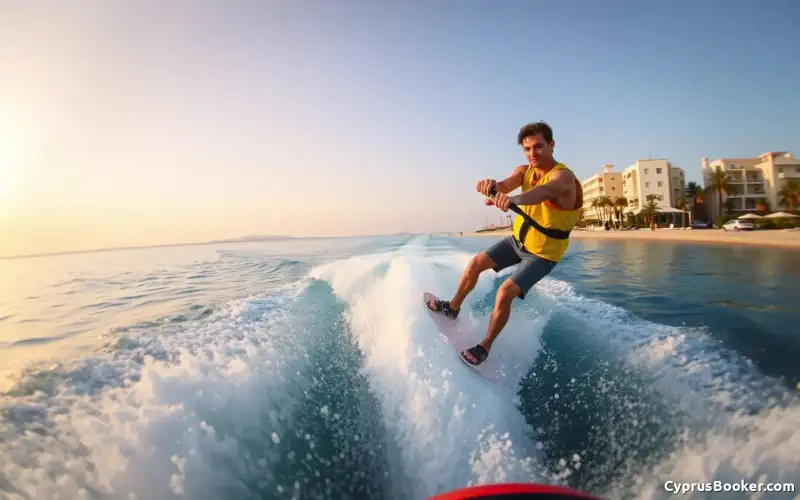
It was July 2023 when my mate Dave convinced me to try wakeboarding. I was 42, hadn't been on a board since a disastrous snowboarding trip in 2008, and the last time I'd been pulled behind a speedboat was never. But there I was at Limanaki Beach, squinting at a wakeboard that looked like it belonged in an extreme sports film, not in the hands of someone whose idea of athletic achievement is finishing a full English breakfast.
The boat operator, Nikos from Wake Cyprus, gave me a look that suggested he'd seen plenty of middle-aged British tourists make this exact decision. "You fall, you get back on," he said in that matter-of-fact way Cypriots have. "Maybe five, maybe ten times. Is normal." He wasn't wrong.
If you're sitting at home thinking about trying wakeboarding in Ayia Napa but you're worried you'll be the only one who can't do it—stop. The learning curve is genuinely forgiving, and there are proper operators who know how to work with people who've never done this before. I'm living proof.
What Wakeboarding Actually Is (And Why It's Not as Mad as It Looks)
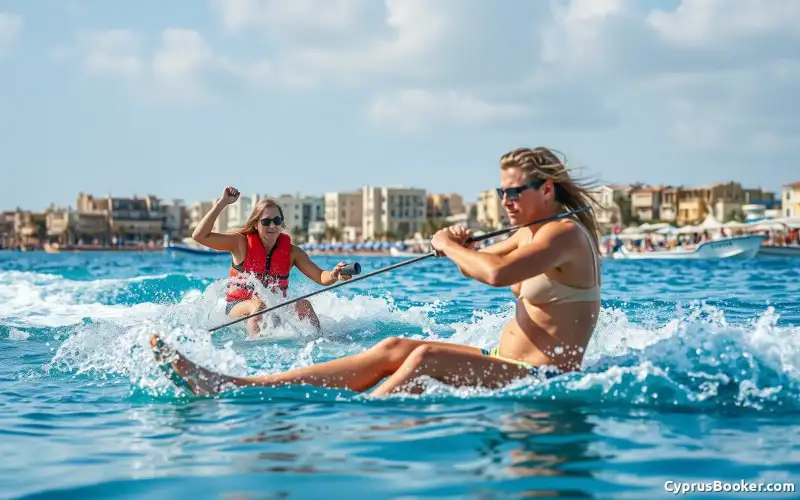
Let's clear this up straight away. Wakeboarding is being towed behind a speedboat while standing on a board, using the rope to keep yourself upright. It's like water skiing's cooler younger sibling. You're not doing flips off the boat (unless you want to), and you're not expected to look like an Olympic athlete on day one.
The board itself is smaller and thicker than a surfboard—more like a chunky skateboard. Your feet are locked into bindings, which sounds terrifying but actually makes things easier because your feet stay put. The rope has a handle you grip with both hands, and the boat does the hard work of pulling you along. Your job is basically to lean back, stay loose, and not panic when you inevitably go over the handlebars.
What makes it beginner-friendly is that the learning curve flattens out quickly. You're not building muscle memory over months like with surfing. Most people get up on the board within three to five attempts. I managed it on attempt two, which tells you something about how accessible this actually is.
Where to Learn Wakeboarding in Ayia Napa: The Honest Breakdown
There are three main operators offering wakeboarding lessons in and around Ayia Napa in 2026:
- Wake Cyprus – Based at Limanaki Beach, they run lessons daily from May through October. Nikos and his team are patient with beginners, and they've got the equipment sorted. They offer 30-minute sessions and will do multiple runs if you're keen.
- Ayia Napa Water Sports Hub – Located near Nissi Beach, they're the bigger operation with more boats and instructors. Good if you want to book with a group, as they run frequent scheduled lessons rather than just on-demand bookings.
- Speedboat Adventures – They're more geared toward thrill-seekers, but they do beginner sessions. Their instructors are friendly, though the vibe is a bit more "extreme sports" than "learning experience."
All three operators provide equipment—board, life jacket, helmet (yes, really), and the rope. You don't need to bring anything except a swimsuit and a willingness to get absolutely soaked.
The Real Cost: What You'll Actually Pay in 2026
Pricing is straightforward, though it varies by operator and season. Here's what you're looking at:
| Operator | 30-Minute Lesson | 1-Hour Session | Group Rate (4+ people) |
|---|---|---|---|
| Wake Cyprus | €65–€75 | €120–€140 | €55 per person |
| Ayia Napa Water Sports Hub | €70–€85 | €130–€150 | €60 per person |
| Speedboat Adventures | €60–€70 | €110–€130 | €50 per person |
Prices creep up in August (peak season) and drop slightly in May, June, and September. If you're going with friends, book as a group—you'll save roughly 10–15% per person. Most operators offer package deals too: three sessions for the price of two-and-a-half, that sort of thing.
What you're paying for isn't just the boat fuel and equipment. A good instructor is worth the money. They'll position the boat correctly, judge the speed based on your weight and fitness level, and know exactly when to slow down if you're struggling. A bad one will just gun it and hope for the best.
The Learning Curve: What Actually Happens During Your First Session
Here's the reality of what your first 30 minutes looks like:
Getting in the Water and Gearing Up (5 minutes)
You'll wade in, get the life jacket and helmet strapped on, and have the board fitted to your feet. The bindings are tight but not painful. The instructor will explain the hand signals—thumb up means "go faster," thumb down means "slow down," and waving your arms means "I'm going in, stop the boat." You'll use that last one more than you think.
The First Attempt (5–10 minutes)
You'll hold the rope handle, the boat will slowly pull you forward, and you'll immediately understand why this is harder than it looks. Your instinct is to lean forward. Don't. You need to lean back, let the boat do the work, and keep your arms straight. Most people go over on attempt one or two. It's not painful—just a sudden surprise dunking. The water's warm, the Mediterranean in July is actually lovely, and you'll surface laughing (or cursing, depending on your personality).
Getting Up (Attempts 3–5)
This is where it clicks. You'll feel the board pop up under your feet, your legs will straighten, and suddenly you're being towed behind a speedboat. It's genuinely thrilling. Your first run might last 10 seconds, or it might last 30. Either way, you'll want to do it again immediately.
Building Confidence (Remaining time)
Once you're up, the operator will take you on longer runs. You'll get your balance sorted, stop tensing up, and start actually enjoying it rather than just surviving it. By the end of 30 minutes, you'll have been up three to five times, and you'll know whether you want to come back for more.
What Goes Wrong and What to Do About It
Let's talk about the falls, because they're inevitable and they're worth discussing properly.
The Standard Wipeout
You're cruising along fine, you lean the wrong way, and suddenly you're underwater. It happens fast and it's not graceful. The good news: you're wearing a life jacket, the boat operator is watching, and the water is 23–24°C in summer. You'll surface, the boat will circle back, and you'll get hauled back aboard. The whole thing takes maybe 30 seconds. Your pride takes longer to recover than your body does.
The Face-Plant
This is when you lose your grip on the handle and go over the front of the board. It looks dramatic from the boat but feels less bad than it sounds. You're moving at maybe 20–25 km/h, the water breaks your fall, and you're cushioned by the life jacket. I did this on my fourth attempt and my main concern was whether anyone had got it on video.
The Rope Tangle
Occasionally the rope gets tangled around the board or your leg. The boat operator will cut the engine immediately, and you'll just float there untangling things. It's annoying, not dangerous. This happens maybe once in every 20 sessions across all operators.
Who Should Actually Try This (And Who Might Want to Skip It)
Wakeboarding works brilliantly for certain groups and less so for others. Here's the honest assessment:
Perfect For:
- Groups of friends looking for something different to do on holiday
- Couples wanting an activity that's fun and a bit adrenaline-fuelled
- People aged 16–65 (yes, really—age isn't the limiting factor, fitness is)
- Anyone who's done water sports before but not necessarily wakeboarding specifically
- People who want a proper story to tell back home
Maybe Not Ideal For:
- Anyone with serious shoulder or knee injuries (the pulling motion puts stress on both)
- Very weak swimmers who panic in deep water
- People who get motion sickness easily (the boat movement can be tricky)
- Anyone who's genuinely terrified of falling (you will fall, multiple times)
The fitness requirement is real but not extreme. You don't need to be a gym regular, but you do need reasonable core strength and the ability to hold on to something while being pulled. If you can do a plank for 30 seconds and you're not afraid of the water, you can probably do this.
The Seasonal Question: When to Go
Wakeboarding is available May through October in Ayia Napa. May and June are genuinely the sweet spot—the water's warm enough, the boats are busy but not rammed, and prices haven't yet hit August levels. September is also excellent if you can swing it.
July and August are peak season. The water's perfect, but you'll be booking alongside hundreds of other tourists, and prices are at their highest. If you're flexible on dates, avoid those months unless you've got no choice.
November through April is quieter, but the water gets chilly and some operators scale back their schedules. It's doable but less fun.
The Verdict: Should You Actually Try It?
I'm going to be straight with you. Wakeboarding in Ayia Napa is genuinely fun, genuinely accessible for beginners, and genuinely worth the money if you've got a few euros spare and a sense of humour about falling into the sea repeatedly.
Is it for everyone? No. But if you've ever thought about trying it and you're worried you'll be rubbish at it, don't be. You'll probably be rubbish at it for about five minutes, and then you'll be fine. The operators here know what they're doing, the equipment is solid, and the worst that happens is you get wet and embarrassed in front of a boat full of strangers you'll never see again.
I'm booking another session for next summer. Nikos was right—it is normal to fall. And it's also normal to get back on and do it again.
Comments (4 comments)