
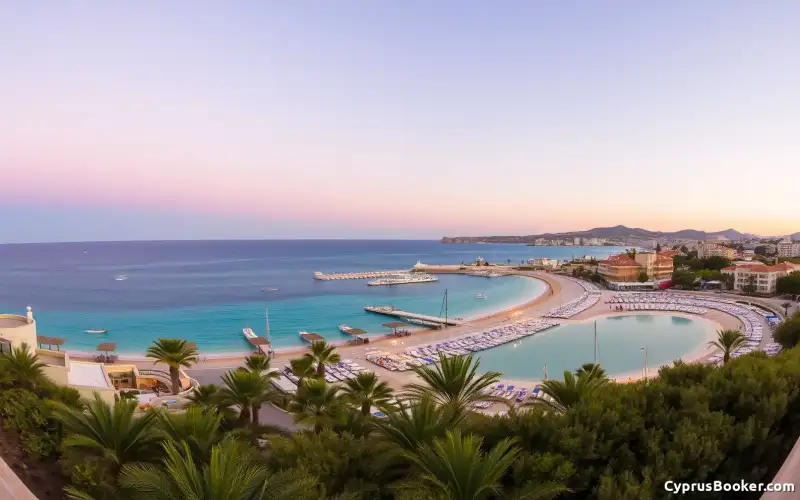
Last February, I sat alone in a taverna on the harbour front at half past three in the afternoon, nursing a glass of Keo beer and watching a man throw a fishing net into grey-green water. The taverna owner, Stavros, was half-heartedly wiping tables that wouldn't see customers for hours. When I asked him how business was, he laughed—not bitterly, just matter-of-factly—and said, "Yiorgos, in summer I don't have time to laugh. Now I have time for everything." That's winter in Ayia Napa in a nutshell.
The question isn't whether Ayia Napa is worth visiting in winter. The real question is whether you're the type of person who actually wants what winter offers. Because what it offers is almost the opposite of what the summer brochures promise.
The Brutal Weather Reality
Let's start with the thing nobody wants to hear: it's not warm. The average daytime temperature from November through February hovers between 15–17°C (59–63°F). That's not "mild Mediterranean." That's "you'll need a proper jacket" territory. On a bad day in January, you're looking at 10°C and rain. Real rain, not the theatrical five-minute downpour that clears by lunchtime.
The sea temperature is worse. It drops to around 15°C by February. I've swum in it. Once. The shock doesn't wear off after thirty seconds—it gets worse. If you're imagining a refreshing dip between November and February, you're going to have a very short swim.
Rainfall is sporadic but genuine. November and December see occasional wet days; January and February are the wettest months. You might get three weeks of perfect sunshine followed by three days where the sky looks like old concrete. The wind can pick up too, especially near the coast. That dramatic cliff scenery that looks so photogenic in summer? It's genuinely dramatic in winter—sometimes too dramatic to enjoy standing on it.
What you won't get is snow. Ayia Napa sits on the southeastern coast, and snow is virtually unheard of at sea level. You might see it on the Troodos Mountains inland, but in town, you're looking at rain, not winter wonderland.
What's Actually Open (And What Isn't)
This is where the reality check becomes concrete. Roughly 60–70% of Ayia Napa's hospitality infrastructure shuts down or goes into skeleton mode from November through February. That's not an exaggeration—it's the seasonal rhythm of a resort town built almost entirely around summer tourism.
Clubs and Nightlife
The nightclub scene, which is the backbone of Ayia Napa's summer reputation, essentially vanishes. The mega-clubs—Pulse, Amnesia, all the places that pack thousands of sweaty bodies into dancefloors—close completely or operate at reduced capacity maybe two or three nights a week, and only then if there's enough demand. In mid-January, you might find one or two venues with a DJ and a handful of locals, but the energy is nothing like summer. If you're coming for clubbing, winter is a non-starter. Full stop.
Restaurants and Tavernas
This is more nuanced. The traditional tavernas—the ones serving real Cypriot food to locals—stay open year-round. Places like Thalassa (right on the harbour) and smaller family-run spots in the old town operate through winter, though with shorter hours. You'll eat well, but you might eat alone. Prices are noticeably lower—expect to pay 15–20% less than summer for the same meal. A meze spread that costs €45 in July might be €35 in February.
The tourist-facing restaurants with the big menus and English-speaking staff? Many close from November to March. Those beachfront places with the sunset views and cocktail lists? Shuttered. It's a significant reduction in choice, especially if you want variety or the option to eat late.
Attractions and Activities
The archaeological sites stay open—the Thalassa Museum, the ruins, the Sea Caves. Museums don't care about the season. Water sports are essentially off the table (literally no one is renting jet skis in February), but walking, hiking, and exploring are fine, just colder and wetter than you might expect. The beaches are accessible but not inviting. You can walk them, photograph them, sit on them with a coffee—but swimming is a decision you'll regret.
The Ayia Napa Monastery remains open and genuinely beautiful in winter light. The town square has a different character when it's not packed with hen parties and groups of lads. Some people find that character appealing. Others find it depressing.
Accommodation
Hotels and apartments stay open, but availability is high and prices drop significantly. A hotel room that costs €120 in July might be €45–60 in February. That's the silver lining. But many smaller guesthouses and holiday apartment complexes close entirely. Your choice of where to stay shrinks considerably.
The Pros of Winter Ayia Napa
Genuinely Lower Prices
This is the one unambiguous win. Accommodation, food, car rentals, activity bookings—everything costs less. If you're on a budget or travelling with a large group, the savings can be substantial. Over a week-long trip in February versus July, you could easily save €300–500 per person. That's not trivial.
No Crowds
Summer Ayia Napa is rammed. The beaches are packed, restaurants have queues, and you're constantly navigating other tourists. Winter flips this entirely. You can walk through the town square without being jostled. You can get a table at a taverna without a reservation. You can sit on a beach and actually hear yourself think. If you travel to escape crowds, winter delivers that completely.
A Glimpse of Real Cyprus
Without the summer tourist infrastructure in overdrive, you see how locals actually live. You'll notice the older men playing backgammon in cafés, the family-run tavernas that cater to people from the surrounding villages, the genuine character of the place underneath the resort coating. It's not "authentic Cyprus"—that's a marketing phrase—but it's closer to how the town actually functions when it's not in summer mode.
Mild Days Exist
Not every day is grey and cold. You'll get stretches of genuinely pleasant weather: clear skies, 18–20°C, perfect for walking and exploring. These days feel special precisely because they're not guaranteed. I've had some of my favourite Cyprus days in February—the light is different, the air is clearer, and you notice things you'd miss in the summer haze.
Excellent Walking and Exploration
The cooler weather makes walking around the town and nearby areas genuinely enjoyable rather than a sweaty endurance test. The Sea Caves, the coastal paths, the archaeological sites—all are better explored without melting. The Cavo Greco area is stunning in winter light, and you won't be sharing the paths with hundreds of other people.
The Cons of Winter Ayia Napa
Severely Limited Nightlife
If you're coming for clubbing, parties, and a vibrant nightlife scene, winter is a complete waste of your time and money. The venues that make Ayia Napa famous are closed. What's open is quiet and sparse. You'll spend your evenings in hotel bars or early dinners, not on packed dancefloors. This alone disqualifies winter for a significant portion of Ayia Napa's usual audience.
Weather Uncertainty
You might get lucky and have mostly sunny days. Or you might get a week of rain and wind. There's no guarantee. Unlike summer, where the weather is reliably hot and sunny, winter requires flexibility and a willingness to have plans disrupted by weather. If your holiday hinges on specific outdoor activities, winter is risky.
Limited Dining and Entertainment Options
The choice shrinks noticeably. Many restaurants close. The variety of cuisines, price points, and dining experiences available in summer is simply absent. If you're picky about where you eat or like having lots of options, this becomes frustrating. Entertainment beyond walking around is limited—no live music venues, no summer events, no water sports, no beach clubs.
A Somewhat Melancholic Atmosphere
Closed shutters, empty beaches, quiet streets—it can feel lonely rather than peaceful, depending on your temperament. Some people find this atmospheric and appealing. Others find it depressing. There's a particular quality to a resort town in off-season that's either charming or bleak, and you won't know which until you experience it.
Fewer Activities for Families
If you're travelling with kids, winter Ayia Napa offers less. No water parks, limited beach activities, fewer restaurants with children's menus, fewer entertainment options. Families typically prefer summer or shoulder seasons (April–May, September–October) when weather is good and venues are open but crowds are manageable.
Who Winter Ayia Napa Actually Works For
Budget-Conscious Couples
If you're a couple looking for a cheap break in the Mediterranean, winter works. Lower prices, quieter atmosphere, and the ability to actually talk to each other without shouting over music or crowds. You're not coming for the nightlife or beach activities—you're coming for relaxation, good food, and exploring at your own pace.
Solo Travellers Seeking Solitude
Winter Ayia Napa suits solo travellers who want space and quiet. You can read, walk, eat well, and exist without the social pressure of a busy resort. The locals are friendlier when there aren't thousands of tourists around. Stavros will actually remember your name by day three.
People Who Want to Experience Cyprus Beyond Tourism
If you're interested in archaeology, history, and local culture rather than beaches and clubbing, winter removes the tourist noise and lets you focus. The museums, sites, and surrounding villages are more accessible when you're not competing with crowds.
Hikers and Outdoor Enthusiasts
The cooler weather is actually ideal for walking and hiking. If you're coming to explore the coastal paths, visit the Sea Caves on foot, or walk inland to villages, winter is excellent. The physical activity keeps you warm, and the cooler temperatures mean you won't exhaust yourself.
People Fleeing Northern Europe Winter
If you're from the UK and facing November–February darkness and cold, even 15°C and occasional sun in Cyprus feels like an upgrade. It's not a beach holiday, but it's warmer and lighter than home, with lower prices to sweeten the deal.
The Verdict
Is Ayia Napa worth visiting in winter 2026? The honest answer is: it depends entirely on what you want.
Winter Ayia Napa is not a beach holiday. It's not a party destination. It's not a place to come for guaranteed sunshine and nightlife. If that's what you're after, you'll be disappointed and probably miserable.
But winter Ayia Napa is a place to come if you want lower prices, fewer crowds, and a chance to experience the town as something other than a summer resort. It's good for couples, solo travellers, and people interested in exploring rather than sunbathing. It's excellent for walking and exploring the archaeological sites. The food is good, the locals are friendlier, and you can actually afford to be there for more than a long weekend.
The weather is the wildcard. You might get lucky and have mostly pleasant days. You might get rained on. You need to be flexible and genuinely okay with spending time indoors or in a café if the weather turns.
My take? If you're the type of person who enjoys a quieter holiday, values money, and doesn't need guaranteed sunshine and nightlife, winter Ayia Napa is genuinely worth considering. Book a mid-range hotel, plan to eat at the local tavernas, bring a proper jacket, and go in with realistic expectations. You might find it's exactly what you needed.
But if you're coming for the summer Ayia Napa experience—the beaches, the clubs, the energy, the guaranteed good weather—wait for May or September. Winter is a completely different proposition, and pretending otherwise will only frustrate you.
Comments (5 comments)