
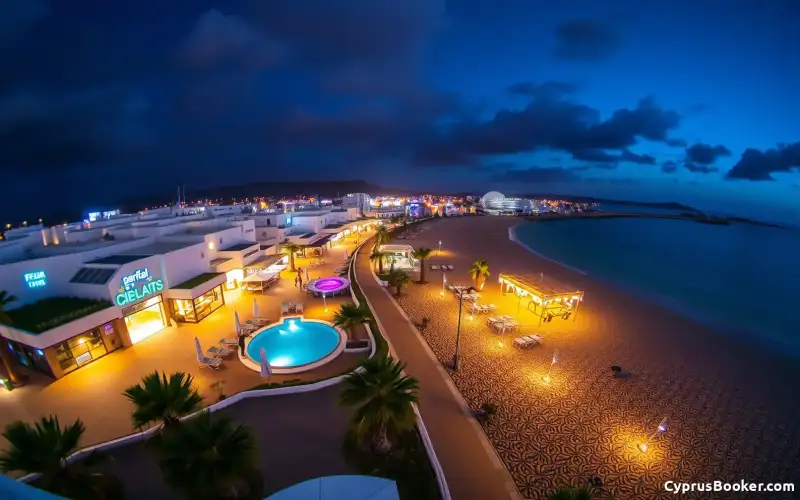
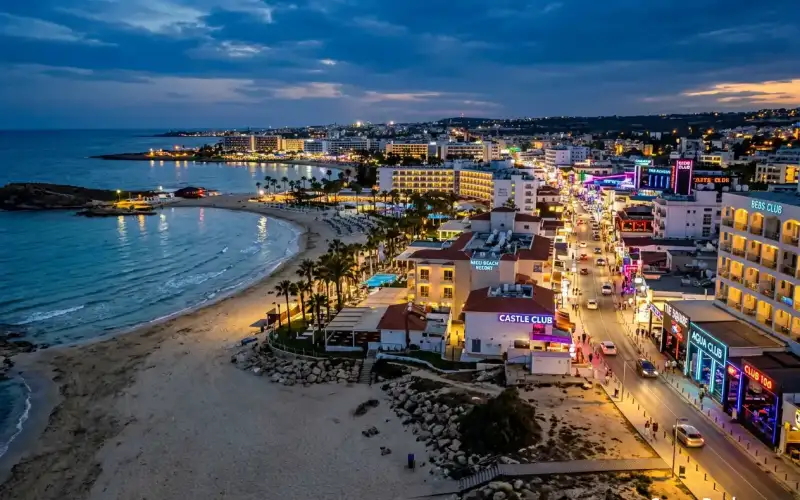
I left Manchester on the 4th of November last year. It had been raining for nine consecutive days. The forecast for the following Wednesday was "rain". By Friday morning I was sitting on a terrace in Ayia Napa drinking a coffee in 18°C sunshine, watching a fishing boat unload sea bream on the dock at Limanaki. The total cost of getting from Piccadilly Gardens to that exact moment, including flight, taxi, and a half-empty bottle of wine the night before: GBP 87.
That's not bragging. That's the maths. And that's the entire premise of this article: a holiday home in Cyprus genuinely pays for itself by February, if you're honest with yourself about what you're already spending to survive a British winter.
The British Winter Tax Nobody Talks About
Let me describe the average November-to-March experience for a 50-something professional living in any northern English city. You wake up at 7am in pitch black. The boiler kicks in for an hour because the house is sitting at 14°C overnight. You drive or commute through grey drizzle to a job. You come home at 5pm in the dark. You consider going for a walk, look at the rain hitting the kitchen window, and don't. You watch television. You go to bed.
This goes on for roughly 150 consecutive days. Christmas helpfully fractures it into smaller chunks, but really, late October through mid-March is one long monochrome experience.
The NHS publishes annual stats on this. About 6% of UK adults — roughly 3 million people — are diagnosed with full Seasonal Affective Disorder. Another 21% report "subsyndromal" SAD: not clinically depressed but noticeably worse from November to March. That's nearly a third of British adults functioning sub-optimally for four months a year.
Vitamin D deficiency in the same period runs at 30-40% of the adult population in the UK, according to public health data. The link between vitamin D and immune function isn't pop science anymore — it's well-established cardiology and oncology research.
Now I'm not suggesting that buying a flat in Cyprus is a substitute for medical care. But I am suggesting that "I have somewhere warm to escape to from January to March" is a quality-of-life intervention that costs less than a lot of people imagine.
The Maths: What You're Already Spending
Let's add up what a typical British couple spends just to survive a winter in the UK, then compare it to what they'd spend with a Cyprus holiday flat as a base.
Scenario A: Surviving Winter at Home
You stay put. From November to March, here's the actual cost of being depressed in Manchester:
- Heating bills (gas + electric): Average UK household uses 2,500 kWh of electricity and 11,500 kWh of gas annually, with about 60% concentrated in winter months. That's around GBP 1,400-1,800 for the four cold months at 2026 prices.
- One short winter break to escape: Most of us crack and book a week somewhere warm. Tenerife or the Canaries for two adults: GBP 1,200-1,800 for an all-inclusive week in a 4-star, off-peak.
- Vitamin D supplements, light therapy lamps, that SAD lamp you bought from Argos: GBP 80-120 across the season.
- The "I'll cheer myself up" spending: Whether it's takeaways, online shopping, an extra glass-or-three of wine on a Tuesday — let's call it GBP 200-400/month for four months. So GBP 800-1,600.
Total winter survival cost: roughly GBP 3,500 - 5,300. And you still spent four months looking at sleet.
Scenario B: You Have a Holiday Home in Ayia Napa
Let's say you bought a one-bed flat for GBP 130k. You're not living there full-time — you're using it for the four cold months and renting it out the rest of the year, or just leaving it empty if that's your preference.
- Annual property running cost: Communal fees (EUR 70/month), local council tax (EUR 200/year), basic insurance (EUR 250/year), basic utilities when empty (EUR 30/month), property management visits (EUR 60/month). Around EUR 2,400/year, or GBP 2,050.
- Heating in Cyprus (Nov-Mar): A small electric heater for the cooler evenings runs maybe EUR 150-200 across the whole winter. The house doesn't drop below 12°C even on the coldest January night.
- Flights for two adults, Manchester-Larnaca return, 4 trips: Off-season Easyjet pricing of GBP 75-150 return × 2 people × 4 trips = GBP 600-1,200.
- Cost of food in Cyprus is roughly 15-25% lower than the UK, so groceries are not an additional cost — you're spending less, not more.
- UK home heating saved: if you're away for those four months, you can drop the thermostat to 7°C frost-protect. Saves GBP 800-1,200.
Net additional cost vs. Scenario A: usually less than GBP 1,500. And in some configurations — particularly if you rent the Cyprus flat out for the summer months at GBP 600-1,000/week — it pays you back.
"But What About the GBP 130k I Spent on the Flat?"
Fair question. I'm not pretending that's free money. But three things to consider:
1. Property appreciation. Ayia Napa apartment prices have grown 6-8% per year for the last three years. A GBP 130k flat bought in 2024 is worth around GBP 150k now. The capital is doing the same thing as a savings account — except your savings account also contains a balcony with a sea view.
2. Rental yield. If you rent it out via Airbnb or a long-let from May to October, expect gross rental income of GBP 6,000-9,000/year on a one-bed in a decent location. That's a 4.5-7% gross yield, which is well above what you'd get on a UK buy-to-let in 2026. Some of the better-located properties our team manages are running 8%+. Browse our current listings on cyprus-property.co.uk and you'll see the rental projections published alongside each property.
3. Liquidity. Cyprus property is genuinely sellable. The market isn't quick like London — expect 4-9 months from listing to sale — but it's not a dead market like some parts of rural Spain. You're not locked in.
The Health Bit (Backed by Numbers, Not Vibes)
I said at the start I wasn't going to do estate-agent fluff, so let me give you the actual research:
- A 2018 BMJ Open study found that adults relocating from northern Europe to a Mediterranean climate showed measurable reductions in CRP (inflammation marker) within 6 months. Sun exposure and dietary change appeared to be the main drivers.
- The UK Biobank found that vitamin D levels in the bottom quartile correlated with a 36% higher risk of all-cause mortality vs the top quartile.
- Cyprus is one of the five "original" Blue Zones identified by Dan Buettner — geographic regions where people live noticeably longer than average. The Cypriot diet (heavy on olive oil, fish, fresh vegetables, halloumi, low red meat) is essentially the textbook Mediterranean diet.
- Manchester, Glasgow and Newcastle have winter PM2.5 air-quality readings 2-4x higher than Ayia Napa. Particulates are the silent driver of cardiovascular and respiratory issues.
You're not just buying a flat. You're buying time outside in sunlight. You're buying daily walks because the weather doesn't fight you. You're buying meals where the protein arrived in a fishing boat at 6am.
"Yes But What Do You Actually Do for Four Months?"
The most common question I get from sceptical friends. They imagine four months of sitting on a balcony watching paint dry. Let me describe an actual week last January:
Monday: Coffee on the terrace. Drove to Cape Greco, walked the cliff path for an hour, had lunch at a fish taverna in Protaras (EUR 18 for two courses).
Tuesday: Drove to Larnaca to visit the old town and the Hala Sultan Tekke mosque on the salt lake. Watched flamingos. Yes, actually flamingos.
Wednesday: Worked from home (Cyprus internet is excellent — fibre everywhere). Took a 90-minute walk around the marina at sunset.
Thursday: Drove up into the Troodos mountains, just under 2 hours, and there was actual snow on Mount Olympus. Went skiing for the afternoon (yes — Cyprus has a small ski resort), then came back down to 17°C at sea level.
Friday: Lunch with three British friends who'd flown out for a long weekend. Sea bream, wine, three hours, EUR 35 each.
Saturday: Cypriot wedding I'd been invited to via the local barber I now consider a mate. Don't ask.
Sunday: Read the papers in the sun, did some work, took a swim (yes, in January — the sea is cold but doable, and there's an outdoor heated pool five minutes' walk away).
Compare that to what you'd have done in Manchester that same week. I'll wait.
How to Actually Make This Happen
If this article has done its job, you're now wondering whether to actually look. Here's what I'd suggest:
Step 1: Book a four-day "winter scouting trip". Come in late November or January. Don't come in August, when everywhere looks beautiful — that's cheating. Come when you'd actually be using the property. We run small-group viewing trips most weeks during winter; they include airport pickup, four nights in a sea-view apartment, and a structured schedule of property viewings, mixed with eating and exploring so you can actually feel what the place is like.
Book a viewing trip with our local agents and we'll handle the logistics. The trip cost is offset against any property purchase — so if you do buy through us within 12 months, the whole trip is essentially free.
Step 2: Spend an hour on our consultation call. Before you book flights, get a clear picture of what your budget actually buys. Our buying team will walk you through three or four properties at your price point in 45 minutes — what they cost, what the running costs are, what the realistic rental income looks like. We do these calls free of charge.
Speak to our buying team to schedule one. Mornings UK time, evenings Cyprus time — same thing, two-hour overlap.
Step 3: Don't decide in the first 48 hours. Whatever you do, don't buy the first thing you see. The Cypriot resale market has plenty of supply. Take photos, take notes, take videos, sleep on it back in the UK for at least two weeks. Then decide.
One Final Thought
I made the move because I was tired of November fog. I justified it with spreadsheets, but the actual reason was emotional — I was 47, I'd worked hard for 25 years, and I no longer wanted to spend a third of every year being cold and miserable.
What surprised me — and what I've now seen happen with about 30 different UK buyers we've helped — is how quickly the spreadsheet becomes secondary. The math works. The numbers add up. But that's not the bit that matters six months in. The bit that matters is sitting on a terrace in February, in a t-shirt, watching the sun set behind the marina, and realising you forgot to be miserable today.
If that sounds like something you'd like to give yourself a chance at — view available villas and apartments on the sister site, or just send the team an email. There's no pressure, no commission for me, and we won't ring you up at 7pm on a Wednesday like a double-glazing salesman. You either want this or you don't, and our job is to make it easy if you do.
See you on the terrace.
Comments (4 comments)