
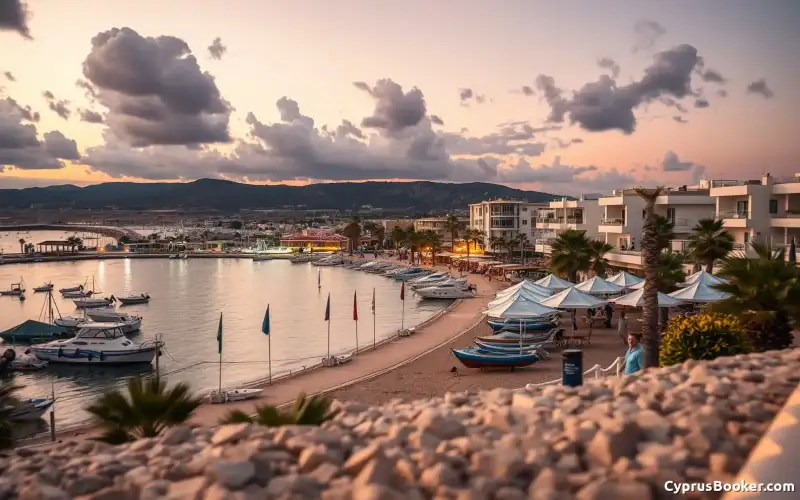
Every British property buyer who's looked seriously at the Mediterranean has had the same internal debate: Spain, Portugal, or somewhere a bit different? I've been through it twice — once for myself in 2019, and a hundred times since with friends asking me to talk them through it over a pub lunch. Here's the honest comparison, with the maths on the table.
Before we start, I'll declare my bias: I bought in Ayia Napa, so obviously I think Cyprus won. But I also genuinely looked at the other two seriously, viewed properties in both, and have friends who own in Albufeira and Marbella. So this isn't a hatchet job on Spain or Portugal — they're both lovely. It's a comparison of three real options for someone with somewhere between GBP 200k and GBP 500k to spend.
The Three Contenders, in Brief
Costa del Sol (Spain) — the granddaddy of British holiday-home destinations. Marbella, Estepona, Fuengirola, Benalmadena. Chrome cafes, marinas full of yachts, more pie-and-mash pubs than London zone 3. About 800,000 British residents in Spain in total, the largest expat group in any EU country.
Algarve (Portugal) — Albufeira, Lagos, Tavira, Vilamoura. Quieter than Spain, slightly classier reputation, golf-course-and-villa territory. Roughly 50,000 British residents, growing fast since the Non-Habitual Resident scheme took off (and contracted, then mutated again).
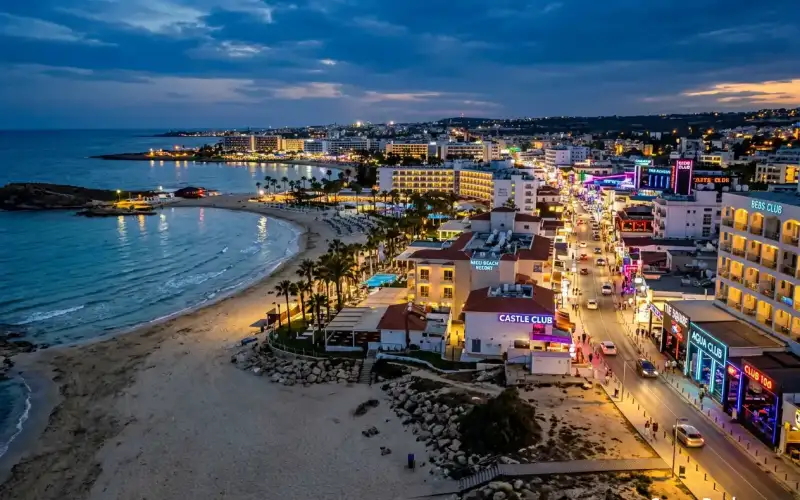
Ayia Napa (Cyprus) — south-east Cyprus, twenty minutes from Larnaca airport. About 25,000 British residents on the island, but concentrated in Paphos and Limassol traditionally. Ayia Napa's British buyer cohort is newer — really only growing since around 2020.
Round 1: Property Prices (GBP per sqm, 2026 data)
| Location | Apartment (avg GBP/sqm) | Villa with pool (typical GBP) | 1-bed flat near sea |
|---|---|---|---|
| Marbella town | GBP 4,800-7,200 | GBP 800k-2.5m | GBP 280k+ |
| Estepona | GBP 3,400-4,800 | GBP 500k-1.2m | GBP 195k+ |
| Albufeira | GBP 3,200-4,500 | GBP 450k-900k | GBP 175k+ |
| Lagos | GBP 3,800-5,200 | GBP 550k-1.1m | GBP 220k+ |
| Ayia Napa | GBP 2,400-3,800 | GBP 280k-650k | GBP 125k+ |
Winner: Ayia Napa. The price gap isn't trivial. For the same money you spend on a one-bed flat in Estepona, you can have a two-bed in Ayia Napa with a balcony bigger than your London flat's living room. If you want to see the spread of what's currently available, view available villas and apartments on the sister site — there's a filter for under-GBP-200k that's worth a scroll.
Round 2: Climate (the whole point of going)
| Costa del Sol | Algarve | Ayia Napa | |
|---|---|---|---|
| Sunshine days/year | ~300 | ~300 | ~320 |
| Avg summer temp | 27°C | 26°C | 30°C |
| Avg winter temp (Jan) | 13°C | 12°C | 16°C |
| Annual rainfall | 525mm | 510mm | 340mm |
| Sea swimmable | June-Oct | June-Oct | May-Nov |
Winner: Ayia Napa, narrowly. Cyprus is genuinely the warmest of the three in winter, and gets the most sunshine days. The downside: summer can hit 36°C in July-August, which is hotter than the Algarve gets. If you're heat-sensitive, Portugal's Atlantic breeze is a real plus.
Round 3: Flight Time and Cost from the UK
| Route | Flight time | Off-season return (avg) |
|---|---|---|
| Manchester → Malaga | 2h 50min | GBP 60-120 |
| Manchester → Faro | 2h 55min | GBP 70-130 |
| Manchester → Larnaca | 4h 25min | GBP 75-150 |
| Heathrow → Malaga | 2h 45min | GBP 80-160 |
| Heathrow → Faro | 2h 50min | GBP 90-170 |
| Heathrow → Larnaca | 4h 35min | GBP 100-200 |
Winner: Spain. Honestly, no contest on this one — Spain's the closest. Cyprus loses about 90 minutes per flight, which over a year of weekend trips adds up. However. The flight cost gap is much smaller than the time gap, because Larnaca-bound flights tend to be on Easyjet, Ryanair and Jet2 with similar pricing dynamics. So you pay roughly the same to fly an extra 90 minutes.
If you live in southern England and you'll only visit four times a year, Spain wins. If you live in the Midlands or further north and you'll go six-plus times, the difference matters less than you'd think.
Round 4: Language and Local Bureaucracy
This one surprises people.
Costa del Sol: Spanish language. In tourist hubs you can survive on English, but try opening a bank account, registering with a doctor, dealing with the town hall — without basic Spanish, you'll need a "gestor" (a paid bureaucracy-fixer) for everything. Brexit has also made Spanish residency genuinely complicated; the Non-Lucrative Visa requires showing EUR 28,800/year of passive income.
Algarve: Portuguese. Less English-friendly than Spain in administrative settings, although tourist-facing staff are excellent. Portugal's NHR scheme that drew so many Brits has been heavily restricted as of 2024. Tax position is more complicated than it was three years ago.
Cyprus: English is essentially a co-official language for practical purposes. The island was a British colony until 1960, drives on the left, has three-pin plugs, sells HP Sauce in supermarkets. Property contracts are routinely drafted in English. Banks have English-speaking expat advisors as standard. Tax forms are bilingual. Around 80%+ of the population speaks fluent English. Court documents can be filed in English.
Winner: Ayia Napa, by a country mile. If you've never lived abroad before, Cyprus is the gentlest possible landing strip. You can buy, sell, settle disputes, hire a plumber, see a dentist — all in English, no awkward fumbling.
Round 5: Tax Position for British Residents
| Spain | Portugal | Cyprus | |
|---|---|---|---|
| UK pension income tax | Up to 47% (national + regional) | NHR ended 2024; now standard rates | Flat 5% above EUR 3,420 (optional) |
| Wealth tax | Yes — varies by region (0.2-3.5%) | No standard wealth tax | None |
| Inheritance tax | Yes — varies by region | 10% stamp duty on inheritances | None (abolished 2000) |
| CGT primary residence | 19-26% (with reliefs) | Up to 28% (with reliefs) | Often 0% with allowances |
| VAT on first home | 10% standard | 23% standard | 5% reduced rate available |
Winner: Ayia Napa, dominantly. Cyprus has the most favourable tax position of the three by some distance, particularly for retirees living off UK pension income. This is genuinely a major reason why so many of our buyers in their late 50s and 60s now look at Cyprus first.
Round 6: The Vibe (this matters more than people admit)
Costa del Sol is dense with British. You can find a Yorkshire pub, a chippy and a Sunday roast within 5 minutes of any property. Some people love that — a community ready-made. Others find it depressing because they came to Spain to escape Britain and ended up in a sunny version of Skegness.
Algarve is more dilute. Brits are present but mixed with Germans, Dutch, Scandinavians. Quieter, more "tasteful" reputation. Albufeira specifically does have a strip of British-themed bars but the rest of the region feels Portuguese.
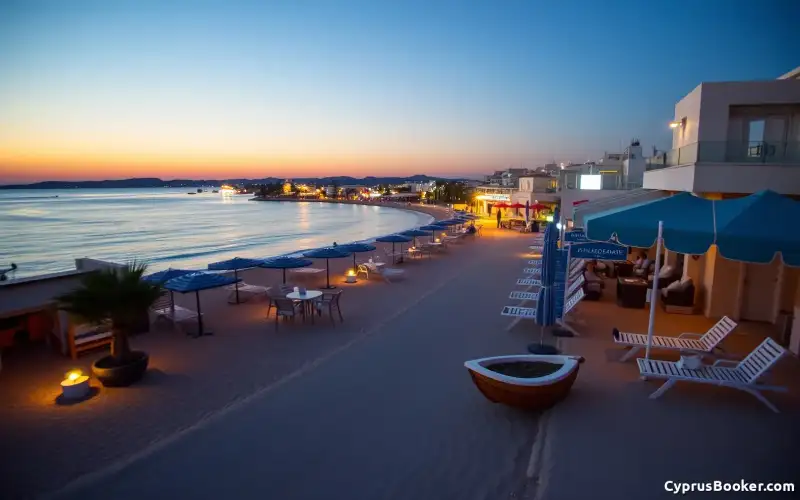
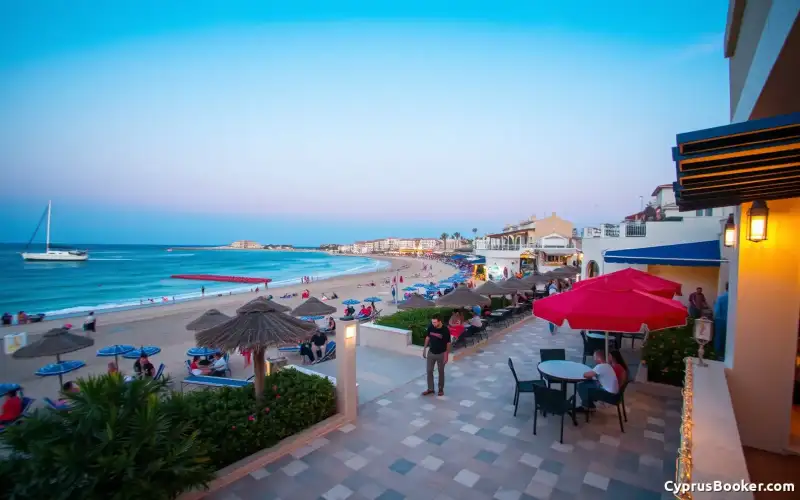
Ayia Napa is — and this is changing fast — much less British-dominated than its reputation suggests. Yes, the famous club strip exists, but it's two streets in a 30-square-kilometre municipality. The rest of the year-round community is Cypriot, Russian, Polish, Israeli and increasingly British buyers. It feels foreign in a way that Marbella simply doesn't anymore.
That cuts both ways. If you want a ready-made British social circle, Marbella delivers it. If you want to feel like you're somewhere different, Ayia Napa wins.
Round 7: Buying Process and Legal Safety
This isn't talked about enough. The actual mechanics of buying property — how protected your money is, how long it takes, whether you're going to be stitched up by a developer — vary substantially across the three.
Spain uses a "private contract" system, with a 10% deposit at signing and notary completion typically 2-3 months later. The Spanish notary doesn't represent you — they certify the document. You absolutely need an independent lawyer. Spain has a much-publicised history of off-plan property scandals along the Costa del Sol, particularly anything involving land that turned out to lack proper licences. Verification of paperwork is essential and not always quick. Average completion time: 8-12 weeks if everything's clean.
Portugal is similar to Spain but slightly more buyer-friendly. The Promessa de Compra e Venda (promise contract) is binding, normally with a 10-20% deposit, then completion via notary. Portugal also has had some questionable developments in the Algarve, but less notorious than Spain. The Golden Visa scheme has now been removed from real estate, so the speculative supply has cooled and prices have stabilised. Completion: typically 8-10 weeks.
Cyprus has — and this is genuinely unusual — the "specific performance" system. Once your contract is filed at the Land Registry (within 6 months of signing), the seller cannot sell to anyone else, and even if they go bankrupt, you cannot lose the property. UK conveyancers love this; it's far safer than the English system where contracts can fall through up until exchange. The downside: post-Brexit, UK buyers need a "permission to acquire" which adds 2-4 months. Net completion: 4-7 months, but with stronger legal protection at every step.
Winner: tied. Cyprus is safer, Spain and Portugal are faster. If you have lawyers you trust, all three are workable. If you're nervous about parting with hundreds of thousands of pounds across borders, Cyprus's specific performance is genuinely reassuring.
Round 8: What Happens When Things Go Wrong
Nobody wants to think about this, but it matters. What if you buy and then need to sell quickly? What if the building has a structural issue? What if your developer goes bust mid-construction?
Spain: Resale market is liquid in Marbella and the bigger Costa del Sol towns. Less so in smaller villages. Construction-warranty disputes can take 3-7 years through Spanish courts. Lawyers' fees rise quickly.
Portugal: Resale slower than Spain, particularly post-NHR cooling. Court system is slow but reasonably fair. Property defects covered by 5-year warranty by law.
Cyprus: Resale market in Ayia Napa is genuinely active — typical time-to-sell is 4-9 months for a fairly priced property. Developer-bankruptcy protections are stronger because your contract is registered at the Land Registry. Court process can be slow (Cyprus has a famously backed-up court system) but the legal protection at the contract level often means you don't need to go to court in the first place.
Winner: marginal Cyprus advantage due to the registration system, but honestly, all three are workable if you do your due diligence properly.
The Honest Verdict
Ayia Napa wins this comparison on:
- Property prices (clear margin)
- Tax treatment (clear margin)
- Climate (small margin)
- Language ease (clear margin)
Costa del Sol wins on:
- Flight convenience
- British-expat community ready-made
- Restaurant variety and shopping
Algarve wins on:
- Aesthetic — the cliffs and beaches are arguably the prettiest of the three
- Lower-density development outside Albufeira
- Atlantic-cooler summers if heat is an issue
If you're 60+, looking for a retirement home, want your money to go furthest, don't speak a foreign language, and can absorb the extra 90-minute flight: Cyprus, every time.
If you're 40s-50s, want easy weekend escapes, live in southern England, and your social life is already half-Spanish: Costa del Sol probably suits you better.
If you want something quieter, more upmarket, and you don't mind the more complex tax landscape post-NHR: Algarve is still beautiful.
If You've Decided Cyprus Is the Answer
The buying process in Ayia Napa, as I covered in the longer guide on this site, takes 4-7 months from offer to title transfer. The key bits — finding the right property at a fair price, organising a lawyer who actually returns calls, navigating the post-Brexit "permission to acquire" — are exactly where most British buyers waste time and money trying to do it solo.
That's the gap our sister site fills. Speak to our buying advisors for a no-pressure 30-minute consultation, or just browse current listings on cyprus-property.co.uk to get a feel for prices. We work with verified developers and resale agents across Ayia Napa, Protaras and Cape Greco, and we don't charge buyers a fee — our commissions are paid by the seller side, same as a traditional UK estate agent.
Whichever Mediterranean spot you pick, do go and view in person before signing anything. Photographs lie. Property videos lie even harder. There's no substitute for standing on the balcony at 8pm with a glass of something cold and asking yourself: would I want to wake up here in February?
Comments (3 comments)