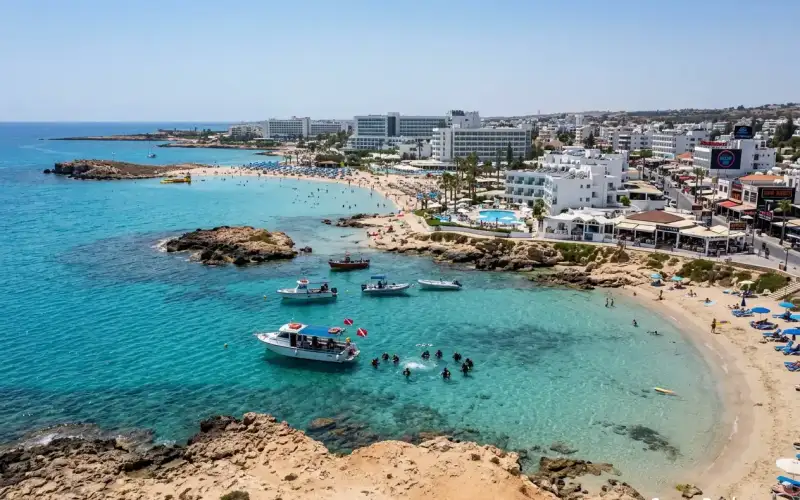
Last summer, I watched my youngest—who's terrified of putting his face underwater in the pool—strap on a wetsuit and descend 12 metres to the seabed off Cape Greco. He came back up grinning like he'd discovered buried treasure. That's the magic of scuba diving in Ayia Napa. It transforms nervous first-timers into underwater explorers in a single morning.
The thing about Ayia Napa is that it sits on Cyprus's most dramatic coastline. The water clarity is stunning—often 30 to 40 metres visibility in summer—and the dive sites are genuinely beginner-friendly. You don't need to be an athlete or have any prior experience. You just need to show up, listen carefully, and trust your instructor.
Why Ayia Napa Is Perfect for Your First Dive
Ayia Napa isn't a coincidence as a diving destination. The town sits at the eastern tip of Cyprus, where the Mediterranean meets rocky cliffs and underwater canyons. That geography matters because it creates sheltered bays with calm water, especially in the mornings before the wind picks up.
The dive schools here cater specifically to beginners. They're not interested in rushing you down to 40 metres to see fancy wrecks. They want you safe, comfortable, and genuinely excited about coming back. Most operators run PADI-certified courses, which means your qualification is recognised worldwide—useful if you catch the diving bug and want to explore elsewhere.
Summer water temperature sits around 26 to 28°C, so you'll be comfortable in a 3mm wetsuit. Winter drops to 16°C, which requires a thicker suit, but honestly, summer is when most British families visit anyway. The busy season runs June through August, but May and September offer better visibility and fewer crowds if you're flexible with timing.
One more thing: Ayia Napa's dive sites are genuinely close. You're not spending two hours on a boat. Most sites are 5 to 15 minutes from the harbour, which means less seasickness risk and more time actually underwater.
Understanding PADI Try-Dives vs. Certification Courses
This is the crucial distinction that confuses most beginners. A PADI Discover Scuba Dive (or try-dive) is a single experience. You spend 30 to 45 minutes in the water with an instructor right beside you, descending to about 12 metres maximum. No qualification, no theory, no commitment beyond that morning. It costs roughly £60 to £85 per person in 2026, and it's brilliant for testing whether diving is actually for you.
A PADI Open Water Certification, by contrast, is a three-day course. You learn theory (usually online or in a classroom), complete confined water training (often in a pool or shallow bay), and then do four open-water dives where you demonstrate specific skills. At the end, you get a card that says you can dive independently up to 18 metres. Cost is typically £280 to £350 for the full course.
Most families with young kids do the try-dive first. See how your child reacts, whether they genuinely enjoy it, and whether they're ready for a full course. I've seen kids absolutely love it and kids who decide it's not for them—both outcomes are fine. The try-dive lets you find out without the three-day investment.
If you're genuinely keen and have the time, the Open Water course is worth doing. You'll be far more relaxed underwater because you've practiced skills in controlled conditions. You'll also understand the theory—why you can't hold your breath while ascending, how nitrogen affects your body, what all those gauges on your equipment actually do.
Best Dive Sites for Complete Beginners Around Cape Greco
Cape Greco is the rocky headland that dominates Ayia Napa's eastern skyline. It's also home to most of the beginner-friendly dive sites. Here's what you're actually diving:
Thalassa Reef sits in a sheltered bay just south of Cape Greco. The seabed is sandy with scattered rocks, and the maximum depth is about 14 metres. You'll see small fish, the occasional grouper, and if you're lucky, an octopus hiding in the rocks. The current is usually minimal, and the visibility is excellent. This is the site where most beginners do their try-dives because it's genuinely forgiving.
The Arch is a natural rock formation about 15 metres down, roughly 20 minutes' boat ride from the harbour. There's a swim-through, which sounds dramatic but is actually quite spacious and safe. Beginners love it because it's visually interesting without being technically demanding. Fish life is decent, and the sandy bottom means you're not worried about accidentally damaging coral.
Grecian Rocks is a cluster of underwater boulders at about 10 to 16 metres depth. The rocks create little canyons and overhangs where fish congregate. It's more visually interesting than flat sand, but still straightforward for beginners. Visibility here is typically excellent because it's exposed to the open sea.
The Wreck of the Pelagios is technically a bit more advanced, but some dive schools take confident beginners to the shallower parts around 12 to 15 metres. The wreck itself is a small cargo vessel that went down decades ago and is now covered in soft coral and small fish. It's iconic enough that many divers want to see it, but check with your school whether they recommend it for your level.
All of these sites are reachable from Ayia Napa harbour in under 30 minutes. The sea conditions are best May through October, though summer (June to August) offers the warmest water and most predictable weather.
Dive Schools Operating in Ayia Napa in 2026
Several PADI-certified dive centres operate out of Ayia Napa. The main ones are:
- Waterworld Diving Centre – Located near the main beach, they run try-dives daily and offer full PADI courses. They're busy during peak season but professional and safety-focused. Expect to pay £75 for a try-dive, £320 for Open Water certification.
- Divezone Ayia Napa – Smaller outfit with a good reputation for personalised instruction. They specialise in small groups (maximum four divers per instructor) and are particularly patient with nervous beginners. Prices are slightly higher (£80 try-dive, £350 certification) but the experience is more intimate.
- Nautilus Diving School – Based at a hotel complex, they offer convenient package deals if you're staying nearby. Their instructors are experienced with children. Try-dive around £70, full course £300.
Book ahead during summer. July and August can get busy, and some schools have limited slots. May, June, and September are sweet spots—good weather, warm water, but fewer crowds.
What to Expect on Your First Dive: The Reality
Let's be honest about what actually happens. You arrive at the dive centre 30 to 45 minutes before your scheduled time. You fill out a medical form (be truthful about any ear problems, heart conditions, or medications). Then an instructor briefs you on the basics: how to clear your mask underwater, how to control your buoyancy, what the hand signals mean.
You get dressed in a wetsuit, which is always slightly awkward and never as graceful as it looks in photos. The equipment (tanks, harness, weights, regulator) feels heavy on land. Don't worry—it becomes almost weightless once you're in the water.
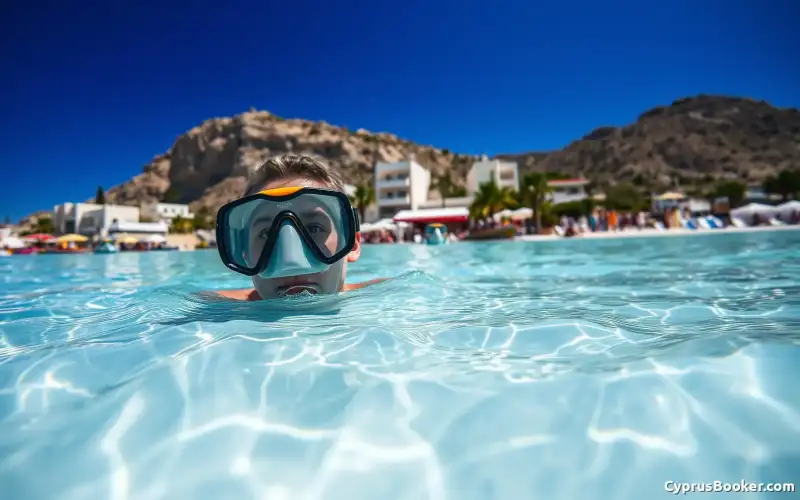
You enter the water gradually, usually from a shallow beach or a boat's ladder. Your instructor stays right beside you. You practice breathing through the regulator in shallow water (about waist-deep) for a few minutes. This is the moment where many people feel a slight panic, but it passes quickly once you realise you can actually breathe.
Then you descend slowly, with your instructor controlling the pace. You'll feel pressure in your ears—you equalise by pinching your nose and gently blowing. If you can't equalise, you stop and surface. There's no shame in that. Some people's ears need time to adjust.
Once you're at depth, everything changes. The noise of the surface disappears. You're weightless. Time feels strange. You'll notice colours fade as you go deeper (reds disappear first, then oranges). Your instructor will point out fish and rocks. You'll practice a few basic skills—removing and replacing your mask, for example. Then you just... swim around and enjoy it.
The whole thing lasts about 30 to 45 minutes underwater, though it feels shorter. You ascend slowly (never faster than your bubbles), make a safety stop at about 5 metres for three minutes, and then surface.
You'll probably be buzzing for hours afterward. Your ears might feel slightly full for a bit. You'll definitely want to talk about what you saw. That's completely normal.
Costs and What's Included in 2026
Here's the actual money side of things:
| Service | Cost (£) | What's Included |
|---|---|---|
| PADI Try-Dive (single) | 60–85 | Equipment rental, brief instruction, one supervised dive to ~12m |
| PADI Open Water (3 days) | 280–350 | Theory, confined water training, four open-water dives, certification card |
| Equipment Rental (per dive) | 15–25 | Included in course/try-dive prices above |
| Boat Fee (if not included) | 20–35 | Usually included; check with school |
| Specialty Courses (e.g., Deep, Navigation) | 150–200 | Two dives, instruction, certification |
Bring your own mask and fins if you have them—rental equipment works fine, but personal gear is more comfortable. Bring a towel and dry clothes for after. Most schools have changing facilities, but they're basic.
If you're staying in Ayia Napa for a week, consider doing a try-dive early in the week and a full Open Water course later if you loved it. That way you're not rushing and you get the full experience.
Common Mistakes Beginners Make (and How to Avoid Them)
After watching dozens of first-time divers, I've noticed patterns. The biggest mistake is holding your breath. The moment you panic slightly, people instinctively stop breathing. Don't. Breathing through a regulator underwater is genuinely safe—your body gets air, your lungs stay inflated. Holding your breath is what causes problems. Your instructor will hammer this point home, so listen.
Second mistake: fighting the equipment. Wetsuits are tight. Tanks are heavy. Regulators feel weird in your mouth. But once you're in the water, none of that matters. Accept that the first few minutes feel strange and you'll relax quickly.
Third: not equalising your ears properly. If you feel pressure building, stop descending and try again. Pinch your nose, gently blow, feel the pop. If it doesn't work, surface and try again later. Forcing it causes pain and potential injury. Your instructor will help.
Fourth: going diving hungover or exhausted. You need to be genuinely alert and well-rested. Dehydration makes nitrogen narcosis worse. Eat a proper breakfast, drink water, sleep the night before.
Fifth: not being honest about your fitness or medical history. If you have ear problems, heart conditions, or you're on medications, tell your instructor. They're not judging you. They're keeping you safe. Some conditions mean diving isn't suitable, and that's fine—it's better to know beforehand than have problems at depth.
Seasonal Considerations and Booking Tips
Summer (June to August) has the warmest water and most predictable weather, but it's also peak tourist season. Dive schools are busy, prices are at their highest, and you might get grouped with strangers. If you book a try-dive in July, you might be in a group of six people with one instructor. That's still safe, but less personal.
May and September are genuinely better. Water is still warm (24 to 26°C), visibility is excellent, and you'll have more relaxed, smaller groups. Schools are quieter and more flexible. Prices drop slightly too.
April and October are possible but water gets chilly (around 18 to 20°C), so you'll need a thicker wetsuit. Spring can be windy, making sea conditions choppy. Autumn is calmer but visibility can be variable.
Book your try-dive or course at least a week in advance, especially during summer. Most schools have online booking systems, but calling directly sometimes gets you better deals or more flexible scheduling. Ask about group discounts if you're diving with friends or family.
Check the school's cancellation policy. Weather occasionally forces cancellations (strong winds, rough seas). Reputable schools will reschedule you free of charge.
After Your First Dive: What Happens Next
Most people want to dive again immediately. That's brilliant. If you're hooked, book an Open Water course before you leave Cyprus. You'll have the certificate for life, and you can dive anywhere in the world with it.
If you're less sure, that's also fine. You can always do another try-dive next summer and decide then. There's no pressure to commit immediately.
Once you're certified, you can dive independently with a buddy (another certified diver). Ayia Napa is full of dive buddies if you join local groups. You can also book guided dives with schools indefinitely—many experienced divers do this because having an instructor means you can relax and enjoy the experience rather than worrying about navigation or safety.
The diving community around Ayia Napa is genuinely friendly. You'll meet people from all over the world who've all had the same nervous-but-excited first dive experience. It's a nice way to make friends while on holiday.
Comments (4 comments)