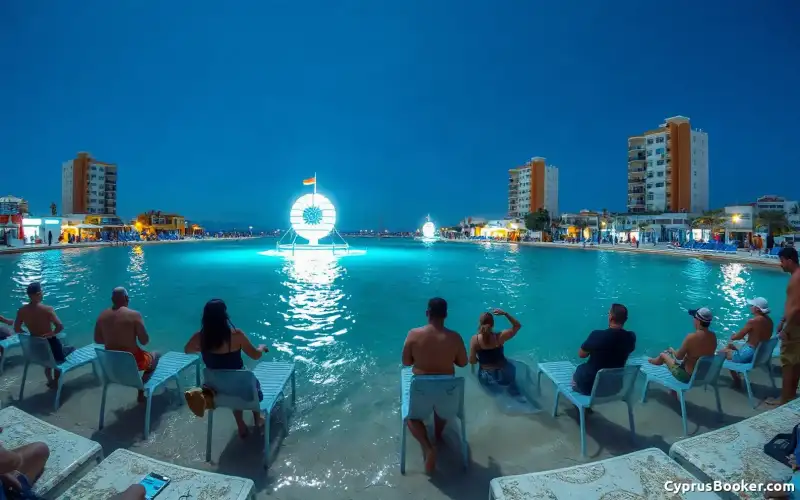
I watched a father stand at the WaterWorld entrance in July, holding a screaming toddler in one arm and a €45 ticket in the other, looking at the two-hour queue for the main slide like he'd just made a terrible life choice. He probably had. But it doesn't have to be that way.
WaterWorld Ayia Napa isn't a bad day out—it's genuinely one of the better waterpark experiences in the Mediterranean—but it's chaotic, expensive, and poorly signposted. Families who show up unprepared waste money, lose hours to queues, and end up eating overpriced souvlaki that tastes like it was grilled in 2019. This guide is what I wish someone had told me before my first visit.
What You're Actually Walking Into
WaterWorld sits about 2km south of central Ayia Napa, roughly a 15-minute walk from the main strip or a €3 taxi ride. It's open daily from late May through September, with peak season running June through August. In 2026, opening hours are typically 10am to 6pm, though this shifts depending on school holidays and local events—check their website before you go, because the printed schedules at hotels are often wrong.
The park covers about 100,000 square metres and is divided into themed zones: the main waterslide area (where everyone congregates), a lazy river section, a wave pool, a kids' zone with smaller slides and paddling pools, and a separate area for extreme slides. On a busy July day, you're sharing this space with roughly 3,000 other people, which sounds manageable until you realise 2,500 of them want to go down the same slide at the same time.
The park is genuinely well-maintained. The tiles are clean, the water is chlorinated to the point of stinging your eyes, and the staff speak English. But it's not a luxury experience. The changing facilities are basic, the shade is minimal, and the infrastructure was built for half the current visitor numbers.
Tickets: What You'll Actually Pay
Adult tickets in 2026 cost €42 to €48 depending on when you buy them. Children (ages 3–11) are €28 to €32. Toddlers under 3 enter free. Family packages exist but only save money if you're buying four or more tickets, and the savings are modest—roughly €5 to €10 per family.
Buy online at least a day in advance. You'll save €3 to €5 per ticket, and you skip the queue at the entrance. Seriously, do this. The gate queue moves slowly, and by 11am it's backed up to the car park.
Discounts are rare. Some hotels offer vouchers, but the discount is usually 5% and you have to buy at the hotel desk, which defeats the purpose. If you're staying in Ayia Napa for a week, consider the two-day pass (€65 adult, €42 child), which gives you flexibility to visit on two quieter days rather than cramming everything into one scorching afternoon.
Locker rental costs €5 for a small locker, €8 for a large one. You need coins, and the change machine is temperamental. Bring €20 in small notes. Towel rental is €3 and honestly pointless—bring your own.
Opening Times & When to Actually Go
The park officially opens at 10am, but don't arrive at 10am. The first hour is quiet, which sounds good, but the staff are still setting up the slides and the water temperature in some pools is still cold. Arrive between 11am and noon. You'll miss the initial chaos, the water will be properly warmed, and you'll still get 6–7 hours before closing.
Tuesdays and Wednesdays are quieter than weekends. Rainy mornings clear out crowds by afternoon—people leave thinking the weather won't improve, but it usually does by 2pm. If you see a weather warning, go anyway. You'll have the park almost to yourself.
Peak times are 1pm to 4pm. This is when families have finished lunch and are trying to squeeze in afternoon slides. If you're going on a weekend in July or August, accept that you'll queue. There's no way around it. But if you're flexible with your dates, avoid these windows.
Rides by Age: What Actually Works
This is where most guides get it wrong. They list every slide without telling you which ones are actually suitable for your kid, or which ones will make your toddler cry for three hours.
For ages 0–3: Bring them if you want, but they'll spend most of the day in the kids' pool or lazy river. The toddler zone has small water slides and paddling pools, which is fine for 20 minutes, then they're bored. If you have a non-swimming toddler, hire a babysitter for the day. It's €15–20 for four hours and worth every cent. Your sanity is more valuable than another lap of the lazy river.
For ages 4–7: The kids' zone becomes actually useful. The smaller slides are genuinely fun, and the wave pool is entertaining for an hour. Most children this age can handle the Kamikaze (a moderate slide, not extreme), though some will find it scary. Let them watch other kids first. The lazy river is genuinely relaxing for parents—you can float for 20 minutes while the kids splash around.
For ages 8–12: This is the sweet spot for WaterWorld. They can handle most slides except the extreme ones. The Kamikaze and the twin slides (Gemini) are perfect. The wave pool is fun but gets boring quickly. Older kids in this group will want to try the extreme slides—let them, but go with them the first time. The Abyss (a near-vertical drop) is genuinely intense and not for nervous children.
For ages 13+: Teenagers will spend the first hour exploring, then get bored unless there's a reason to stay. The extreme slides are the only thing that holds their attention. If you have a mix of ages, let the older kids do the extreme slides while you supervise the younger ones at the wave pool. You'll all be happier.
Queue Strategy: How to Actually Get on Rides
Most families queue for every slide they want to do. This is a waste of time. On a busy day, you'll spend 90 minutes queuing and 10 minutes sliding. Here's how to avoid it.
Use the FastPass system. WaterWorld offers a FastPass option (€15 per person) that lets you skip queues at the most popular slides. It's expensive, but if you're visiting on a Saturday in July, it saves you 2–3 hours. Calculate whether it's worth your sanity. If you have three kids and two adults, that's €75 for the day. If it saves you three hours of queuing, that's €25 per hour of peace. You decide.
Identify the unpopular slides. Not every slide is equally popular. The smaller slides in the kids' zone have almost no queue. The lazy river has no queue. The wave pool queue is long but moves quickly. The extreme slides (Abyss, Kamikaze) have long queues but the queue moves faster than you'd think because the slides move people quickly. Avoid the main family slides between 1pm and 3pm—that's when every family with young kids is trying to do the same thing.
Split your group strategically. If you have two adults and multiple kids, send one adult with the older kids to the extreme slides while the other supervises younger kids at the wave pool. You'll cover more ground and everyone gets to do what they want.
Go to the park on a weekday if possible. A Wednesday in June has maybe 1,000 visitors. A Saturday in July has 4,000. The difference in queue times is dramatic.
What to Pack: The Stuff Nobody Mentions
Sunscreen. Serious sunscreen. SPF 50+, reef-safe, and reapply every two hours even if the bottle says it's waterproof. The Cypriot sun in July is genuinely dangerous. I watched a family from Manchester turn bright red in three hours because they thought


Comments (0 comments)
No comments yet — be the first!