
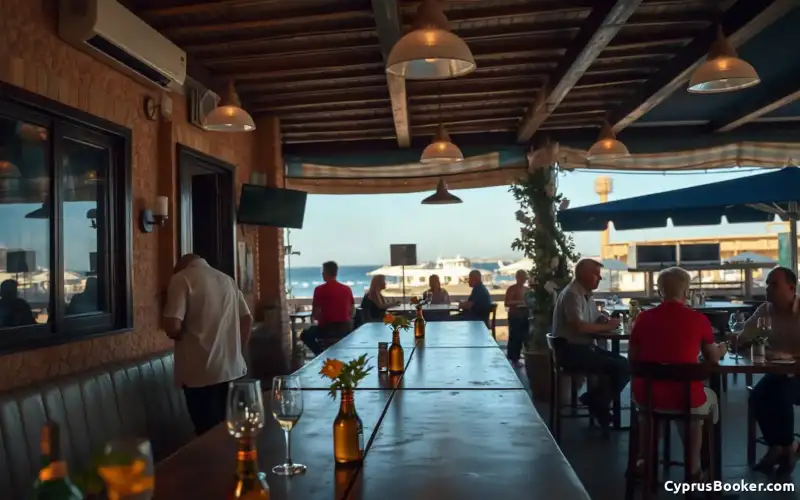
Last summer, I watched a British couple at a taverna in Protaras spend twenty minutes trying to order a single moussaka each. They couldn't understand why the waiter kept shaking his head and gesturing at the table next to them, where a family of four was sharing eight different dishes. That's the moment I realised most tourists have no idea how Cypriot taverna culture actually works. It's not about ordering one plate per person. It's about understanding an entirely different dining philosophy—one that's been perfected over centuries.
The good news? Once you crack the code, ordering at a traditional taverna becomes genuinely enjoyable. You'll eat better, spend less money, and actually understand why locals keep coming back to the same family-run places year after year.
Why Cypriot Taverna Ordering Feels So Different
If you're used to British restaurants where you order one main course and sit down to eat it solo, a Cypriot taverna will feel utterly chaotic at first. The waiter doesn't bring you a menu immediately. There's no starter-main-dessert progression. People are shouting across tables. Dishes arrive at random intervals. Someone's grandmother is in the kitchen. This isn't poor service—it's just how it works here.
The fundamental difference is that Cypriot dining is communal. A taverna meal is designed for sharing. Meze—small plates of different dishes—are the backbone of everything. You'll order 8 to 12 different meze for a table of four people, not four individual mains. Each dish is small enough to taste properly, but there's enough variety that everyone gets something they love. It's the opposite of the British "pile it high" mentality.
The second thing that throws people off is timing. In Cyprus, there's no rush. Courses don't arrive in a predetermined order. Cold meze might come out alongside hot ones. Bread arrives whenever the kitchen feels like it. You might get your grilled fish before your saganaki (fried cheese). This drives some British tourists mad, but locals understand it's because the kitchen is cooking to order, not following some industrial flowchart.
Finally, the menu itself is cryptic. Most tavernas don't have detailed English translations. The waiter expects you to ask questions. He might not speak perfect English, but he knows every single dish and how it's made. He's not being unhelpful by not volunteering information—he's waiting for you to engage.
Reading the Menu Without Losing Your Mind
Here's the honest truth: most Cypriot taverna menus are badly designed for tourists. The English translations are sometimes comical. "Grilled pieces of meat" could mean anything. But there's a system to it if you know where to look.
Start by understanding the basic categories. Most menus divide dishes into sections: cold meze (salads, dips, cured meats), hot meze (fried cheese, meatballs, grilled vegetables), seafood, grilled meats, and grains (rice dishes, pasta). Prices are usually per portion, and portions are small—that's intentional.
When you see "halloumi" or "feta" on the menu, that's telling you it's cheese-based. "Saganaki" specifically means fried cheese, usually pan-fried until it gets a golden crust. "Keftedes" are meatballs. "Souvlaki" is meat on a skewer. "Kleftiko" is slow-roasted lamb wrapped in paper. These words appear on almost every menu, and once you know them, you can navigate blindfolded.
The wine list is usually short and focused on Cypriot wines. Don't overthink it. Most tavernas have a house white and house red that cost €8 to €15 per bottle and are perfectly decent. The waiter will happily recommend something based on what you're eating. Retsina (resin-flavoured wine) is traditional but polarising—try it once, then decide.
Ask the waiter what's good that day. This isn't a formality. The kitchen might have fresh fish that's not even on the menu, or they might have run out of something. A simple "What's fresh today?" opens up a whole conversation and usually results in better food.
The Art of Ordering Meze Correctly
This is where most tourists go wrong. They see meze listed at €4 to €8 each and think, "I'll have three meze and I'll be fine." Then they're still hungry at the end of the meal because they've only eaten the equivalent of one British starter.
The rule is simple: order three to four meze per person. For a table of four, that's 12 to 16 dishes. Yes, really. But remember—each meze is small. A portion of saganaki is two or three pieces of fried cheese. A meatball meze is usually four or five keftedes. A salad meze is a side-plate portion. By the time you've worked through 12 different dishes, you've eaten a proper meal.
The second rule: balance hot and cold. Don't order eight hot meze and expect them all to arrive at once. The kitchen can't fry that much simultaneously. Mix it up. Order four or five cold meze (which come out immediately), then four or five hot ones (which take 10 to 15 minutes), then maybe a grilled fish or meat dish if you want something more substantial.
The third rule: ask for recommendations in categories. Don't say, "What do you recommend?" Say, "What's your best cold meze?" or "What hot meze should we definitely have?" The waiter will give you three or four specific suggestions, and you pick from those. This is how locals order.
Here's a solid strategy for a table of four: Start with three cold meze—usually a Greek salad (actually called horiatiki, with feta and olives), a tzatziki or melitzanosalata (aubergine dip), and something with cured meat like loukoumades (if they have them) or pastirma. Then add three hot meze—saganaki, keftedes, and something grilled like halloumi or shrimp. Then ask about seafood or grilled meat options. This gives you nine dishes, covers all the bases, and costs about €30 to €40 per person.
Navigating the Unwritten Rules of Cypriot Dining
Cypriot taverna culture has rules, but they're not written anywhere. Break them and you won't get thrown out, but you'll mark yourself as a tourist instantly.
Rule one: Don't expect the waiter to check on you constantly. British restaurants train staff to hover and ask "Is everything alright?" every thirty seconds. Cypriot waiters assume you'll flag them down if you need something. To get attention, make eye contact and give a small wave or nod. Snapping fingers is considered rude, but a polite "Yassou!" (hello) works. Don't be shy—they expect it.
Rule two: Don't order everything at once. Order your cold meze first. When those are nearly finished, order the hot meze. This keeps the food flowing and prevents everything from arriving cold. The waiter might suggest this anyway, but if he doesn't, you initiate it.
Rule three: Bread and dips are usually free. A basket of bread arrives, sometimes with a small dish of olive oil or tzatziki. This isn't a starter you're paying for—it's complimentary. Eat it to manage your appetite while waiting for meze, but don't fill up entirely.
Rule four: Pace yourself. A Cypriot taverna meal can last two hours. That's normal. People aren't in a rush. They eat slowly, talk, drink wine, order more wine. If you're used to wolfing down food and leaving within 45 minutes, adjust your mindset. This is social time.
Rule five: Tipping is optional but appreciated. A tip of 5 to 10 percent is standard if the service was good. Round up the bill if it's easier. Cypriots don't tip as heavily as Americans, but they do acknowledge good service.
Rule six: Don't ask for modifications. Cypriot food is made a certain way for a reason. Asking for the sauce on the side, or no garlic, or extra something marks you as difficult. If you have genuine dietary requirements, mention them when ordering, but don't treat the menu like a build-your-own burger situation.
Specific Dishes to Order and Why
Rather than guessing, here are the meze dishes that actually matter. These appear on almost every traditional taverna menu in Ayia Napa and beyond, and they're worth ordering:
- Halloumi saganaki – Fried cheese with a crispy exterior and molten centre. Order this every time.
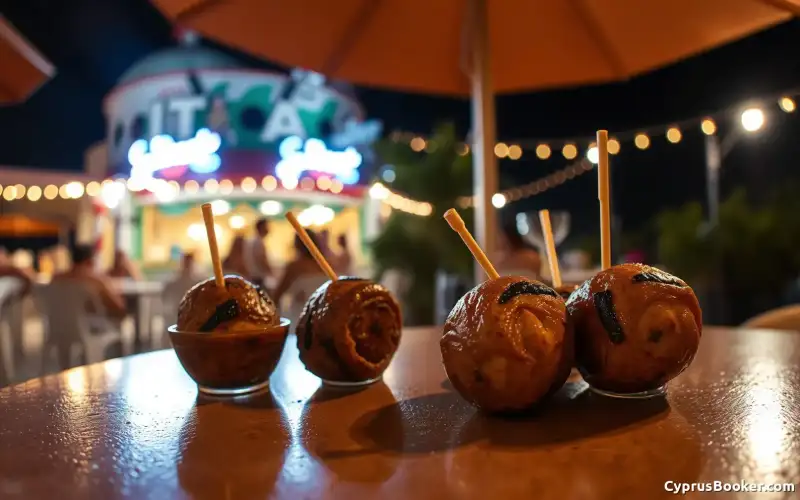
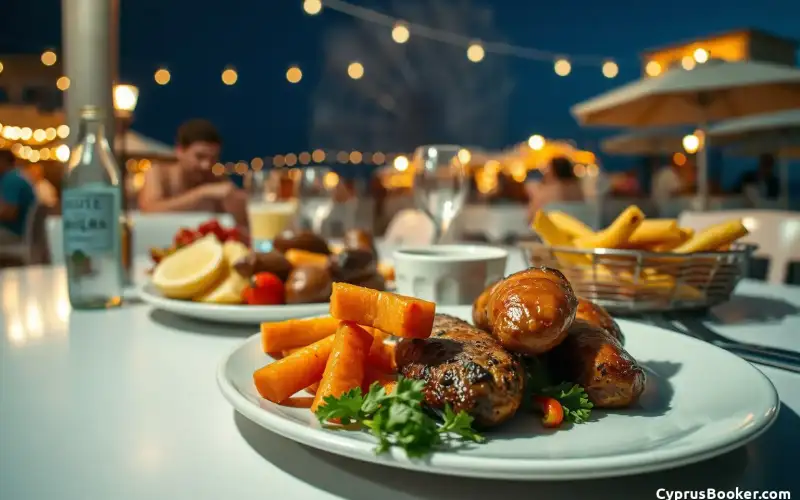
- Keftedes – Spiced meatballs, usually beef or pork. Better than they sound.
- Horiatiki salad – Tomatoes, cucumber, olives, feta, onion. Simple and perfect.
- Melitzanosalata – Charred aubergine dip. Smoky and addictive.
- Loukoumades – Fried dough balls with honey. Dessert-level indulgence as a meze.
- Grilled octopus – If they have it fresh, order it. Chewy, briny, perfect with lemon.
- Shrimp saganaki – Shrimp in tomato sauce with feta. Rich and flavourful.
- Souvlaki – Meat on a skewer. Pork is more common than lamb, and it's usually excellent.
Avoid ordering individual dishes like moussaka or pastitsio unless you're genuinely not interested in the meze experience. These are fine, but they're not why you came to a taverna. You came for the variety and the ritual.
What to Do When Things Go Wrong
Sometimes the kitchen forgets your order. Sometimes a dish arrives cold. Sometimes you order something and it's not what you expected. Here's how locals handle it:
First, stay calm. Getting angry at a waiter in Cyprus is culturally tone-deaf. The service industry moves at a different pace here, and that's not necessarily bad—it's just different. If something's clearly forgotten, politely remind the waiter. He'll apologise and get it sorted. If something arrives cold, send it back without drama. Say, "This is cold, can we get a hot one?" The kitchen will remake it quickly.
If you genuinely don't like something, you don't have to eat it. Leave it on the plate. The waiter won't be offended. He might ask why you didn't like it, and you can explain. This information actually helps the restaurant. Cypriots are proud of their food, and honest feedback is respected more than fake politeness.
The one thing you should never do: complain about prices after eating. Prices are displayed on the menu. If you ordered without checking, that's on you, not the restaurant. Most tavernas are genuinely affordable—a proper meal for two people rarely exceeds €50—but you need to look at the menu before ordering.
The Practical Details That Actually Matter
Timing matters. Tavernas fill up between 8 and 10 p.m. If you want a table without waiting, go at 7 p.m. or after 10:30 p.m. Lunch service runs from noon to 3 p.m., and it's usually quieter than dinner. Weekends are busier than weekdays, obviously.
Cash versus card: most tavernas accept both, but some older, family-run places prefer cash. Don't assume. Ask when you sit down. If you're planning to spend €100 or more, definitely ask first.
Dress code: there isn't one. Shorts and flip-flops are fine. You'll see locals in everything from beachwear to smart casual. The only rule is don't show up in swimming trunks and a bikini top—that's pushing it, even in Ayia Napa.
Allergies and dietary requirements: mention them immediately when ordering. Cypriot food uses a lot of olive oil, garlic, and dairy. If you're vegetarian, you have options (halloumi, various dips, grilled vegetables), but you need to specify. Vegan is trickier—most tavernas aren't set up for it, but they'll try to accommodate if you ask nicely.
Your First Taverna Visit: A Walkthrough
You arrive at 8 p.m. on a Friday. The taverna is busy but not packed. You're shown to a table. A basket of bread and a small dish of olive oil arrive. You get menus, usually laminated and slightly sticky. You have five minutes to look them over.
The waiter comes. You say, "We're not sure what to order. What do you recommend?" He suggests three or four cold meze and a couple of hot ones. You pick four cold and four hot. You order a bottle of house white wine. He nods and disappears.
Five minutes later, the cold meze start arriving: a salad, two different dips, some cured meat. You eat slowly, tear bread, drink wine. The waiter brings more bread without being asked. After 15 minutes, the hot meze arrive: fried cheese, meatballs, grilled shrimp. You eat these too. By now it's been 45 minutes and you've had eight dishes.
You're satisfied but not stuffed. The waiter asks if you want anything else. You order a grilled fish or some loukoumades for dessert. He brings it. You finish eating. He brings the bill without being asked. You pay, leave a tip, and leave. Total time: two hours. Total cost: €35 to €45 per person.
That's a proper taverna experience. Not fancy, not rushed, just good food and the rhythm of local dining culture.
The Thing Nobody Tells You
After you've ordered like a local a few times, something shifts. You stop thinking about the mechanics of ordering and just enjoy the meal. You realise why Cypriots spend hours at tavernas—it's not just about the food, though the food is excellent. It's the pace, the informality, the sense that nobody's watching the clock. You can sit for three hours with a €40 bill and nobody will rush you.
That's the real secret to taverna culture. Once you understand that, everything else falls into place.
Comments (0 comments)
No comments yet — be the first!