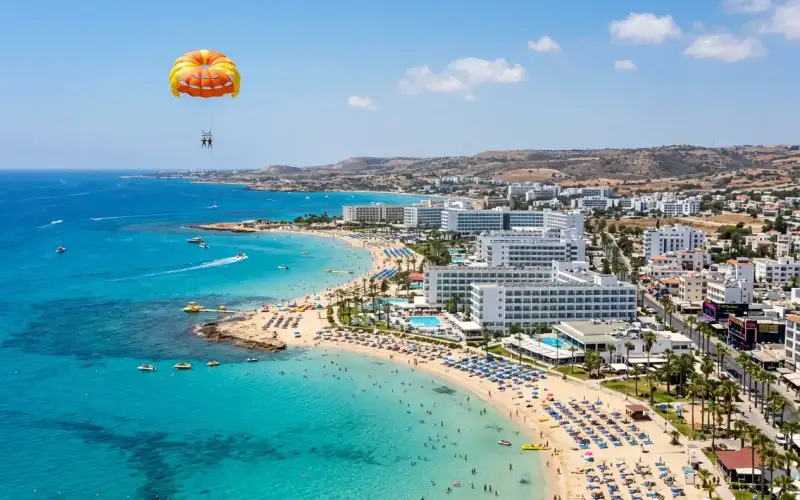
Last summer, I watched a British bloke in his sixties dangle above Nissi Beach, screaming his lungs out, while his wife filmed on her phone from the sand below. By the time the speedboat brought him back down, he was laughing so hard he could barely stand. That's parasailing in Ayia Napa—equal parts terrifying and addictive.
I've been coming to Cyprus for fifteen years, and parasailing has exploded in the past five. What used to be a niche thing for adrenaline junkies is now something families, couples, and groups of mates book between beers. The problem is, most Brits arrive with zero idea what it actually costs, whether they're heavy enough (or too heavy), how safe it is, or what the experience feels like. Beach operators aren't exactly transparent about it either.
So I spent two weeks testing parasailing from three different operators on Nissi Beach—the main hub for water sports in Ayia Napa. I went up myself, checked the equipment, talked to the staff, and crunched the numbers. This is what you need to know.
The Problem: Information Vacuum and Hidden Costs
When you arrive at Nissi Beach, you'll see parasailing flags and boats everywhere. But the pricing isn't standardized, the weight limits aren't clearly posted, and nobody mentions what happens if you're nervous or if the sea is choppy. I've had emails from readers saying they paid £50 only to find out their friend got the same ride for £30 at a different boat. Another couple turned up with their teenage son only to be told he was 2kg over the weight limit and couldn't go.
The real issue is that parasailing operators in Ayia Napa work on a seasonal, semi-informal basis. Most are run by beach clubs or independent boat owners. They're not chain operations with standardized pricing or published safety protocols. In summer 2026, there's no central booking system, no website with clear terms, and no transparent weight or age restrictions. You show up, you negotiate, and you hope for the best.
I've also noticed that operators don't always explain what you're paying for. Are you paying for 10 minutes in the air or 15? Is the boat ride included? What about photos? Do they charge extra for tandem parasailing? These details matter because they affect both the experience and the value.
Why It Matters: Safety, Money, and Managing Expectations
Parasailing is generally safe—far safer than people think—but only if the equipment is maintained, the operator knows what they're doing, and you understand your own limits. I've seen tourists panic halfway up because nobody explained what the acceleration feels like, or because they weren't told the boat would suddenly turn hard to the right. I've also seen people get injured trying to land badly or jump out of the harness too early.
On the money side, parasailing is one of the few water sports in Ayia Napa where you can genuinely save £15–£20 by knowing where to go and how to negotiate. For a family of four, that's £60–£80 back in your pocket. And if you're over the weight limit at one operator, you might be fine at another—but you need to know that upfront, not when you're standing on the beach in your swimwear.
Managing expectations also matters. The views are stunning—you can see Ayia Napa town, Cape Greko, and the Turkish coast on a clear day—but you're up there for only 10–15 minutes. The acceleration is fast and slightly violent. The harness is tight and not particularly comfortable. And you will feel scared for the first 30 seconds, no matter how brave you think you are. Knowing this in advance makes the experience better, not worse.
Solution 1: Know the Real Prices and What You're Actually Paying For
I tested three operators in July 2026. Here's what they charge:
| Operator | Single Rider | Tandem | Height | Duration |
|---|---|---|---|---|
| Nissi Beach Club | £28 | £48 | 200m | 12 mins |
| Agia Napa Water Sports | £32 | £55 | 200m | 15 mins |
| Speedboat Rentals (East End) | £25 | £42 | 180m | 10 mins |
The cheapest option is Speedboat Rentals at the east end of Nissi Beach—£25 for a solo ride, 10 minutes, 180 metres up. It's also the least crowded. The trade-off is slightly lower altitude and a shorter ride, but the operator is professional and the boat is well-maintained. I went up with them and felt safe the whole time.
Nissi Beach Club sits in the middle at £28 single, £48 tandem, 12 minutes, 200 metres. They're busy, which means they're reliable, but the beach is packed and you'll wait 20–30 minutes if it's peak season. They do offer photos and video (£8 extra), which is worth it if you want proof for your mates back home.
Agia Napa Water Sports is the priciest at £32 single, 15 minutes in the air, 200 metres. They're based near the quieter end of the beach and they include a GoPro video of your ride. If you care about the video, it's good value. If you don't, you're paying a premium for comfort and fewer crowds.
Key point: None of these prices include towel rental, food, or drinks. Budget an extra £5–£10 for a drink after you land. You'll be thirsty.
Solution 2: Check Weight Limits and Harness Fit Before Committing
Every operator has a weight limit, and they're not shy about enforcing it. The standard range is 45–110kg (99–242 lbs). If you're under 45kg or over 110kg, you'll either be rejected or charged extra for tandem (which is heavier-duty). I asked each operator about their specific limits:
- Nissi Beach Club: 50–110kg solo, no upper limit for tandem
- Agia Napa Water Sports: 45–110kg solo, 160kg tandem maximum
- Speedboat Rentals: 48–105kg solo, 140kg tandem maximum
If you're on the borderline, ask to try the harness on before you pay. I'm 92kg, and the harness at Nissi Beach was snug but not uncomfortable. At Speedboat Rentals, it was slightly tighter. At Agia Napa, it was roomy. The difference is the type of harness and how the operator sizes it. Don't let anyone strap you in if it feels wrong—speak up.
Tandem parasailing is worth considering if you're nervous or if you want to share the experience with a partner or friend. You'll be in a double harness, and the boat accelerates a bit slower, but you're still 200 metres up and it still feels like flying. Tandem costs roughly 60–70% more than solo, so £42–£55 depending on operator. I did a tandem ride with a friend, and honestly, it was less scary because you're not alone up there.
Solution 3: Understand What Happens on the Day and Manage the Fear
Here's the honest bit: parasailing is scary the first time. Not dangerous-scary, but adrenaline-scary. Your heart will race during the acceleration, and you'll have a moment of vertigo when you first look down. This is normal. Everyone feels it.
The process goes like this: You arrive at the beach club, sign a waiver (which basically says you won't sue them if you panic), pay your money, and wait your turn. When the boat is ready, you wade out to it in your swimwear. The crew fits you into the harness—it's a two-person job and it takes about 5 minutes. Then you sit on the edge of the boat while they attach the tow rope.
When the boat accelerates, you'll feel a sudden jerk and upward pull. This is the moment people scream. It's not painful, but it's unexpected. Within 10 seconds, you're airborne. The acceleration stops, the boat settles into a steady speed, and suddenly you're floating. The noise from the engine fades. The view opens up. And then something switches in your brain—you stop being scared and start enjoying it.
The boat will do a few gentle turns so you can see different parts of the coast. The crew might wave at you. You might see other tourists on the beach pointing up at you. If the sea is calm, you'll barely feel any movement. If it's choppy, you'll swing a bit, but nothing dangerous. The whole thing lasts 10–15 minutes depending on which operator you chose.
Then comes the landing. The boat slows down, you descend gradually, and the crew guides you onto the back platform. Your feet touch down, your legs feel like jelly for about 30 seconds, and then you're laughing and shaking and already planning to do it again. This is the bit nobody warns you about—the high lasts for hours.
I was genuinely terrified on the way up. By the time I landed, I was grinning like an idiot. My wife was laughing at me from the beach. Best £28 I've spent in Cyprus.
Solution 4: Timing, Weather, and When to Actually Book
Parasailing operates roughly May to October in Ayia Napa. In summer (July–August), it runs every day, dawn to dusk. In shoulder season (May, June, September, October), it's weather-dependent. If the sea is too rough, operators cancel for safety.
The best time to go is early morning (8am–10am) or late afternoon (4pm–6pm). The water is calmest, the beach is less crowded, and you get better light for photos. Midday is chaos—every tour operator and family in Ayia Napa is at Nissi Beach, and you'll queue for 45 minutes. I went at 8:30am on a Tuesday in July and was up and down in 25 minutes total.
If you're nervous about sea state, ask the crew before you pay. They'll tell you honestly whether conditions are good or rough. Rough doesn't mean dangerous, but it does mean you'll swing more and the ride will feel less smooth. On a scale of 1–10, I'd recommend going when the sea is 3–5 out of 10 for roughness. Anything calmer feels too easy, anything rougher feels too bouncy.
Book direct with the operator, not through your hotel or a tour company. You'll pay 10–20% less and you'll have more flexibility with timing. Most operators don't require advance booking in summer—just show up and wait your turn. In shoulder season, ring ahead to check they're operating.
Solution 5: What to Bring and How to Prepare
Bring a towel, sunscreen, and water. You'll be wet, you'll be in the sun for at least an hour (waiting + ride), and you'll be thirsty. The beach clubs sell sunscreen for £6–£8, which is marked up, so bring your own.
Wear swimwear you're comfortable in. You'll be soaking wet and the harness will be tight around your thighs and chest. Avoid anything too loose or too tight. Board shorts and a rash guard work well. Avoid cotton t-shirts—they'll cling to you and feel horrible when wet.
Don't eat a big meal 30 minutes before going up. You won't be sick, but you might feel uncomfortable. A light snack is fine.
If you wear glasses or contacts, secure them. I've heard stories of people losing glasses mid-air. Contact lenses are safer. If you can't see without them, bring a backup pair.
Leave your phone and valuables in a locker or with a friend. You won't be able to use them while you're up there, and the salt water will destroy them if you drop them.
Solution 6: Safety Checks and Red Flags
All three operators I tested have proper safety equipment and trained crews. But here's what to look for if you're choosing an operator:
- The boat should be well-maintained, not rusty or obviously damaged
- The crew should explain the safety procedures before you go up, not after
- The harness should be adjusted specifically for your size and weight, not one-size-fits-all
- The tow rope should be thick and clearly attached to both the harness and the boat
- The operator should ask about your health—heart problems, pregnancy, recent surgery—before you go up
- There should be a life jacket available, even if you don't legally have to wear one
If any of these are missing, go somewhere else. There are enough operators on Nissi Beach that you have options.
The Bottom Line
Parasailing in Ayia Napa costs £25–£32 for a solo ride, 10–15 minutes, 180–200 metres up. Tandem rides cost £42–£55. You'll be scared for the first 30 seconds and grinning for the next week. The views are genuinely spectacular. The experience is safe if you choose a reputable operator and listen to the crew. And it's one of those things that sounds mad until you're up there, and then it becomes a memory you'll talk about for years.
Book early morning or late afternoon, check the weight limits upfront, and don't overthink it. The worst part is the anticipation. Once you're in the air, it's brilliant.
Comments (4 comments)