
Last week I had three separate phone calls from old colleagues asking the same question: "Mate, how do I actually buy a place in Cyprus?" Two of them are sick of Manchester rain, one wants somewhere her grandkids will actually want to visit. So instead of repeating myself for the fourth time, I'm writing it down.
I've lived between Ayia Napa and the UK since 2019, when I bought a two-bed flat behind Nissi Avenue mostly because I was tired of November fog rolling down from the Pennines. Five and a half years on, more British buyers are arriving than I've ever seen — and the maths actually adds up better than people expect.
Why Ayia Napa Specifically (and Not Larnaca or Paphos)
Cyprus has three or four legitimate "buy a holiday home" markets. Paphos has the older retiree crowd and a working airport. Limassol is the Monaco of the island, all glass towers and Russian restaurants — gorgeous if your budget starts at GBP 600k. Larnaca is the practical choice if you fly in and out a lot.
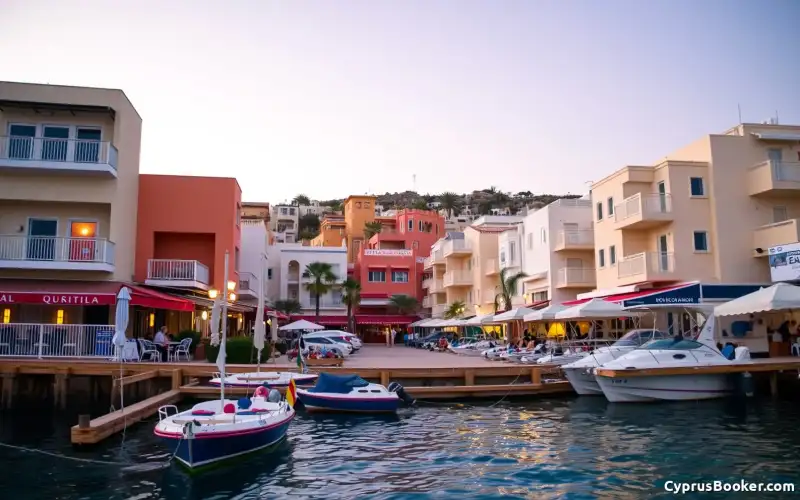
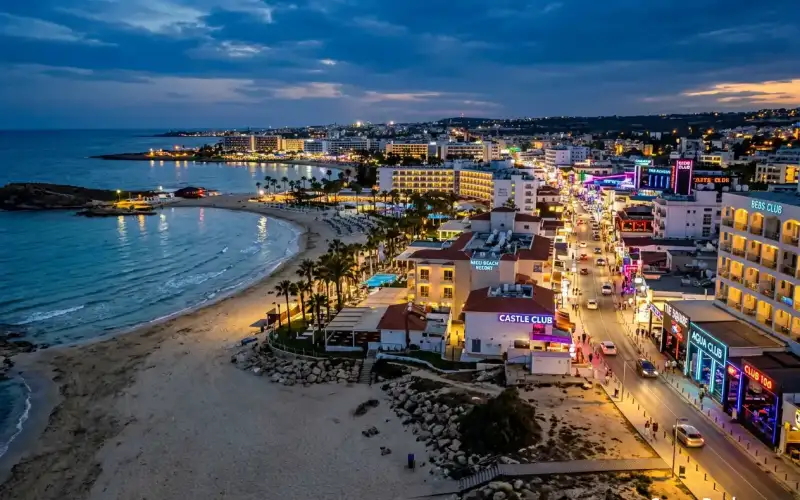
Ayia Napa sits in the south-east corner, twenty minutes from Larnaca International. It's the youngest of the four — I mean that geographically (it really only became a proper town in the 1980s) and demographically. In the last six or seven years it's quietly turned into something more interesting than the Sunny Beach reputation suggests: marina full of Sunseeker yachts, the new Limanaki promenade, restaurants serving sea bass that swam past your table an hour ago.
The price point matters too. You can still buy a one-bed apartment with a sea glimpse for under GBP 130k. A three-bed villa with a small pool, ten minutes inland, sits around GBP 300k–400k. Compare that to anything in the South of France with the same weather and you'll see why our buying enquiries jumped 40% last year. If you want to see what's actually on the market right now, browse our current listings on cyprus-property.co.uk — we update them weekly.
The Five Reasons People Actually Move (or Buy a Second Home)
1. Your Health Genuinely Improves
This sounds like estate agent fluff but bear with me. Cyprus gets roughly 320 sunny days a year. The UK averages around 140. That's not a small gap — that's the difference between a body that produces enough vitamin D naturally and one that needs a supplement bottle on the kitchen counter from October to April.
The NHS itself estimates that around 1 in 15 adults in the UK suffers from Seasonal Affective Disorder, with another 1 in 5 dealing with milder "winter blues". I'm not a doctor, but I can tell you that since I started spending November to March in Cyprus, I haven't taken a single sick day in three years. My GP back in Cheshire rolls his eyes when I tell him that, but my blood-test numbers don't lie.
Air quality also matters more than people think. Ayia Napa's PM2.5 readings are typically a third of what you'd see in inner Manchester, Birmingham or Glasgow. If you've got asthmatic kids or you're in your 60s and starting to notice the smog, that's a quiet but real upgrade.
2. The Climate Does What It Says on the Tin
Average summer temperature 28-32°C. Winter daytime 15-18°C — meaning you can sit outside for lunch on Boxing Day in a jumper and not feel mad. Sea temperature stays swimmable from May through November.
What people miss is the lack of grey-sky days. In the UK we get sunshine, sure — but it arrives bolted to a four-day weather forecast and you have to plan around it. In Cyprus you stop checking the weather app. There isn't really a point. By March you'll find yourself genuinely irritated when a single cloud appears.
3. The Food (and the Longevity That Comes With It)
Cyprus is one of the original Blue Zones — those handful of regions worldwide where people routinely live to 95 in good health. The diet is the easy explanation: fresh fish three times a week, olive oil instead of butter on everything, tomatoes that taste like tomatoes, halloumi made the day before you eat it.
A weekly grocery shop for two adults runs me about EUR 70-90, depending on whether I bother with imported British biscuits (sometimes you just need a Hobnob). That's substantially less than I was spending in a Sainsbury's mid-size in Stockport. Eating out at a proper village taverna — three courses, half a litre of local wine — comes to around EUR 25 per head.
4. The Economics Stack Up
Now the bit my accountant friends always want to hear about. Cyprus tax law is genuinely one of the more pleasant systems in Europe for British buyers:
- Capital Gains Tax on a primary residence held for 5+ years can be 0%, depending on circumstances. On rental properties there's CGT but you have substantial allowances.
- UK pension income, if you become a Cyprus tax resident, can be taxed at a flat 5% above EUR 3,420 — or you can opt into PAYE rates. Either way, far below the UK marginal rate most retirees are paying.
- Inheritance tax doesn't exist in Cyprus. None. Zero. Compare that to the UK 40% above GBP 325k.
- VAT on a first home can be reduced to 5% on the first 130 sqm, instead of the standard 19%.
A word of caution: HMRC has its own rules about non-residency and you cannot just declare yourself a Cypriot for tax purposes overnight. The "60-day rule" or the "183-day rule" both have specific tests, and you'll want a UK accountant alongside a Cypriot one. I use a small firm in Larnaca who specialise in expats — happy to share their details if you speak to our buying team for an introduction.
5. You Can Actually Escape the British Winter
Of all five reasons, this is the one that drives buying decisions. November to March in Manchester, Bristol, Glasgow or Hull is genuinely punishing — short days, near-constant cloud cover, the kind of horizontal drizzle that gets inside your collar. By February most of us are running on caffeine and false cheer.
If you've got a holiday home in Ayia Napa, those four months become a choice rather than a sentence. Easyjet and Ryanair both fly Manchester-Larnaca direct from around GBP 60-90 return in the off-season. Jet2 do it from Leeds-Bradford. BA from Heathrow. Total flight time is 4 hours 20 minutes — less than the train from London to Edinburgh.
How the Buying Process Actually Works
Here's where I'll be more useful than 90% of websites that just hand-wave at "consult a lawyer". The Cyprus property purchase has six concrete stages:
Stage 1: Reservation Agreement
Once you've found a property and your offer is accepted, you pay a holding deposit — typically EUR 2,000-5,000 — and the property is taken off the market for around 30 days. This is non-binding on you (mostly) but takes the property out of circulation while your solicitor does the searches.
Stage 2: Appointing a Lawyer (Independent of the Seller)
Cardinal rule: never use the lawyer the developer or seller suggests. You want your own. Expect to pay around 1% of the purchase price + VAT for full conveyancing. A decent expat-friendly firm will give you a fixed fee quote up front. We work with three firms across Larnaca and Paralimni; if you want introductions, our property finder service can sort that in a single email.
Stage 3: Title Deed Search
This is where Cyprus differs from the UK. The "title deed" (in Greek, the titlos) is what proves you own the land and building outright. Some older properties — particularly developments built between 2002 and 2012 — have title deed delays. A good lawyer checks this on day one. If a property doesn't have separate deeds yet, that's not always a deal-breaker, but it is a negotiating point.
Stage 4: Contract of Sale
Drafted in Greek and English. Once signed, your lawyer files it at the Land Registry within 6 months — this is called "specific performance" and it means even if the seller goes bankrupt, you cannot lose the property. UK buyers always find this comforting because it's actually safer than the English exchange-of-contracts system.
Stage 5: Permission to Acquire (for Non-EU Buyers)
Since Brexit, British buyers technically need a "permission to acquire immovable property" from the Council of Ministers. In practice this is a rubber stamp — I have never heard of a UK buyer being refused — but it adds 2-4 months to completion. Plan accordingly.
Stage 6: Transfer of Title
Final stage. Pay the transfer fees (typically 1.5%-4% on a sliding scale, often discounted by 50% for the next year or two depending on government promotions). Get your name on the deed. Pour yourself something cold.
From offer accepted to keys-in-hand: budget 4-7 months. Faster if there are no title-deed wrinkles, slower if your lawyer is slow at chasing the Council of Ministers.
Hidden Costs People Forget
- Annual Immovable Property Tax — abolished in 2017. You pay nothing yearly to central government on the property itself.
- Local council tax — yes, but it's about EUR 100-300/year. Cheaper than your wheelie-bin licence in Lambeth.
- Building insurance — EUR 200-400/year for a typical apartment.
- Communal fees if you're in a complex with a shared pool — EUR 60-120/month.
- Property management if you're not living there year-round — EUR 50-100/month gets you key-holding, monthly inspections, plant watering.
Should You Buy in 2026?
Honest answer: yes, if your timeline is 5+ years. The Cyprus market has gone up roughly 6-8% per year for the last three years, but it's still substantially below what equivalent property in Greece, Portugal, Spain or Italy now costs. The euro-pound rate is reasonable (currently around 1.17). And the supply of decent older flats in Ayia Napa — which is what most British buyers actually want — is finite, because the planning permissions for the resort centre are tight.
If your timeline is "I want to flip this in 18 months" — Cyprus is the wrong country. Transaction costs are too high.
Where to Start
Three steps:
- Come for a viewing trip. Four days, three or four properties per day, ideally in February or March when you can see what the off-season actually feels like. We organise these regularly — book a viewing trip with our local agents and we'll handle the airport pickup, hotel and the schedule.
- Get pre-approved if you're using finance. Cyprus banks (Hellenic, Bank of Cyprus) lend up to 70% loan-to-value to UK residents now, which they didn't five years ago. Rates are around 4.5-5.5%.
- Talk to two lawyers before you pick one. Conveyancing fees are similar but the speed and English-language clarity vary wildly.
That's the honest 2,200-word version of "how do I buy in Cyprus". It really is more straightforward than people fear — the process is closer to buying in Edinburgh than buying in Marrakech. The hardest part is usually picking a town. But if you're reading a website called ayia-napa.co.uk, I suspect you've already made that decision.
Comments (2 comments)