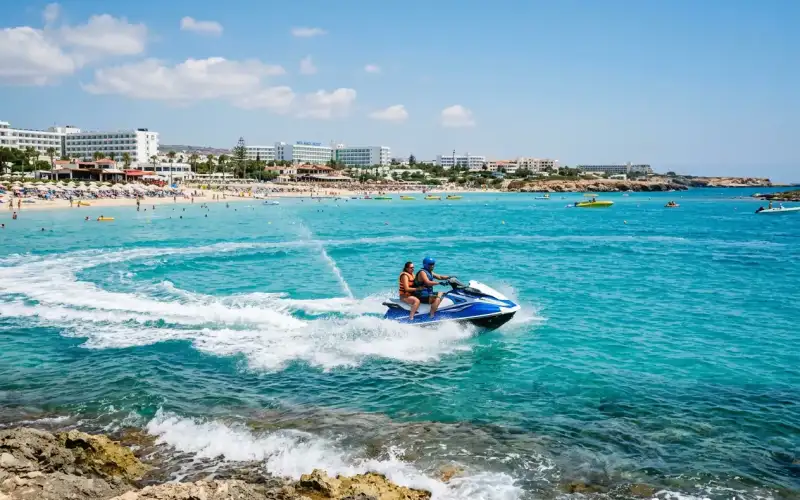
I watched a British lad last summer hand over his credit card to a beach operator in Ayia Napa, do a fifteen-minute jet ski run, and get charged an extra £120 for "damage to the hull" he swore blind he didn't cause. The operator's mate was already renting out the same ski to the next customer. That's the reality of jet skiing here if you don't know what you're doing.
Jet skiing in Ayia Napa is genuinely fun—the Med is warm, the beaches are packed, and you get a proper adrenaline hit for your money. But it's also an industry where a handful of operators run tight ships and others will squeeze every penny out of tourists who don't ask the right questions. This guide covers what you'll actually pay in 2026, where to go, who to trust, and how to avoid coming home with a surprise bill.
1. The Real Cost of Jet Ski Hire in Ayia Napa (2026 Prices)
Let's start with what matters: your wallet. Jet ski hire in Ayia Napa runs between £40 and £80 for a 30-minute session as of summer 2026. That's the going rate on the main beaches—Nissi Beach, Makronissos, and the strip near the harbour.
A 30-minute hire is the standard slot. You'll do roughly 15 minutes out and 15 minutes back, or a circuit if you're confident. Most operators don't give you much choice—it's half an hour or nothing. An hour costs £70–£140, depending on the operator and whether you're hiring in peak season (June–September) or shoulder months (April, May, October).
Fuel surcharges exist but aren't always advertised upfront. Ask directly: "Is fuel included?" Some operators add £5–£10 at the end. Others bundle it in. Helmet hire is free—you get a basic one, sometimes two if you're bringing a mate to sit behind you (passenger rates are typically 50% of the solo price, so £20–£40 extra).
The cheapest operators are on Nissi Beach's eastern end and near the water sports huts between Makronissos and the main strip. Avoid hiring from someone with a folding table and a laminated price sheet—these are usually the fly-by-night outfits that disappear after the season or suddenly claim your ski has "engine trouble" so they can upsell you to a "premium" model at double the price.
2. Best Beaches for Jet Ski Hire
Not all beaches in Ayia Napa are equal for jet skiing. Some have shallow water, strong currents, or overcrowded zones. Here's where the legitimate operators actually work.
Nissi Beach
This is the main hub. Nissi is 1.2 miles east of the town centre and has at least six permanent water sports operators with proper beach huts, insurance documents on the wall, and staff who speak English fluently. The water is calm on the western side, deeper on the eastern side. Hire costs run £50–£75 for 30 minutes. You'll see the operators' signs as soon as you walk onto the sand. Parking is £3 for the day in the official lot.
Makronissos Beach
Two miles east of Nissi, Makronissos is quieter and has three solid operators. The water is slightly choppier here, which some riders prefer. Prices are £40–£60 for 30 minutes—marginally cheaper than Nissi because it's less touristy. The beach has fewer sunbeds and fewer crowds, so you'll have more space to manoeuvre. Parking is free on the road behind the beach.
Kermia Beach (Glitter Beach)
One mile west of the town centre, near the harbour. This beach is narrower and gets busy with fishing boats and small commercial traffic. Only two operators here, and I'd only recommend them if Nissi and Makronissos are fully booked. Water conditions can be choppy. Prices are £45–£65. Skip it unless you have no other option.
Landa Beach
Three miles west of the centre, near the old salt lake. One operator, quieter vibe, decent water conditions. Prices £40–£55. Good if you want to avoid the crowds, but you'll need your own transport—it's not walking distance from the town centre.
3. Age, Licence & Legal Requirements
Cyprus law requires you to be at least 16 years old to operate a jet ski. Most reputable operators won't hire to anyone under 18 without parental consent and a signed waiver. I've seen operators hand skis to 14-year-olds, but those are the ones you should avoid—if they're dodgy on age, they're dodgy on insurance and maintenance.
You don't need a special licence to rent a jet ski in Cyprus. Your passport or driving licence as ID is enough. However, some operators will ask for a deposit or a credit card imprint—this is normal and protects them (and technically you, because it's proof you rented from them). Always check the deposit amount upfront. It should be £100–£300, not £500.
If you're a confident swimmer with some water sports experience, you're fine. If you can't swim or have never been on a jet ski, most operators will give you a five-minute briefing on the basics: throttle, brakes, how to turn, what to do if you fall off. It's not rigorous, but it covers the essentials. Don't be embarrassed to ask for extra time if you're nervous.
4. Spotting Dodgy Operators & Scams
This is where local knowledge saves you money. Here are the red flags I've seen repeatedly:
- No physical hut or office: If the operator is working from a beach chair with a clipboard, walk away. Legitimate operators have a small hut, a log book, and staff on shift.
- No visible insurance documents: Ask to see their public liability insurance. It should be on the wall or in a folder. If they get defensive or say "it's in the office," that's a warning sign.
- Pressure to pay cash upfront: Cash-only transactions mean no paper trail. Use your card and ask for a receipt with the operator's name and the exact time/duration of your hire.
- Vague damage policies: Before you go out, ask: "What happens if I damage the ski?" If they say "it depends" or quote you a massive figure like £1,000, that's a scam operator. Legitimate operators have a printed damage policy—usually £100–£300 for minor damage, £500+ for major damage, and zero charge if it's normal wear.
- Skis that look neglected: Check the ski before you get on. Is it clean? Are the mirrors intact? Does the engine start smoothly? A well-maintained ski suggests a professional operator. A battered, dirty ski with duct tape repairs is a sign they don't invest in their equipment.
- No helmet or dodgy helmet: Every operator should provide a helmet. If they don't, or if the helmet is cracked, don't rent from them. Head injuries in the sea are serious.
- Unrealistic "damage claims" after the fact: This is the classic scam. You return the ski in perfect condition, and suddenly the operator claims you hit a rock or damaged the engine. They'll show you a "repair quote" (fake) and demand £200–£400. To avoid this: take a photo or video of the ski before you leave the beach, and get the operator to sign off on its condition. Ask another customer or a friend to witness the handover.
5. What to Bring & What to Wear
Jet skiing in the Mediterranean sun is deceptively intense. You're on the water, reflected heat, no shade. Here's what you actually need:
Sunscreen: Waterproof, SPF 50+. Reapply after your ride. Sunburn on the water is brutal—I've seen tourists who couldn't sleep that night.
Rash guard or wetsuit: Not essential in summer (water is 26–28°C in July–August), but a thin rash guard protects your shoulders and back from wind chill and sun. A lot of operators have these for hire at £5–£10 if you didn't bring one.
Footwear: Water shoes or old trainers. The beach and the ski's footrests are hot. Flip-flops will blow off.
Shorts or swim trunks: Avoid cotton—it holds water and chafes. Quick-dry synthetics are better.
Minimal jewellery: Watches, rings, and necklaces can fall off in the water. Leave them in your hotel room or give them to someone on the beach.
Sunglasses: Optional but useful. Polarised lenses cut glare off the water. Some people lose them, so don't bring expensive ones.
6. Safety Rules You Need to Know
Jet skis are fun, but they're also powerful machines. The Mediterranean in Ayia Napa is busy with boats, swimmers, and other skis. Here are the actual rules:
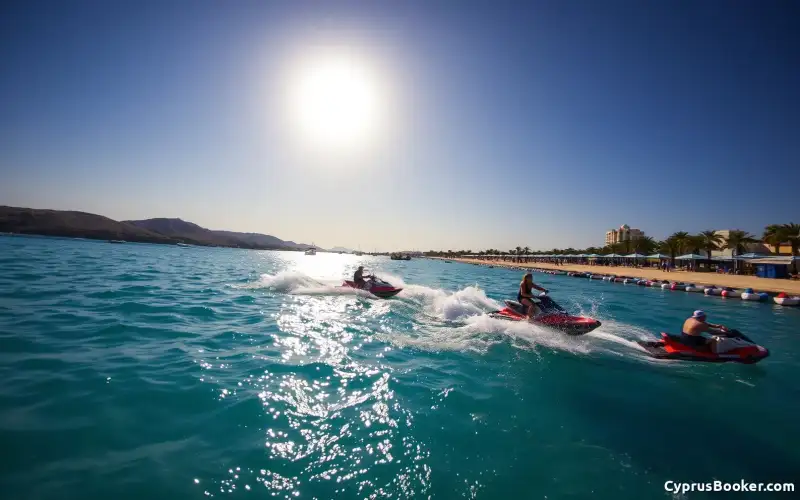
Stay in designated zones: Most operators will point out a buoyed area where you can ride. Don't go beyond it. That's where the water traffic control ends, and you risk hitting fishing boats or shipping lanes.
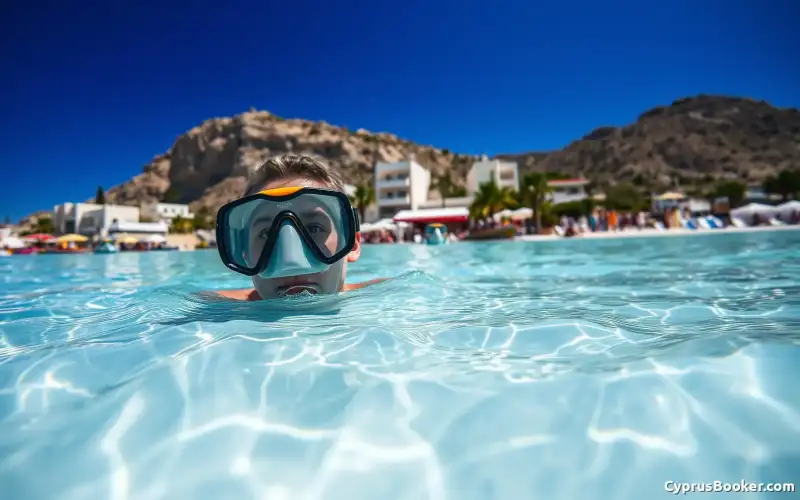
Watch for swimmers: The beaches are packed. Swimmers and snorkellers venture out further than you'd expect. Slow down near the shore and near other people in the water.
Don't ride under the influence: I shouldn't have to say this, but I will. Alcohol and jet skis don't mix. You'll lose your balance, misjudge speed, and potentially hurt someone. Most operators won't rent to you if you smell of alcohol—and they're right not to.
If you fall off: The ski will keep running (they have a kill switch cord attached to your wrist, but not everyone uses it properly). Stay calm, swim back to the ski, and climb on. The water is warm and you'll be fine. Don't panic.
Respect other water users: Give fishing boats a wide berth. They can't manoeuvre quickly. Don't ride too close to swimmers or paddleboards.
7. Passenger Rules & Group Hiring
Most skis in Ayia Napa are single-rider only, but some operators have larger models that take two people. If you want to bring a mate, ask upfront. Passenger hire typically costs 50% of the solo rate—so £20–£40 for 30 minutes, depending on the operator.
Passengers sit behind the driver and hold on. They don't touch the throttle or controls. If the operator doesn't give clear instructions to your passenger, ask them to repeat it. A nervous passenger who doesn't know how to hold on is a liability.
Group hiring (three or more skis) sometimes comes with a discount. If you're hiring four skis for 30 minutes, you might negotiate down to £45 per ski instead of £50. Always ask. The worst they'll say is no.
8. Best Time to Hire & Seasonal Variations
Summer (June–September) is peak season. Prices are highest, beaches are rammed, and you'll wait 15–20 minutes for your turn. Early morning (8–9 a.m.) or late afternoon (5–6 p.m.) are quieter slots.
May and October are sweet spots. Water is still warm (22–24°C), prices drop by 10–15%, and beaches are less crowded. You'll get better service and more attention from operators.
Winter (November–March) is dead season. Most operators close or run skeleton crews. Water temperature drops to 15–17°C, and the wind picks up. If you do hire in winter, expect prices to be 20–30% lower, but conditions are rougher and you'll definitely need a wetsuit.
9. Insurance, Damage Claims & How to Protect Yourself
This is the crucial bit. Damage claims are where operators make extra money, and where tourists lose it.
Before you hire, get the operator to write down the condition of the ski. Ideally, they'll do this on a damage waiver form that lists any existing scratches, dents, or repairs. Sign it. Take a photo of the form. If they won't do this, use your phone to video the ski from all angles while the operator watches. This sounds paranoid, but it's not—it's evidence.
Ask what happens if you damage the ski during your ride. Get a specific number: "If I scratch the hull, how much?" (Usually £100–£200.) "If the engine won't start after I return it?" (Typically not your problem if you didn't cause it.) "What if I lose the keys?" (Usually £50–£100.)
Most legitimate operators won't claim damage unless it's obvious. A small scratch from normal use? They'll ignore it. A cracked mirror or a dent from hitting something? They'll charge you. A completely non-functional engine that suddenly "broke" after your ride? That's where you push back and ask to see the repair quote.
If an operator demands money for damage you didn't cause, ask to speak to the manager or owner. If they're still unreasonable, get their business name and report them to the Cyprus Tourism Organisation or your travel insurance provider. Most travel policies cover water sports damage claims up to £500–£1,000.
10. Tips for First-Timers: What to Expect on the Water
Your first jet ski ride will feel faster than it actually is. The sensation of speed on water is intense because there's nothing to reference—no trees, no buildings, just open sea. You'll probably feel nervous for the first five minutes, then confident, then exhilarated. That's normal.
The throttle is sensitive. A small twist makes a big difference. Don't grab it and twist hard immediately—build up speed gradually. Turning is easier than you'd think—lean into the turn and ease the throttle slightly. Braking is gentle—the ski will slow down on its own if you release the throttle.
If you're going out with a passenger, tell them to hold on around your waist or torso, not your neck or arms. They need to move with you when you turn, not fight against it.
The water will splash up, especially if you're going fast. You'll get wet. That's the point. Don't worry about it.
Most people do one 30-minute session and that's enough for them. Some want to go again immediately. If you're keen, book a second session, but give yourself a break first—your arms and shoulders will be tired from holding on and balancing.
11. How to Get to the Jet Ski Beaches from Town
Nissi Beach is the easiest. It's 1.2 miles from the centre of Ayia Napa (the main square near the bars). Walk south towards the sea, or take a taxi for £4–£6. Buses run from the town centre every 20 minutes in summer (route 101), cost 50p, and drop you near the beach entrance.
Makronissos is 2 miles from town. Taxi costs £6–£8. There's a bus, but it's less frequent. Walking is possible but takes 25 minutes in the heat.
Landa Beach requires a taxi or rental car. It's 3 miles west and not served by regular buses.
If you're staying in a hotel on the strip, most of these beaches are within walking distance or a short taxi ride. Always ask your hotel reception which beach they recommend—they'll know which operators are reliable and might even have a discount voucher.
12. Comparing Jet Skis to Other Water Sports in Ayia Napa
Jet skiing isn't the only water sport option. Here's how it stacks up:
| Activity | Cost (30 mins) | Skill Required | Adrenaline Level | Best For |
|---|---|---|---|---|
| Jet Ski | £40–£80 | Low–Medium | High | Thrill-seekers, confident swimmers |
| Parasailing | £35–£60 | None | Medium | Relaxed riders, scenic views |
| Banana Boat | £20–£40 | None | Medium | Groups, families, laughs |
| Scuba Diving | £60–£100 | Medium–High | Medium | Underwater exploration, certification |
| Windsurfing | £40–£70 (hourly) | High | High | Experienced water sports people |
Jet skiing gives you the most control and the most speed. Parasailing is more relaxed but less interactive. Banana boats are cheaper and funnier but less of an individual experience. Pick based on what you want: adrenaline, relaxation, or laughs with mates.
13. What Happens If You Get Injured
Minor injuries are rare but possible. Cuts, bruises, and muscle strains from holding on happen occasionally. The water is warm and clean, so infections are uncommon. If you cut yourself, rinse it with fresh water and apply antiseptic cream from your hotel or a pharmacy.
More serious injuries—broken bones, head injuries, near-drowning—are extremely rare in Ayia Napa because the designated zones are monitored and the water is calm. If something serious happens, the operator will call for help immediately. Ayia Napa has a hospital (Larnaca General, about 30 minutes away) and a well-equipped clinic in town.
Make sure you have travel insurance that covers water sports. Most basic policies do, but some exclude "high-risk" activities. Check your policy before you book. If you're injured and your insurer denies the claim because jet skiing wasn't covered, you'll be paying for medical costs out of pocket.
14. Off-Season Hiring & Winter Jet Skiing
If you're visiting Ayia Napa outside the summer rush (November–March), jet ski hiring is possible but limited. Most operators shut down in winter, but a few stay open year-round. Nissi Beach usually has at least one operator running even in January.
Winter water is cold (15–17°C), so you'll need a proper 3mm or 5mm wetsuit. Operators usually rent these for £10–£15. Wind can be stronger, and the sea can be choppier. Ride times might be limited to 20 minutes instead of 30 because of conditions.
Prices in winter drop to £30–£50 for 30 minutes. It's a quieter experience—fewer tourists, more space, and a different vibe. If you're a confident rider and don't mind cold water, winter jet skiing is actually brilliant.
15. Final Checklist Before You Ride
Before you hand over your money and head out on the water, run through this:
- Check the operator has a physical hut and visible insurance documents.
- Ask about the damage policy and get it in writing.
- Video the jet ski's condition before you leave the beach.
- Confirm the price includes fuel and helmet hire.
- Ask about the designated riding zone and any no-go areas.
- Get a briefing on throttle, brakes, and what to do if you fall off.
- Apply sunscreen generously.
- Put on water shoes and a rash guard if you have one.
- Tell someone on the beach (friend, hotel staff) where you're going and when you'll be back.
- Keep your phone and valuables with someone you trust on the beach—don't take them on the ski.
- Ask the operator for their contact number in case you have questions after your ride.
- Take a photo of the operator's business name and their ID or badge number.
That last one sounds extreme, but it's your protection if a dispute arises later. You've got their details, they know you've got them, and suddenly damage claims become a lot less likely.
Bonus Tip: Negotiating Discounts & Package Deals
If you're hiring multiple skis or booking more than one session, ask for a discount. Operators expect this. A group of four hiring four skis for an hour might negotiate down from £280 (£70 × 4) to £240–£250. It's not huge savings, but it's worth asking.
Some operators offer "combo deals"—jet ski plus parasailing, or jet ski plus lunch at a beach bar. These are sometimes cheaper than booking separately, sometimes not. Always do the maths before you agree.
If you're staying in a hotel, ask reception if they have vouchers or partnerships with water sports operators. Some hotels get 10–15% discounts that they pass on to guests. It's free money if you ask.
Conclusion
Jet skiing in Ayia Napa is genuinely worth doing. The Med is warm, the beaches are beautiful, and the experience is a proper rush. But it's an industry where a few operators are excellent and others are sharks. The difference between a great experience and an expensive disaster is knowing where to go, what to pay, and what questions to ask.
Stick to Nissi or Makronissos beaches, use operators with proper huts and insurance, get damage policies in writing, and video the ski before you ride. Do that, and you'll have a brilliant time. Ignore those steps, and you might end up like that lad I mentioned—£120 lighter and wondering what just happened.
The water's warm. The sun's out. Go have fun, but do it smart.
Comments (3 comments)